
REVIEW · DIASPORA ROOTS & NAMING CEREMONIES
Traditional naming ceremony For African Diasporas in Kumasi
A name ceremony in Kumasi can feel personal fast. This private day with Bilson Tours Gh lets you take part in a traditional naming process in the Adanwomase community, receive a name tied to your date of birth, and leave with a certificate of recognition. Two big wins for me are the respectful, private feel of the ceremony and the hands-on cultural stops, including kente weaving and a cocoa farm visit with time to taste fresh cocoa. One thing to consider is that the day depends on good weather, so the schedule may shift if conditions are poor.
You start with pickup offered and a 9:30am departure from the Lancaster Kumasi City, at CityRain Tree St on Lesley Opoku-Ware Drive. Then you spend about 7 hours moving through ceremony and workshops in an air-conditioned vehicle with bottled water along the way. For many in the African-American and Caribbean diaspora, this is the kind of experience that turns a year-of-return talking point into something you can actually hold in your hands: a name, a story, and a formal recognition.
Before you go, read the vibe right. You are not just watching a show. You are stepping into a family and community moment, wearing tailored Ghanaian cloth and sharing your date of birth so the naming can be done properly.
In This Review
- Key Highlights You Should Know Before You Go
- Kumasi Naming Ceremonies: The Meaning Behind the Day
- Meeting Bilson Tours Gh and Getting Settled for a 9:30am Start
- Adanwomase Naming Ceremony: How Your Date of Birth Becomes a Name
- Ghanaian Cloth and Ceremony Etiquette You’ll Appreciate
- Kente Weaving Workshop: Pattern, Skill, and Cultural Craft
- Cocoa Farm Visit: Taste Ghana Through What Grows
- Lunch, Water, and Staying Comfortable During a Full 7 Hours
- Value and Price: Is $175 Reasonable for This Private Day?
- Privacy Matters: What a Private Tour Changes
- Reviews That Point to the Best Parts of the Day
- Who This Tour Is Best For in Kumasi
- Should You Book the Private Naming Ceremony?
- FAQ
- What time does the tour start?
- Where is the meeting point?
- How long does the experience last?
- Is this a private tour?
- Is pickup offered?
- What is included in the price?
- What happens during the naming ceremony?
- Are there any extra costs beyond the tour price?
- What if the weather is bad, or I need to cancel?
Key Highlights You Should Know Before You Go
- Private naming ceremony with only your group, so you get real attention, not a rushed stop
- Your date of birth is used to generate your traditional Ghanaian name and recognition
- Tailored Ghanaian cloth is part of the ceremony setup, making the day feel official
- Kente weaving workshop gives you a closer look at how patterns and meaning travel through generations
- Cocoa farm visit with fresh cocoa adds a tasty, grounded look at Ghanaian agriculture
- A certificate of recognition gives you something concrete to take home from the experience
Other roots visits and naming ceremonies arranged for visiting families
- Traditional naming ceremony For African Diasporas in Kumasi★ 5.0 · 10 reviews
- Traditional Naming Ceremony For African Americans In Kumasi★ 5.0 · 5 reviews
- Full Day Tour with Traditional Naming Ceremony in Kumasi★ 5.0 · 4 reviews
Kumasi Naming Ceremonies: The Meaning Behind the Day
A traditional naming ceremony in Ghana is not a minor cultural stop. In many communities, it happens soon after birth, because the name connects a person to family, identity, and social belonging. For people whose families were separated by history, this kind of ceremony can land differently. It is not just about a word. It is about recognition, place, and continuity.
This tour is designed for the African-American and Caribbean diaspora. That matters, because the emphasis is on meeting the ceremony with respect while still giving you a clear path into the process. You do the naming procedure with the Adanwomase community, and you get a traditional name connected to your birth date. You also receive a certificate of recognition, which turns the experience into something you can show family, friends, and future generations.
Another reason I like this concept is the balance. You are not only in ceremony mode. You also get cultural context through the kente weaving workshop and a cocoa farm visit. That makes the day feel less like a single performance and more like a fuller snapshot of how culture lives in everyday practice.
Meeting Bilson Tours Gh and Getting Settled for a 9:30am Start
The day begins at a clear starting point: Lancaster Kumasi City, CityRain Tree St, on Lesley Opoku-Ware Drive in Kumasi. Pickup is offered, which helps if you do not want to deal with local transit while you are trying to get oriented.
The time matters. Starting at 9:30am gives you daylight for moving between stops and helps keep the ceremony comfortable. The tour runs about 7 hours, so you should plan for a steady day rather than a relaxed half-hour of sightseeing.
You are in an air-conditioned vehicle with bottled water, plus a tour guiding service. That is practical value in Ghana, especially when the day runs warmer than you expect. It also means you can focus on the experience instead of sorting out logistics while you’re hungry or trying to keep track of what comes next.
Adanwomase Naming Ceremony: How Your Date of Birth Becomes a Name
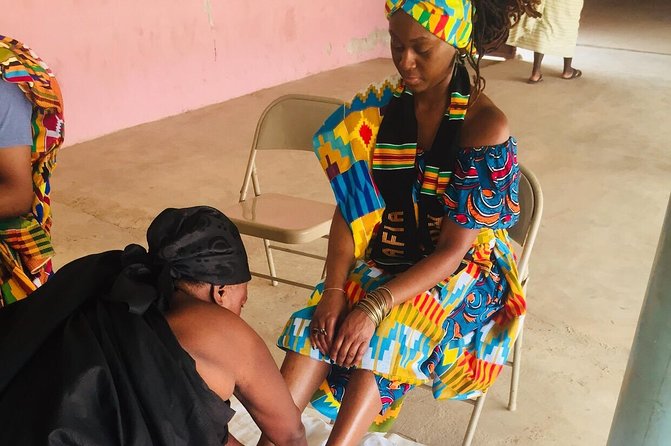
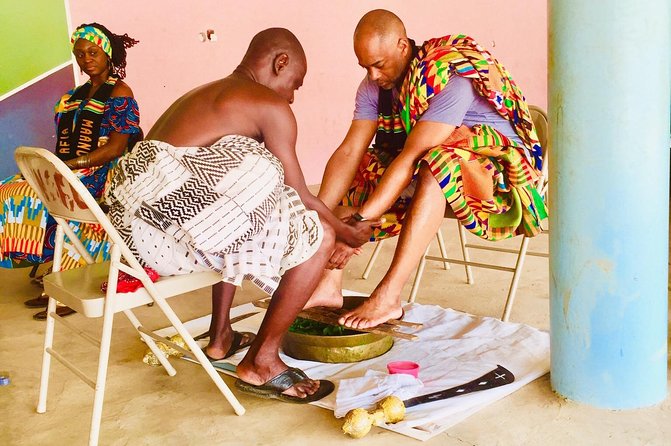
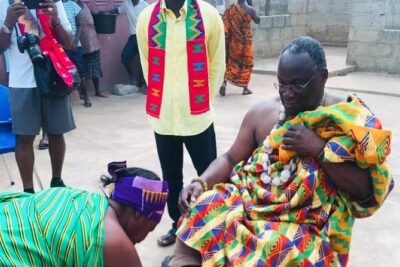
This is the heart of the day, and you should treat it like the main event. Your schedule centers on visiting the Adanwomase community and going through the process of traditional naming. You provide your date of birth, and the naming process uses that to generate your Ghanaian name.
You should expect a formal, guided flow. The tour description makes it clear that you give your date of birth for the Ghanaian names and the certificate of recognition. That means you are not just asked for your information. You are participating in a process.
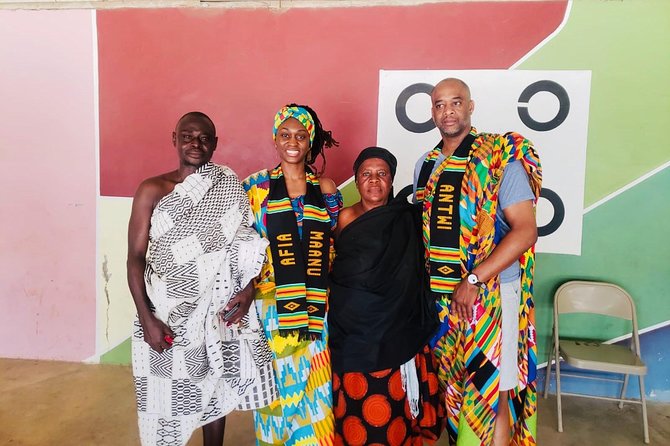
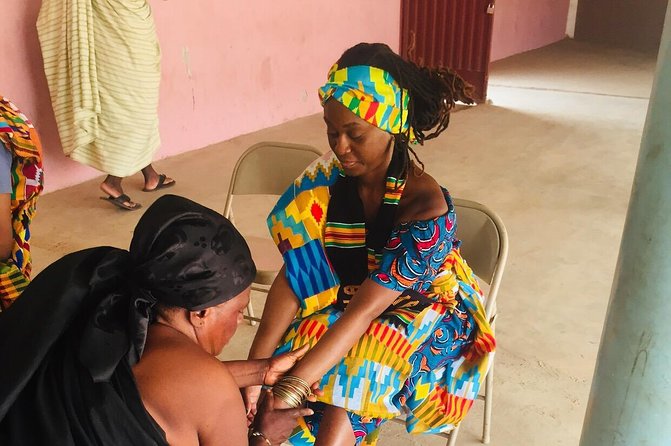
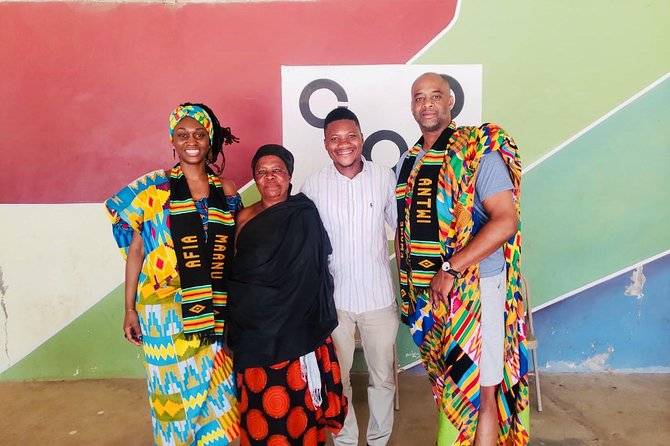
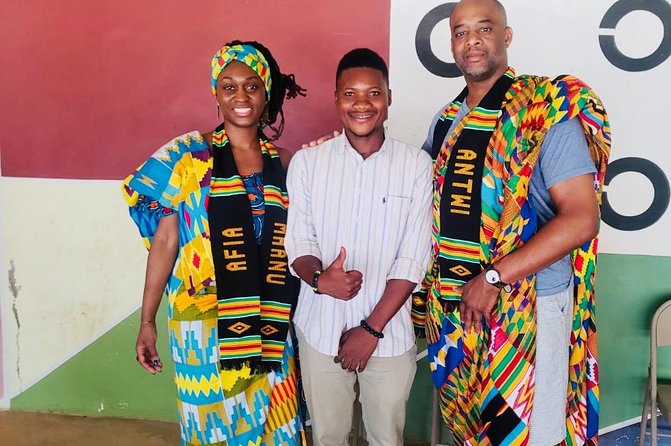
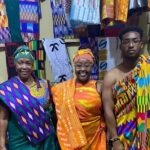
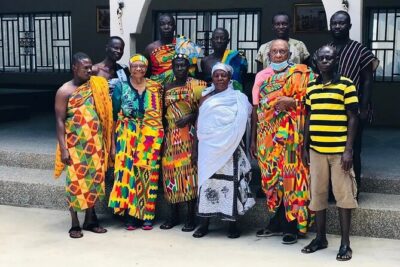
You will also be adorned in Ghanaian cloth tailored for the occasion. That is one of the most meaningful parts for me, because cloth here is not just clothing. It signals ceremony. It marks the moment as official and respectful, which helps you feel like you belong at the table rather than sitting in the audience.
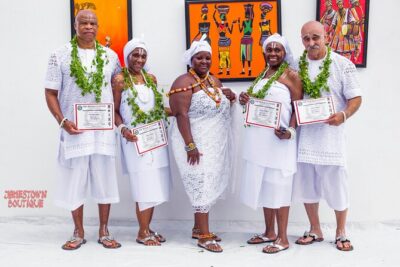
At the end of your ceremony portion, you receive a certificate of recognition. I like this detail because it is not vague. You leave with documentation tied to what happened that day, which helps the name feel real beyond the moment of taking photos.
Ghanaian Cloth and Ceremony Etiquette You’ll Appreciate
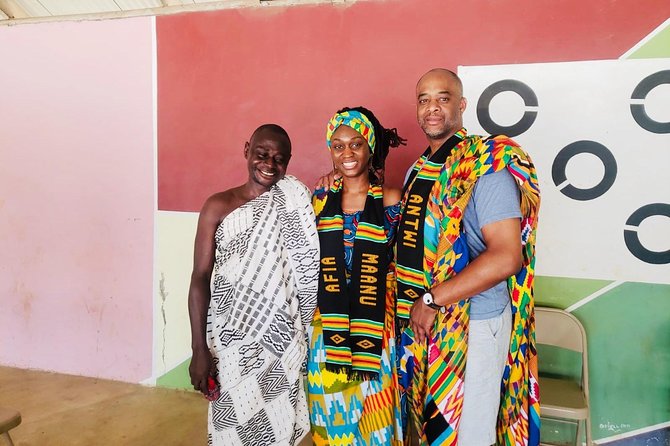
A lot of cultural tours include a costume moment. This one is different because the cloth is tied directly into the ceremony setup. You are adorned in Ghanaian cloth that is tailored for you for the experience.
In a ceremony like this, the practical takeaway is to show up ready to participate. That means wearing comfortable shoes (the day is outdoors in parts), keeping your phone powered for the moments you are allowed to capture, and listening carefully to your guide. Your guide, Bilson, is repeatedly described as patient and attentive in the reviews, which is exactly what you want when you are stepping into a process with cultural steps you might not know.
Also, come prepared for a sensory day. You will be in a community setting, around other people, with guidance leading the timing. You do not need to memorize rules. You just need to follow directions and keep a respectful pace.
Kente Weaving Workshop: Pattern, Skill, and Cultural Craft
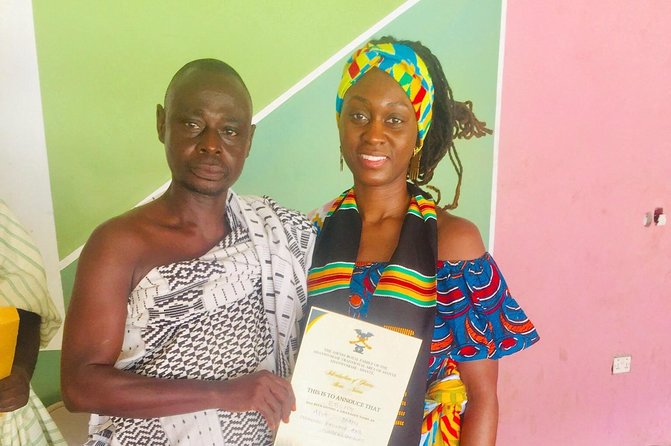
After the naming portion, you shift into learning. A kente weaving workshop is included, and it helps translate the ceremony into something you can understand with your hands and eyes, not just your ears.
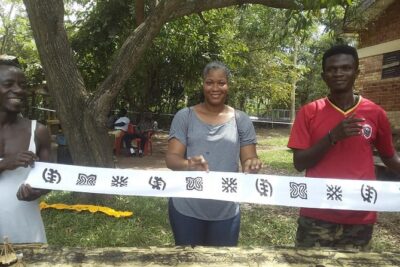
You will visit a kente weaving workshop as part of the day. Even without a studio-style museum explanation, weaving is one of those crafts where you immediately see the discipline and the intention. Kente patterns typically carry meaning, and watching how cloth is made helps you understand why people treat kente like identity, not just fashion.
The reviews make this part sound like more than a passive demo. One guest highlights learning to weave kente during the experience, and another specifically calls out kente weaving along with the naming moment as part of what made the day feel life changing.
So if you like craft-based travel, this is a good fit. You get to slow down, ask questions through your guide, and absorb how technique turns into tradition over time.
More of Kumasi and the Ashanti towns around it

Cocoa Farm Visit: Taste Ghana Through What Grows
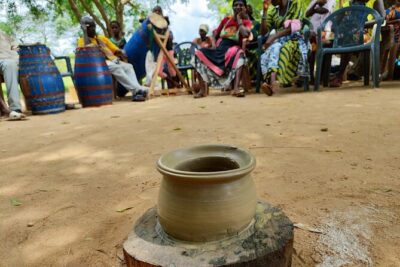
The tour also includes a visit to a cocoa farm, plus time to taste fresh cocoa. This is a smart pairing with the naming ceremony because it grounds the day in how Ghanaian culture connects to land and daily life.
Cocoa is not just a product. It is an agricultural reality that shapes communities and economies. When you add a taste, the experience stops being theoretical. It becomes sensory. You can walk away saying, I not only saw the culture, I tried one of its outputs.
One of the stronger mentions in the reviews is fresh cocoa tasting. That matters because it tells you you are not just passing a farm sign. You are getting an included stop with edible payoff, which makes the day feel well-rounded and worth the time.
Lunch, Water, and Staying Comfortable During a Full 7 Hours
You get lunch included, and the tour includes bottled water. Those details are small but they matter, because a day that starts at 9:30am and runs about 7 hours is long enough that hunger and thirst can wreck your mood.
I also like that you have air-conditioned vehicle time between stops. You will still spend time outside for ceremony and workshops, but the breaks in the vehicle keep you from feeling fried.
If you are sensitive to heat or bright sun, plan for it. Bring light layers you can manage, and wear breathable clothing. You will be in Ghanaian cloth during the ceremony part, so choose outer layers that won’t clash with the experience. The goal is to feel comfortable enough that you can stay present in the moment.
Value and Price: Is $175 Reasonable for This Private Day?
At $175 per person for about 7 hours, this is not a cheap add-on. But for a private cultural experience, it can be good value.
Here’s why. You are not just paying for transportation. The day includes an air-conditioned vehicle, fuel surcharge, bottled water, lunch, entrance fees, a tour guiding service, and key access moments like a private ceremony and a kente weaving workshop plus a cocoa farm visit.
Most importantly, you are paying for time with Bilson and a ceremony format that is built around your participation. It is private, meaning only your group will participate, which usually costs more than joining a big tour with many languages and distractions.
The reviews are blunt about impact. Guests describe it as life changing and priceless, and one person even emphasizes how Bilson went above and beyond with time and patience to make sure they could attend. That kind of care tends to show up in how smoothly the day runs, and it matters when you are in a ceremony where you want things to feel respectful and unhurried.
A possible tradeoff is that you should not expect this to be a casual sightseeing loop. It is a meaning-forward cultural day. If you want quick photos and fast pacing, you might find it slower than you planned. But if you want recognition and learning, it is priced like an experience, not like a bus ride.
Privacy Matters: What a Private Tour Changes
This is listed as a private tour or activity, and the key phrase is that only your group will participate. That is not just a comfort detail. It changes how the naming ceremony and workshops unfold.
In a private setting, you are more likely to get attention when you need it. You are also less likely to feel like you are being managed as part of a crowd. That can be especially important in ceremonies where names, clothing, and steps are part of a respectful process.
If you are traveling with family or traveling solo but want a personal feel, private format is a strong selling point. It also helps if your group includes people who want to ask questions and actually understand what they are seeing.
Reviews That Point to the Best Parts of the Day
The most praised aspects show a pattern: care, welcome, and a sense of personal connection.
Multiple reviews mention Bilson by name and highlight his time and patience. One guest notes he was willing to make a 10-hour trip to help ensure they reached the tour, and that he was sweet and knowledgeable. Another emphasizes the welcoming nature of the Adanwomase community and the way the royal family was gracious and inclusive, specifically understanding the impact this chance has for diaspora people not born in Africa.
So while you should always treat cultural experiences with your own openness, these comments give you a practical expectation: the day is guided with empathy. You are not thrown into the deep end alone.
Guests also connect the naming ceremony with the other stops. One review calls the naming ceremony life changing and adds that kente weaving and tasting fresh cocoa made the day feel complete. Another highlights a feeling of being welcomed and acknowledged differently since the year of return festivities.
Even if you are not traveling during those same events, the takeaway is clear. This tour aims for emotional resonance, not just cultural exposure.
Who This Tour Is Best For in Kumasi
You’ll love this if you fit one of these profiles:
- You are African-American or Caribbean diaspora and want a respectful naming connection in Ghana
- You value hands-on cultural craft, especially kente weaving
- You want a day with meaning, plus practical included meals and transport
- You like private tours because you want attention and space for questions
You might think twice if you want a purely passive sightseeing day. This is participation-based. It asks you to share your date of birth and to take part in ceremony steps while wearing Ghanaian cloth. It will feel structured, and that structure is part of the value.
Also consider the weather requirement. If your travel dates are in a period where rain is common, you might want flexibility. The tour requires good weather, and if it is canceled due to poor weather you will be offered another date or a full refund.
Should You Book the Private Naming Ceremony?
If you are drawn to a naming ceremony for identity, not just for photos, I think you should strongly consider booking this. The private format, the certificate of recognition, and the included craft and food stops add up to a full cultural day that feels more like a connection than an attraction.
Choose it if you want to walk out of Kumasi with something tangible tied to your own birth date, plus a clearer understanding of kente weaving and cocoa through a real visit. If you can handle weather-dependent planning and you’re ready to participate in a ceremony with guidance, this is the kind of experience that can make you feel, in a grounded way, more connected than you expected.
FAQ
What time does the tour start?
The tour starts at 9:30am.
Where is the meeting point?
You meet at Lancaster Kumasi CityRain Tree St, Lesley Opoku-Ware Drive, Kumasi, Ghana.
How long does the experience last?
It runs about 7 hours (approx.).
Is this a private tour?
Yes. It is private, and only your group will participate.
Is pickup offered?
Pickup is offered, and the activity ends back at the meeting point.
What is included in the price?
The tour includes an air-conditioned vehicle, fuel surcharge, bottled water, lunch, entrance fee, and tour guiding service.
What happens during the naming ceremony?
You visit the Adanwomase community and go through the traditional naming process. You share your date of birth for the Ghanaian name and your certificate of recognition, and you are adorned in Ghanaian cloth as part of the ceremony.
Are there any extra costs beyond the tour price?
Buying your own items is not included.
What if the weather is bad, or I need to cancel?
The experience requires good weather. If it is canceled due to poor weather, you will be offered a different date or a full refund. You can cancel up to 24 hours in advance for a full refund, and cancellations within 24 hours are not refunded.
More Ghana Tours Out of the Review Pile
- Bonwire Namimg Ceremony and Kente Tourist Center
★ 5.0 · 40 reviews - Tour Kumasi City Like a Local
★ 4.5 · 34 reviews - Kumasi City Tour
★ 5.0 · 8 reviews - Kumasi City Tour
★ 4.5 · 7 reviews - Lake Bosomtwe Boat Cruisely and Kumasi City Tours
★ 4.5 · 6 reviews
Deeper into Ashanti
- Bonwire Namimg Ceremony and Kente Tourist Center
★ 5.0 · 40 reviews - Tour Kumasi City Like a Local
★ 4.5 · 34 reviews - Kumasi City Tour
★ 5.0 · 8 reviews - Kumasi City Tour
★ 4.5 · 7 reviews - Lake Bosomtwe Boat Cruisely and Kumasi City Tours
★ 4.5 · 6 reviews
Roots Visits and Naming Ceremonies
- Bonwire Namimg Ceremony and Kente Tourist Center
★ 5.0 · 40 reviews - Traditional Naming Ceremony For African Americans In Kumasi
★ 5.0 · 5 reviews - Full Day Tour with Traditional Naming Ceremony in Kumasi
★ 5.0 · 4 reviews
Latest Kumasi reviews added here


Diaspora Roots & Naming Ceremonies, compared.
 ★ 5.0Bonwire Namimg Ceremony and Kente Tourist CenterFrom $18040 reviews
 ★ 5.0Ghana Heritage Tours – Beyond The ReturnFrom $3,59536 reviews
 ★ 5.0The Ancestral Naming Ceremony and Home Coming ExperienceFrom $26530 reviews
 ★ 5.0The Homecoming Experience To Cape-coast And Elmina.From $18028 reviews
 ★ 4.5Naming Ceremony and Heritage Homecoming Experience for DiasporasFrom $26515 reviews
 ★ 5.0Traditional Naming Ceremony and Boat Cruise ExperienceFrom $22015 reviews
 ★ 5.0Kumasi Heritage Tours And Naming Ceremony In A DayFrom $25611 reviews
 ★ 5.0A 9 Days Experience Of The MotherlandFrom $1,9488 reviews
Browse the lists this tour appears in