
REVIEW · ASHANTI KINGDOM & KUMASI TOURS
Tour Kumasi City Like a Local
Kumasi culture hits fast, right on the street. This half-day tour ties together Ashanti landmarks, the Golden Stool legend, and a real market walk, all with a guide who helps you connect the dots. Kumasi even earns its Garden City nickname, so you get more than just buildings. Ashanti stories and The Garden City vibe in one go.
I like how the day is built like a timeline, starting at Manhyia Palace Museum where you first get context on Ashanti rule before you move room to room. The drawback: you should be ready for some movement and noise, and one group noted the music level was too loud for easy chat at the market.
I also like the practical side of the plan. It is not a sit-and-stare tour, you will likely ride and walk using local options, then pause for a local food lunch. If you want photos too, the guide style is friendly and photo-aware.
In This Review
- Key Points You Will Care About
- Getting Your Bearings in Kumasi (The Garden City)
- Manhyia Palace Museum: Ashanti Power Explained Before You Walk the Rooms
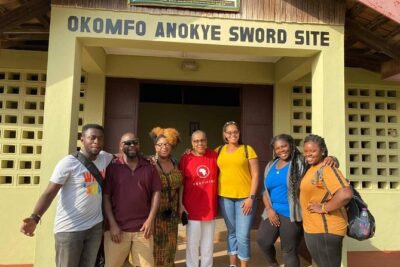
- Okomfo Anokye Sword Site and the Golden Stool Descent
- Prempeh II Museum: Royal Life Through Objects, Clothing, and Ritual Tools
- Kejetia Market Walk: Seeing Kumasi’s Everyday Rhythm
- The Guide Makes It a “Like a Local” Tour
- Price and What $80 Includes (And Why It Can Be Fair)
- Lunch With Local Food: A Real Break, Not a Token Bite
- What to Expect From Timing, Pickup, and the Private Format
- Practical Tips So Your Day Feels Easy
- Who This Tour Is Best For
- Should You Book Tour Kumasi City Like a Local?
- FAQ
- How long is the Kumasi City Like a Local tour?
- What does the tour cost?
- Is pickup included?
- Are entrance fees included?
- Is lunch included?
- Is the tour private?
- Will I get a ticket on my phone?
- How far in advance should I book?
- Is there free cancellation?
Key Points You Will Care About
- Half-day timing that makes the Ashanti story make sense, from royal history to living culture in the city
- Four major stops with entrance fees and lunch covered, so you spend less time figuring out tickets
- Kejetia Market is the star for everyday life, with a “walk it like a local” approach
- Private tour means you can set the pace, especially helpful if your group includes older family members
- Local transport is part of the experience, so comfortable shoes matter
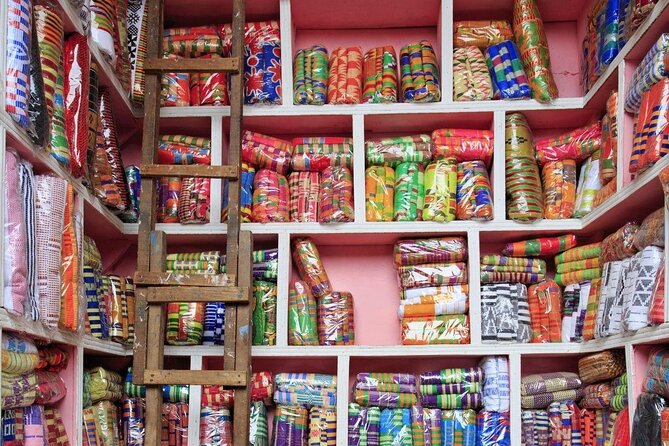
- The guide experience can extend beyond the listed stops, including Kente village time outside central Kumasi
More of Kumasi and the Ashanti towns around it
- Bonwire Namimg Ceremony and Kente Tourist Center★ 5.0 · 40 reviews
- Traditional naming ceremony For African Diasporas in Kumasi★ 5.0 · 10 reviews
- Kumasi City Tour★ 5.0 · 8 reviews
- Kumasi City Tour★ 4.5 · 7 reviews
Getting Your Bearings in Kumasi (The Garden City)
Kumasi is Ghana at street level. It is the second-largest city, and the energy is different from the quieter historic corners you might expect. One reason people call it The Garden City is that many flower species linked to the area are known to originate here, so the city has a softer side that often surprises first-time visitors.
This tour is built around learning, not just checking boxes. You start with a museum that gives you the “why” behind what you will see later. Then you hit sites tied to Ashanti founders and key royal symbols, and you finish in a market where you can feel how everyday life runs.
Two things matter for your enjoyment here. First, the guide connects the historical threads. Second, you are not only seeing monuments, you are seeing the places where people actually trade, talk, and live.
Manhyia Palace Museum: Ashanti Power Explained Before You Walk the Rooms
Manhyia Palace Museum sets the tone. You begin with a video that introduces Ashanti history, then you move through multiple rooms with original artifacts. This matters because Kumasi can feel like a maze if you do not know what you are looking at. The video intro gives you the language for the rest of the day.
What I like about this stop is that it focuses on authority and identity, not just dates. The guide will point you toward major figures and symbols tied to the Ashanti empire. Yaa Asantewaa, the war queen, is part of the story you should expect to hear about. You also learn about the current king sitting on the stool as part of how authority is represented.
One practical detail to keep in mind: the museum is not right next to the field where Akwaside tribal chiefs gathering happens every six weeks. If you are traveling with curiosity and want to time events, you now know that the gathering has its own place and schedule, and the museum is part of the broader palace area rather than the exact event field.
Time on site: about 1 hour, with admission included.
Best for: first-timers who want context before the legend stops later in the day.
Okomfo Anokye Sword Site and the Golden Stool Descent
This is the stop where legend turns into a physical place. You go to the site associated with the beginning of the Ashanti nation, including the story of the Golden Stool. The site is described as the exact place where the Golden Stool descended into the laps of King Osei Tutu I, the founder of the Ashanti nation.
Then you add another iconic layer: the sword. The story explains that Chief Priest Okomfo Anokye drove the sword into the ground. The timing given is close to 300 years ago, and the belief attached to the sword is that no one would be able to remove it. The site is presented as having remained even after attempts.
This kind of location-based storytelling is powerful because you are not just hearing a myth. You are standing at the point where the myth is rooted in a named place, and your guide helps you understand how people interpret that meaning.
Time on site: about 1 hour, with admission included.
Good to know: expect the guide to lean into the story. If you prefer facts over folklore, you can still ask questions, but this stop is meant to be told.
Prempeh II Museum: Royal Life Through Objects, Clothing, and Ritual Tools

Prempeh II Museum is the most “hands-on” feeling stop. The focus stays on Ashanti culture and history, but it is done through objects linked to Prempeh II, an Ashanti king. Instead of only hearing about power, you see it, in war attire, ceremonial clothing, jewelry, and protective amulets.
What makes this museum stand out for me is the variety of items tied to daily and ceremonial life. You may see personal equipment for bathing and dining, furniture, royal insignia, and even mention of weighing gold. That last detail hints at how royalty is tied to wealth, trade, and ritual, not just ceremony.
The museum is also described as constructed to assemble an Ashanti chiefs house. So you are not only viewing pieces in display cases. You are experiencing a space built around how such a house might be assembled.
Time on site: about 1 hour, with admission included.
Best for: people who love museum details, clothing, and object-based history.
Kejetia Market Walk: Seeing Kumasi’s Everyday Rhythm
Kejetia Market is where Kumasi becomes real. From far away, it is described as looking like an alien mothership landed in the center of Kumasi. Up close, the market has rusting tin roofs and a scale that is hard to picture until you are inside.
The numbers shared for Kejetia are huge: about 11,000 stalls, and at least four times as many people working. It can feel like a circular shanty town, and once you step inside, it is disorienting in the way big places are, but also captivating.
This is not a museum walk where you move quietly. This is sound and motion. The best way to enjoy it is to follow your guide closely early on, then ask them to slow down at moments you want to study, like textiles and everyday trade. If you care about photos, this is a great place to ask for help with framing and timing, since the guide style here is often described as photo-friendly.
One consideration: one group noted the music was too loud for comfortable conversation during parts of the market experience. If you want to talk a lot with your guide, plan for that. Bring patience, and expect to talk over noise.
Time on site: about 1 hour, with admission included.
Tip for your comfort: wear shoes you can walk in for a while, because this is a walk-through market experience.
City runs in other Ghanaian towns
The Guide Makes It a “Like a Local” Tour
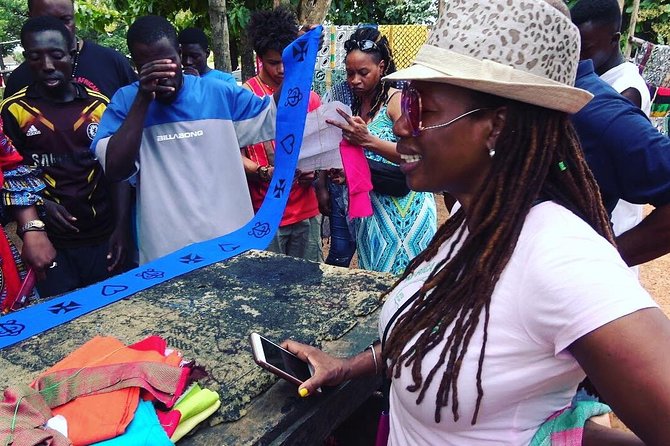
This tour is private, and that is where the value often shows. You are not sharing a script with strangers. Your guide can pace the day to your group, and you can get questions answered while you walk.
Bilson Tours Gh is named as the provider, and Bilson is specifically praised in multiple accounts for being warm and personable. People also highlight that he takes good photos and helps you feel comfortable exploring local areas and markets. If you are traveling with a parent or someone who needs a slower pace, this private setup can matter.
There is also a useful clue about how the guide works with your needs. One group said the experience was tailored and that the guide helped them explore Kente villages further outside Kumasi. That is not guaranteed for every group, but it suggests a helpful “flex” mindset. If you want added time on textiles, ask early.
Finally, the guide approach is sometimes paired with practical local transport choices rather than a single private vehicle for the entire loop. One group mentioned moving around using options like tro-tro, tuktuk, cabs, and walking. That can be great for atmosphere, but it also means the day may feel like a city walk more than a smooth, drive-everywhere route.
Price and What $80 Includes (And Why It Can Be Fair)

At $80 per person for 5 to 6 hours, the main question is not only the cost. It is what you get wrapped into that price.
Included:
- Pickup and transportation
- Entrance fees for the museum and site stops
- Lunch with local food
- A tour guide service
Not included:
- Personal purchases
So your money goes toward the parts that usually cause friction for independent travel: ticket lines, entrance fees across multiple sites, and a guide who can interpret what you are seeing. If you plan to do several museums plus the market in one day, the math often works better than buying each ticket separately and trying to piece together a good route.
One more value angle is time. For many visitors, the hardest part of Kumasi is knowing what to prioritize. This plan gives you a focused loop across Ashanti royal history, a legend site tied to the nation’s founding story, and Kejetia Market.
Lunch With Local Food: A Real Break, Not a Token Bite
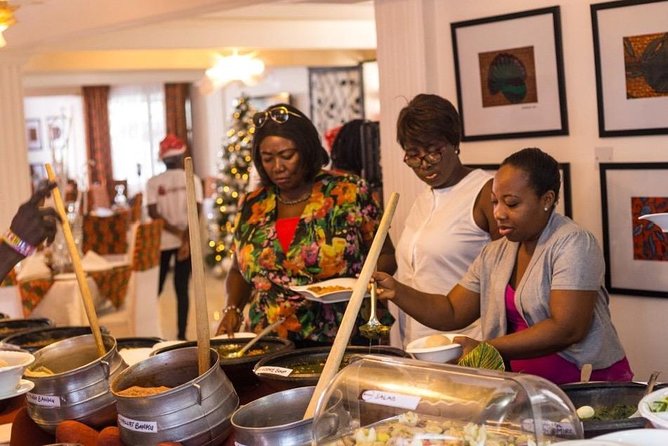
Lunch is included, and the intention is a local food experience. That matters because in half-day tours, food can become an afterthought. Here, you have a scheduled pause, which is especially helpful when you are moving between museums and a busy market.
Keep your expectations practical. You are in Ghana, not a resort dining room. The goal is flavor and experience, not plated perfection. If you are sensitive to heat, spicy food, or busy environments, tell your guide what you can handle before lunch.
What to Expect From Timing, Pickup, and the Private Format
This is a 5 to 6 hour experience, offered with pickup. You will also receive a mobile ticket, and it is designed as a private activity where only your group participates.
The private format affects your day in small but important ways:
- You can ask follow-up questions without feeling rushed.
- You can adjust pace if someone needs slower walking.
- You can get photo stops when you actually see something you like.
One more planning note: on average, this tour is booked about 20 days in advance. If you are in Kumasi during a busy stretch, booking earlier gives you more choice.
Practical Tips So Your Day Feels Easy
Here is how to make the most of it with what is known about this experience.
- Wear comfortable shoes. Kejetia Market is a walk, and you may move between sites using a mix of transport and walking.
- Bring light layers. Museums can be cooler inside than outside, and market weather can shift.
- Have cash ready for personal items. Shopping is not included, so keep spending separate from the tour cost.
- Ask for photos early. If you care about pictures, bring it up at the start so the guide can plan moments.
- Be ready for noise. If music is loud at the market, you will still be able to enjoy the visuals and your guide’s explanations, but conversation may take a bit more effort.
- If you want Kente village time, ask about extensions. There is a hint that the guide can help with extra textile-related time outside central Kumasi.
Who This Tour Is Best For
This tour suits you if:
- You want a structured introduction to Kumasi without spending your day researching.
- You care about Ashanti royal history, artifacts, and legend connected to specific places.
- You want a market visit that includes a guided walk and context.
It may not fit you as well if:
- You want a very quiet, low-walking day with minimal city movement.
- You prefer a strictly factual, no-storytelling approach at sacred or legendary sites.
- You dislike loud environments like large markets.
Overall, it is a strong choice for first-time visitors who want to understand what they are seeing and still experience daily life in Kumasi.
Should You Book Tour Kumasi City Like a Local?
If you want one half-day to connect Ashanti royal sites with real market life, I would book it. The $80 value is strongest because transportation, entrance fees, and lunch are already handled, and the tour is built around making the story understandable instead of dumping stops on you.
Book it especially if you like guided museum interpretation, enjoy object details like royal clothing and ritual tools, and you want Kejetia Market as more than just a glance from the edge.
I would think twice if you are hoping for a slow, mostly seated route with perfect conversation levels at the market. You should be ready for city noise, walking, and a pace that can feel like moving through Kumasi rather than touring from a single vehicle.
If your top priority is context plus atmosphere in one afternoon, this is a solid way to get it.
FAQ
How long is the Kumasi City Like a Local tour?
It lasts about 5 to 6 hours.
What does the tour cost?
The price is $80.00 per person.
Is pickup included?
Pickup is offered.
Are entrance fees included?
Yes, entrance fees are included.
Is lunch included?
Yes, lunch is included and is described as a local food experience.
Is the tour private?
Yes. Only your group will participate.
Will I get a ticket on my phone?
Yes. The tour includes a mobile ticket.
How far in advance should I book?
On average, this tour is booked about 20 days in advance.
Is there free cancellation?
Yes. You can cancel up to 24 hours in advance for a full refund.
A Wider Spread of Ghana Tours
- Kumasi City Tour
★ 5.0 · 8 reviews - Kumasi City Tour
★ 4.5 · 7 reviews - Lake Bosomtwe Boat Cruisely and Kumasi City Tours
★ 4.5 · 6 reviews - One day tour at Kumasi
★ 5.0 · 6 reviews - Full Day Tour with Traditional Naming Ceremony in Kumasi
★ 5.0 · 4 reviews
More Ghana Tours Out of the Review Pile
- Bonwire Namimg Ceremony and Kente Tourist Center
★ 5.0 · 40 reviews - Traditional naming ceremony For African Diasporas in Kumasi
★ 5.0 · 10 reviews - Kumasi City Tour
★ 5.0 · 8 reviews - Kumasi City Tour
★ 4.5 · 7 reviews - Lake Bosomtwe Boat Cruisely and Kumasi City Tours
★ 4.5 · 6 reviews
Deeper into Ashanti
- Bonwire Namimg Ceremony and Kente Tourist Center
★ 5.0 · 40 reviews - Traditional naming ceremony For African Diasporas in Kumasi
★ 5.0 · 10 reviews - Kumasi City Tour
★ 5.0 · 8 reviews - Kumasi City Tour
★ 4.5 · 7 reviews - Lake Bosomtwe Boat Cruisely and Kumasi City Tours
★ 4.5 · 6 reviews
Latest Kumasi reviews added here




Ashanti Kingdom & Kumasi Tours, compared.
 ★ 5.0Bonwire Namimg Ceremony and Kente Tourist CenterFrom $18040 reviews
 ★ 5.0Kumasi Heritage Tours And Naming Ceremony In A DayFrom $25611 reviews
 ★ 5.0Traditional naming ceremony For African Diasporas in KumasiFrom $17510 reviews
 ★ 5.0Full-Day Tour to Ashanti Region, Kumasi and Ghanaian HistoryFrom $2808 reviews
 ★ 5.0Kumasi City TourFrom $608 reviews
★ 4.5Kumasi City TourFrom $517 reviews
★ 5.0Kumasi City TourFrom $608 reviews
★ 4.5Kumasi City TourFrom $517 reviews
 ★ 4.5Lake Bosomtwe Boat Cruisely and Kumasi City ToursFrom $1856 reviews
 ★ 5.0One day tour at KumasiFrom $1306 reviews
Browse the lists this tour appears in