
REVIEW · ASHANTI KINGDOM & KUMASI TOURS
Kumasi City Tour
Royal Kumasi hits hard in four hours. This half-day tour puts you in the spotlight of the Ashanti Kingdom through Manhyia Palace, the Prempeh II Jubilee Museum, and the Okomfo Anokye Sword Site, with guided stops that connect artifacts to real stories. You also get the convenience of pickup and a mobile ticket, so you spend less time figuring things out and more time paying attention.
What I like most is how the guide helps it make sense. Great English and clear explanations turn museum objects into something you can actually picture in daily life. I also really appreciate the personalized tour style at Prempeh II Jubilee Museum, because a small, focused visit beats wandering in silence.
One thing to consider: this is a tight schedule. With four museum-style stops that each run about an hour, you will move at a steady pace, so go in ready to learn fast and keep your feet going.
In This Review
- Key highlights at a glance
- What You’ll Get in Four Hours Around Kumasi
- Ghana Armed Forces Museum: A Ghana Story Told Through War Gear
- Manhyia Palace Museum: Artifacts and the Golden Stool Silver Jubilee
- Prempeh II Jubilee Museum: Talismans, Royal Emblems, and Brass Gold Weights
- Okomfo Anokye Sword Site: The Legend Explained in a Small Museum
- Kejetia Market Atmosphere and Street-Food Smells: Plan for a Quick Taste
- Price and Timing: Is $60 Good Value?
- How the Guide Turns Objects into Real Meaning
- Practical Tips Before You Go (So the Day Feels Easy)
- Should You Book This Kumasi City Tour?
- FAQ
- What is the duration of the Kumasi City Tour?
- How much does the tour cost?
- What time does the tour start?
- Does the tour include pickup?
- Are admission tickets included?
- What is the maximum group size?
- What is the cancellation policy?
- What are the main places visited?
Key highlights at a glance
- Manhyia Palace Museum frames artifacts through the Golden Stool Silver Jubilee (1995)
- Prempeh II Jubilee Museum reads like a chief’s residence, with courtyard layout and carved symbols
- Protective talismans, ceremonial items, and brass gold-measure weights get specific attention
- Okomfo Anokye Sword Site includes a small museum explaining the immovable sword legend
- Ghana Armed Forces Museum connects Ghana’s conflict story from colonial times to World War artifacts
- Max group size of 15 keeps it easy to ask questions and hear answers
More of Kumasi and the Ashanti towns around it
- Bonwire Namimg Ceremony and Kente Tourist Center★ 5.0 · 40 reviews
- Traditional naming ceremony For African Diasporas in Kumasi★ 5.0 · 10 reviews
- Kumasi City Tour★ 5.0 · 8 reviews
- Kumasi City Tour★ 4.5 · 7 reviews
What You’ll Get in Four Hours Around Kumasi
This tour is built for people who want a focused Kumasi hit without burning an entire day. Plan on about four hours total, starting at 8:00 am, and expect a route shaped around major cultural and historical sites rather than long scenic breaks.
The heart of the experience is the way each stop adds a piece to the Ashanti Kingdom story. You start with the Ghana Armed Forces Museum to understand conflict and change across different eras. Then the route shifts toward royal life and spiritual symbolism with Manhyia Palace Museum, Prempeh II Jubilee Museum, and finally the Okomfo Anokye Sword Site.
You also get structure that makes the day smoother. Admission tickets are included at each stop, you get pickup, and the tour runs with a maximum of 15 travelers, which usually means the guide can keep the group together and still answer questions.
If you like history you can point to, this format works well. If you prefer slow walking and lots of wandering, you may want to pair this with extra free time on your own later in the day.
Ghana Armed Forces Museum: A Ghana Story Told Through War Gear
Your first stop is the Kumasi Fort Ghana Armed Forces Museum, and it has the kind of collection that makes you understand why objects matter. The museum displays military equipment, artifacts, and other items linked to conflicts ranging from the British Asante War period to the Second World War.
What I found useful about this start is that it sets context. When you later see Ashanti royal items tied to protection and power, you are not treating them as isolated curiosities. You are seeing them against a backdrop where conflict, authority, and survival were part of the landscape of life.
The museum collection also isn’t just one narrow category. You can expect war weaponry and flags, plus portraits, photographs, armored vehicles, and decorations. That variety matters, because it helps you grasp the broader evolution of Ghana from the colonial era to the present day.
A practical note: museums can feel dense if you read everything without help. The value here is that the guide can point you toward what to look for first, so you do not get stuck trying to decode every label alone.
Manhyia Palace Museum: Artifacts and the Golden Stool Silver Jubilee
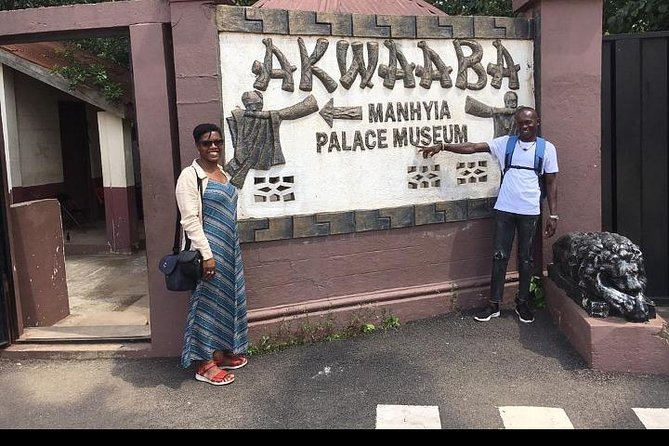
Next up is Manhyia Palace Museum, and this is where the tour starts feeling very Ashanti. The museum is described as modest in size, but it holds a focused collection of historic artifacts, including war talismans and other treasures from the Ashanti Kingdom.
The key detail that makes this stop more than a quick walk-through is the museum’s origin. It was inaugurated in 1995 as part of the Silver Jubilee celebration connected to the ascension of the Golden Stool. That date gives you a lens for why the collection is presented the way it is, and it hints at how the kingdom honors continuity and memory.
You can expect the guide to connect items to roles and meanings, not just list what is behind glass. That is what turns “a museum room” into a story you can follow. You start seeing how power was expressed through symbols, objects, and beliefs, and how those elements traveled from royal context into public remembrance.
If you are the type who likes a good first introduction, this is a strong step. It gives you enough background to understand what you will see later at Prempeh II Jubilee Museum, where the items get even more personal.
Prempeh II Jubilee Museum: Talismans, Royal Emblems, and Brass Gold Weights
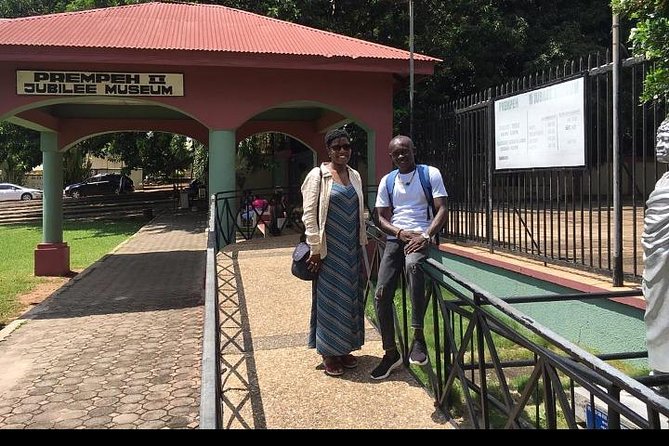
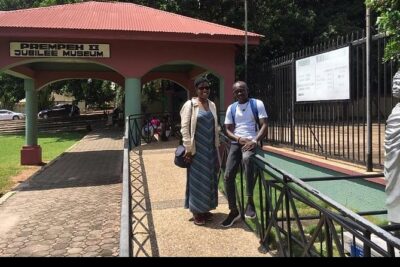
Prempeh II Jubilee Museum is compact, but it is packed with meaning, and the tour includes a personalized explanation with admission. One of the clever touches here is that the museum is designed to resemble an Ashanti chief’s residence, including a front courtyard and walls adorned with traditional carved symbols.
That setting matters for how you perceive the collection. Instead of seeing artifacts arranged like a random assortment, you start to feel like you are inside a world with roles and routines. It is an environment that helps you connect objects to daily life and authority.
The exhibits you will encounter include artifacts associated with Ashanti King Prempeh II. The list is detailed, which is great news for you if you love specifics:
- War attire and ceremonial garments
- Jewelry and royal emblems
- Protective talismans and other spiritual items
- Personal accessories used for bathing and dining
- Furniture and pieces tied to royal life
- Finely crafted brass weights used for measuring gold
That last one is a standout. Brass weights for gold measurement remind you that power and tradition were not only about ceremonies and symbols. They were also tied to trade, value, and the practical systems that kept a kingdom functioning.
The guide’s job here is especially important. Without help, you can miss the point of why certain items sit together. With a guide, you are more likely to notice the connections between protection, prestige, and governance.
Expect this to be the most “hands-on feeling” stop, even though you are still looking at artifacts behind glass. You leave with a better sense of how royal life worked, at least in the way the museum chooses to represent it.
Okomfo Anokye Sword Site: The Legend Explained in a Small Museum
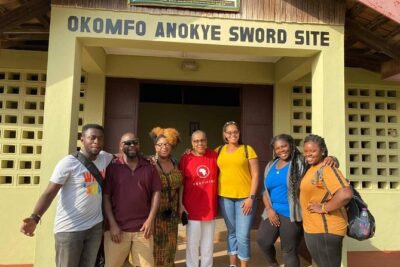
The final cultural stop is the Okomfo Anokye Sword Site, where you will find an on-site small museum. Here, the focus is the location of the immovable sword, driven into the ground by Okomfo Anokye.
This is the kind of stop that can go two ways. If you treat it like a quick photo break, you may leave with a few images and little understanding. If you listen to the guide’s explanation, it becomes a lesson in how belief, authority, and story live in physical places.
Because it is a smaller museum, it also tends to feel less overwhelming than larger galleries. For many people, it is the right ending point, since you shift from collections and artifacts into a landmark that carries the weight of a specific legend.
If you like mythology and spiritual geography, you’ll probably find this a satisfying closer. If your travel style is strictly chronological, it still works, because it adds meaning to what you have already seen in royal context.
City runs in other Ghanaian towns
Kejetia Market Atmosphere and Street-Food Smells: Plan for a Quick Taste
The tour experience is described as more than museum walls. It is meant to reflect the rhythm of Kumasi, with references to local music and the aromas of traditional Ghanaian street food, plus iconic city energy like Kejetia Market.
Here is the practical way to think about it: four museum-style stops take time, so any market and food moments are likely to be more about atmosphere than a long shopping spree. That can be a good thing. Short, guided exposure helps you get your bearings fast, and then you can return later for a deeper wander on your own.
If you have any food sensitivities, this is the kind of day where you should stay mindful. Street food can be a highlight, but you control how adventurous you get. If you want to play it safe, choose vendors that look clean and have high turnover.
If your main goal is history and culture, you will not feel like the market is missing. If your main goal is markets and shopping, you might want to schedule extra time after the tour ends.
Also note where the route finishes. This tour is set to end at Prempeh II Jubilee Museum, which is convenient if you want to keep exploring the area right away.
Price and Timing: Is $60 Good Value?
At $60 per person, this tour is priced for a half-day experience with multiple paid entries baked in. The biggest value factor is that admission tickets are included for every featured stop, so you are not hunting down separate costs mid-day.
The second value factor is the group size cap of 15 travelers. A small group usually means the guide can keep things moving without leaving you behind, and it tends to make Q and A more realistic.
Timing also matters. Starting at 8:00 am gives you a head start on the day. It helps if Kumasi traffic or midday heat slows your walking later. You also finish while the day still has room to pivot, meaning you can add lunch, a market return trip, or a museum you want to revisit.
Finally, the tour is offered with pickup and a mobile ticket, which reduces friction. Those sound like small perks, but they are the difference between a smooth morning and a stressed one, especially in a busy city.
The only real “value question” is your learning style. If you want guided context and you like organized stops, this price feels fair. If you want a long, flexible day with lots of independent roaming, you may want to pair this with extra time.
How the Guide Turns Objects into Real Meaning
One of the standout praised aspects of this experience is the guide’s communication. People describe the guide as speaking great English and being a kind, helpful presence. That matters, because museum learning is only as good as the explanation you get in the moment.
A good guide does not just translate words. They help you see what to notice. In this tour, that is especially important because the collections are not generic. You are looking at war-related equipment, palace artifacts, protective talismans, and royal items that carry context.
When the guide can explain why something exists, you start thinking differently while you look. You stop treating artifacts like decorations and start recognizing them as part of how identity, protection, and authority were expressed.
This kind of guided storytelling is also why the stop order works. You learn conflict context first. Then you shift into royal symbolism and the material culture of leadership. Then you end with the Okomfo Anokye legend tied to a physical site.
If you are traveling solo or with friends who learn at different speeds, a strong guide helps everyone. Even if you only catch half the details, the tour still gives you a clear structure for understanding what you are seeing.
Practical Tips Before You Go (So the Day Feels Easy)
Because this is a steady-paced morning, show up ready for walking. Comfortable shoes are non-negotiable if you want to enjoy it instead of just “get through it.” Bring water, and if you are sensitive to sun, wear a hat or use sunscreen.
For museums, think like a student with a camera. Keep your phone charged, but also take a moment before each stop to decide what you care about most. Do you want more on Ashanti royal items, or do you want the military collections to dominate your attention? Either way is fine, but committing helps.
You will likely appreciate having a plan for your photos. Many artifacts have limited angles or lighting. Instead of snapping everything, focus on a few items that your guide highlights. Your memory will be better, and you will feel like the trip had a theme.
Also, since the meeting and ending points are tied to specific locations, do not plan to wander far off before the start. The tour begins at Manhyia Palace and ends at Prempeh II Jubilee Museum, so you can treat it like a one-direction route.
If you are using public transportation, the tour is listed as near transit, which can help if pickup logistics do not perfectly match your plans. Just keep a buffer in your schedule.
Should You Book This Kumasi City Tour?
I think you should book this tour if you want a short, structured introduction to Kumasi’s Ashanti culture and key historical sites. It is especially good for first-time visitors, for people with limited time, and for anyone who likes museums when they come with explanation and context.
It also fits well if you care about value, because admission is included for the major stops and the group stays small. The 8:00 am start is a bonus if you hate losing your mornings to planning.
You might skip it if your travel style is more about long market wandering, extended downtime, or you want a flexible schedule that does not keep to about an hour per stop. In other words, if you want to linger, this may feel like a sprint.
One last booking reality check: confirmation depends on minimum participant numbers, so I suggest booking sooner rather than later if you are working with tight dates. If plans shift, the tour offers free cancellation up to 24 hours before the start, which gives you a safety net.
FAQ
What is the duration of the Kumasi City Tour?
It runs for approximately 4 hours.
How much does the tour cost?
The price is $60.00 per person.
What time does the tour start?
The start time is 8:00 am.
Does the tour include pickup?
Yes, pickup is offered.
Are admission tickets included?
Yes, admission tickets are included for each of the listed stops.
What is the maximum group size?
The tour has a maximum of 15 travelers.
What is the cancellation policy?
You can cancel for a full refund up to 24 hours before the experience’s start time.
What are the main places visited?
You visit Kumasi Fort Ghana Armed Forces Museum, Manhyia Palace Museum, Prempeh II Jubilee Museum, and the Okomfo Anokye Sword Site.
A Wider Spread of Ghana Tours
- Tour Kumasi City Like a Local
★ 4.5 · 34 reviews - Kumasi City Tour
★ 4.5 · 7 reviews - Lake Bosomtwe Boat Cruisely and Kumasi City Tours
★ 4.5 · 6 reviews - One day tour at Kumasi
★ 5.0 · 6 reviews - Full Day Tour with Traditional Naming Ceremony in Kumasi
★ 5.0 · 4 reviews
More Ghana Tours Out of the Review Pile
- Bonwire Namimg Ceremony and Kente Tourist Center
★ 5.0 · 40 reviews - Tour Kumasi City Like a Local
★ 4.5 · 34 reviews - Traditional naming ceremony For African Diasporas in Kumasi
★ 5.0 · 10 reviews - Kumasi City Tour
★ 4.5 · 7 reviews - Lake Bosomtwe Boat Cruisely and Kumasi City Tours
★ 4.5 · 6 reviews
Deeper into Ashanti
- Bonwire Namimg Ceremony and Kente Tourist Center
★ 5.0 · 40 reviews - Tour Kumasi City Like a Local
★ 4.5 · 34 reviews - Traditional naming ceremony For African Diasporas in Kumasi
★ 5.0 · 10 reviews - Kumasi City Tour
★ 4.5 · 7 reviews - Lake Bosomtwe Boat Cruisely and Kumasi City Tours
★ 4.5 · 6 reviews
Latest Kumasi reviews added here



Ashanti Kingdom & Kumasi Tours, compared.
 ★ 5.0Bonwire Namimg Ceremony and Kente Tourist CenterFrom $18040 reviews
 ★ 4.5Tour Kumasi City Like a LocalFrom $8034 reviews
 ★ 5.0Kumasi Heritage Tours And Naming Ceremony In A DayFrom $25611 reviews
 ★ 5.0Traditional naming ceremony For African Diasporas in KumasiFrom $17510 reviews
 ★ 5.0Full-Day Tour to Ashanti Region, Kumasi and Ghanaian HistoryFrom $2808 reviews
 ★ 4.5Kumasi City TourFrom $517 reviews
 ★ 4.5Lake Bosomtwe Boat Cruisely and Kumasi City ToursFrom $1856 reviews
 ★ 5.0One day tour at KumasiFrom $1306 reviews
Browse the lists this tour appears in