

REVIEW · ACCRA MARKETS & STREET FOOD TOURS
Makola Market Walking Tour
Makola Market can overwhelm fast. This walking tour turns the noise into a clear route through Ghanaian ingredients like palm oil, gari from cassava, giant snails, and edible cow hides. I also like the shopping support from guides such as Ben or Prince, who help you navigate stalls and talk prices. The main drawback: it is a busy place and you will cover plenty of ground.
You start in the food market zone, where your guide points out what you are seeing and what it is used for, from spices to fresh produce. Then the walk expands to cosmetics, jewelry, textiles, pharmaceuticals, groceries, and even electronics, so you get a real sense of what people buy every day. If you have time and energy, you can also reach the Agblobloshie vegetable market and the used clothing area called Broni wawu, also known as bend-down boutique.
Plan on 2 to 3 hours, in a private group with a live English-speaking guide and water included. Pickup and drop-off depend on your selected option around Accra Metropolis and Accra Metropolitan Assembly, and the tour ends back near the meeting area. The goal is practical, you leave with a better feel for how Makola works and how to shop with less stress.
In This Review
- Key highlights worth knowing before you go
- Makola Market feels like Accra when you have a guide
- The route starts in the food market, where Ghanaian shopping begins
- What to do if you want to shop for ingredients
- After food, Makola becomes fashion, health, and daily trade
- Cosmetics, textiles, and jewelry, what the guide helps you notice
- Pharmaceuticals and electronics: practical, not touristy
- Pushing deeper: artisan and timber markets for real building supplies
- Why this stop is worth it
- Agblobloshie vegetables and Broni wawu used clothing
- How to shop in used clothing without getting overwhelmed
- Price and value: what $58 covers in a real market setting
- How to get the best results from your guide (Ben and Prince style)
- What you should prepare before the first stop
- Practical tips that matter in Makola Market
- Who this Makola Market Walking Tour is best for
- Should you book the Makola Market Walking Tour?
- FAQ
- How long is the Makola Market Walking Tour?
- Is there a live guide, and what language is it in?
- What is included in the tour price?
- Where does the tour start and end?
- Is this tour a private group?
- What cancellation options are available?
Key highlights worth knowing before you go
- Food market orientation that makes the whole market make sense, from palm oils to gari and local spices
- A guided route through multiple sections, cosmetics, textiles, jewelry, pharmaceuticals, groceries, electronics
- Price help when vendors push high numbers, with guides stepping in to reduce friction
- Optional deeper stops like the artisan and timber market for building supplies
- Agblobloshie vegetables and Broni wawu used clothing, with context so you know what you are looking at
- English live guide plus water, in a private group setting
Still hungry after Makola? These market walks cover the rest
- Makola Market Walking Tour★ 5.0 · 14 reviews
- Private Accra Market Tour★ 5.0 · 10 reviews
- Accra Street Food Tour: Makola Market Tour With Full Lunch★ 4.1 · 9 reviews
- Accra Street Food Tour: Osu Night Market Tour Experience★ 4.7 · 8 reviews
Makola Market feels like Accra when you have a guide
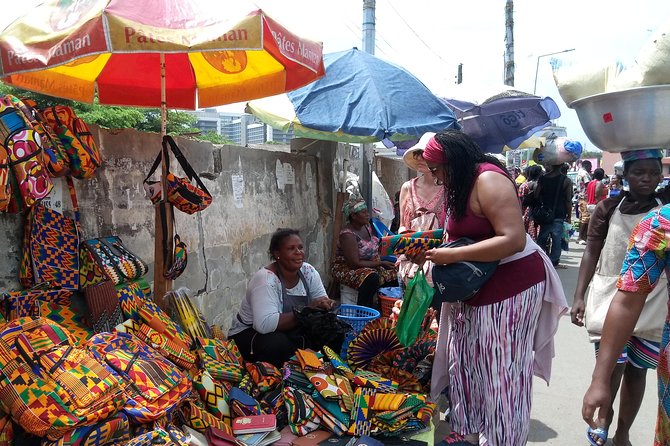
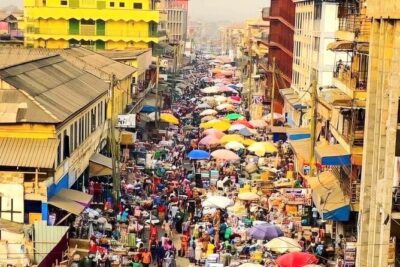
Makola Market is huge in a way that is hard to picture until you are there. Without direction, it is easy to get turned around, miss entire sections, or spend more than you meant to. With a guide, you get a route you can follow and a translator for what the stalls represent.
I like that this tour is built around how the market is organized. You do not just walk past things and take photos. You learn why certain foods, goods, and services are grouped where they are, and what locals look for in those aisles.
The private-group setup matters too. A walk through a market works best when the pace fits your feet and your comfort level. If you want to ask questions, you get time to ask them, not just a rush through the crowd.
The route starts in the food market, where Ghanaian shopping begins
The best part of Makola is also the first part: the food market. Your guide typically begins with the sections that explain Ghanaian cooking and everyday eating, so the rest of the market feels less random as you move along.
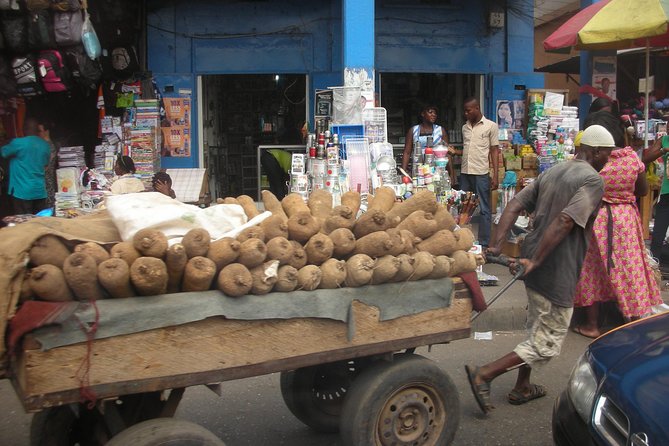
Expect to get specific, visual explanations of ingredients you would otherwise never know how to find. You might see meats like bush meat and fishes, giant snails, and edible cow hides. You might also learn about oils from the palm tree, including both the red and white oils that come from the same source.
Then comes the everyday staples that show up in Ghanaian kitchens. Gari made from cassava is one example, along with local spices, fruits, and vegetables. The point is not to memorize a grocery list, it is to understand what is being sold and why people buy those items together.
What to do if you want to shop for ingredients
If you want spices, produce, or packaged items, this is the moment to get your bearings. Go in with at least one simple goal, like buying a spice mix, trying a snack, or picking out a food ingredient you can bring home.
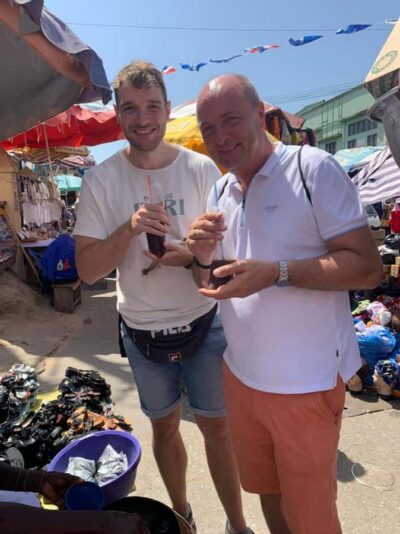
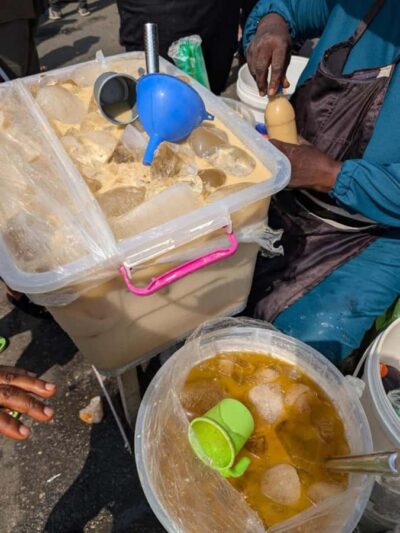
One traveler shared how the guide Ben helped them try Agneli kaklo and tiger nuts during the experience. You should not assume you will automatically get food tastings on every departure, but it does show what your guide can often help coordinate if you ask about local snacks you can sample safely.
After food, Makola becomes fashion, health, and daily trade
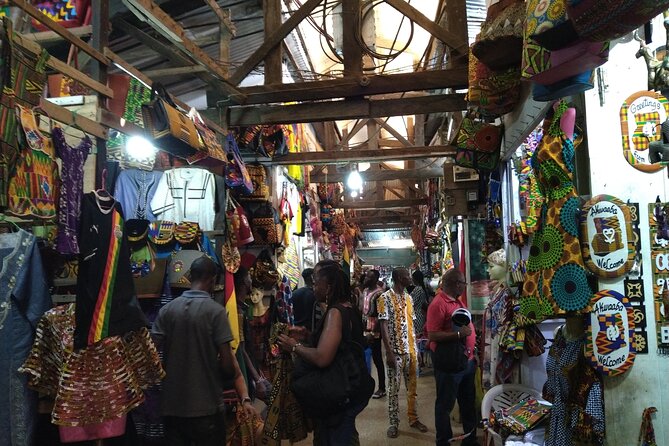
Once you have the food section context, the tour keeps moving across the market like a guided map. You will typically pass through cosmetic and beauty areas, jewelry stalls, and textiles. You may also see a pharmaceutical section, plus groceries and electronics.
This mix is valuable because it reflects real market life. People do not only come to Makola for one thing. They come to solve multiple errands in one place, and your guide helps you understand how those needs show up on the ground.
Cosmetics, textiles, and jewelry, what the guide helps you notice
In these sections, the guide is doing more than pointing at items. They help you read the stall layout and learn what each product category usually supports, whether that is personal care, clothing and fabric purchases, or adornment.
Textiles in particular can be a rabbit hole if you wander alone. With a guide, you can ask what people buy for specific uses and what is worth comparing between sellers, so you avoid overspending or missing better options.
Jewelry and cosmetics can also involve negotiation and different pricing strategies, especially if you are new to the market. One review highlighted that the guide Prince helped navigate the market and even supported price talk when vendors inflated numbers. That kind of support can make a big difference to your budget and your patience.
On foot, elsewhere in Ghana
Pharmaceuticals and electronics: practical, not touristy
The presence of a pharmaceutical section and electronics is easy to overlook if you are only chasing souvenirs. This tour helps you notice that the market covers functional needs, not just crafts.
You may find yourself looking at everyday electronics and consumer goods in a way that feels surprisingly normal once your guide explains what you are seeing. It is a reminder that Makola is not staging Ghana for visitors. It is Ghana doing its daily business.
Pushing deeper: artisan and timber markets for real building supplies
If you have the energy to continue beyond the main aisles, your route can extend to the furthest sections, including the artisan and timber market. This area has a different feel from the food and fashion lanes.
The artisan and timber market is known for customers who are there for building and repair supplies. Your guide can help you understand how the market serves tradespeople and homeowners who need materials, tools, or skilled labor support.
Why this stop is worth it
If you only want to shop for small items, you might skip these sections. But if you care about how cities run, this is the part that explains the supply chain in a hands-on way. You start to see how Makola supports construction, maintenance, and craft work, not just buying for personal consumption.
Also, walking farther can help you see that the market is more than a set of photo stops. It is a working system with different zones that serve different purposes.
Agblobloshie vegetables and Broni wawu used clothing
Two of the most distinctive add-ons are the Agblobloshie vegetable market and the used clothing line known as Broni wawu, also called bend-down boutique.
Agblobloshie is described as the largest vegetable market in Ghana, and it is a great option if you want to focus on produce and the way sellers organize vegetables. Even if you are not buying much, it helps you see the scale of food trade in Accra.
The Broni wawu area is different. The name Broni wawu, also noted as white man died, is part of why it stands out in local conversation. Your guide can show you how the used clothing line is set up and what kinds of items you are likely to see, from underwear to shirts and shoes.
How to shop in used clothing without getting overwhelmed
Used clothing sections can feel chaotic if you do not know what to look for. The best way to handle it is to set a plan before you start browsing. Decide what you want, like shoes in your size or a specific type of shirt, and stick to that list.
Your guide Ben has been praised for helping find things a person needed and for finding a good price. That kind of help is especially useful when there are many similar items and you need help comparing quickly.
Also, if you are thinking about souvenirs, remember that used items vary widely in what you find. Go slowly, check details carefully, and ask your guide to help you approach sellers with confidence.
Price and value: what $58 covers in a real market setting
At $58 per person for 2 to 3 hours, this tour is not the cheapest thing you can do in Accra. But in a market like Makola, value comes from time and guidance, not just ticking boxes.
You are paying for a local guide with market experience, plus water. The guide helps you reduce wasted time, find the right sections faster, and avoid common beginner mistakes like browsing in the wrong lane or getting lost when the crowd thickens.
The reviews also point to another value layer: guides who step in with navigation and shopping talk. Prince is noted for helping negotiate when pricing felt inflated, and Ben is noted for getting good prices and finding specific items people needed. That support can pay for itself quickly if you end up buying even one or two worthwhile things.
A practical note on budgeting: markets can bring out impulse buys. If you go in with a clear list, you make the $58 feel smaller because the guide is helping you execute your plan, not just wander.
How to get the best results from your guide (Ben and Prince style)
The biggest upgrade you get on this tour is not just English explanations. It is confidence. Your guide helps you walk into a crowded environment and interact with locals in a way that feels respectful and less stressful.
One traveler described Prince as kind and attentive, including driving past Jubilee House when they had extra time in a combined day. That kind of flexibility shows that a strong guide thinks beyond the exact walking route and tries to make your day flow.
Another traveler described Ben as helpful with finding needed items, getting a good price, and even going above and beyond to help with a practical problem like locating a replacement for a broken suitcase, which took extra time. That does not mean every group will have the same extra help, but it does suggest the guide approach is human, not robotic.
What you should prepare before the first stop
To get the most from the guide, show up ready to ask. Have two or three questions you actually care about, like what a certain spice is used for, what is worth comparing in textiles, or where sellers typically price differently.
Also, come with a rough shopping goal. You do not need a spreadsheet, just pick what matters, food ingredients, specific fabric, a jewelry piece, electronics, or used clothing items.
When you have that direction, your guide can move you efficiently from section to section and help you avoid the endless looking spiral.
Practical tips that matter in Makola Market
Makola is a walking tour, so comfort changes everything. Wear shoes that can handle uneven ground and crowds, and plan for sun and heat. Bring light layers if you get warm easily.
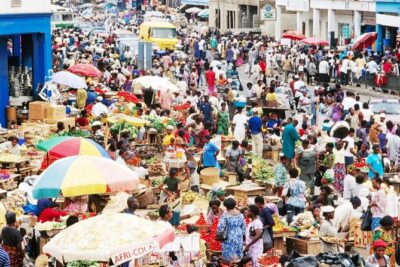
Bring a calm mindset too. Even with a guide, the market will feel intense at times. You are looking at hundreds of transactions happening in real time, not a controlled shopping mall experience.
If you want to photograph, ask your guide how to approach it politely. Markets operate on human trust and eye contact, so a quick check can prevent awkward moments.
Finally, take breaks when you need them. The tour is 2 to 3 hours, and you do not need to prove anything by pushing through fatigue. Tell your guide if you want a slower pace or if you want to skip optional areas like the timber and artisan market.
Who this Makola Market Walking Tour is best for
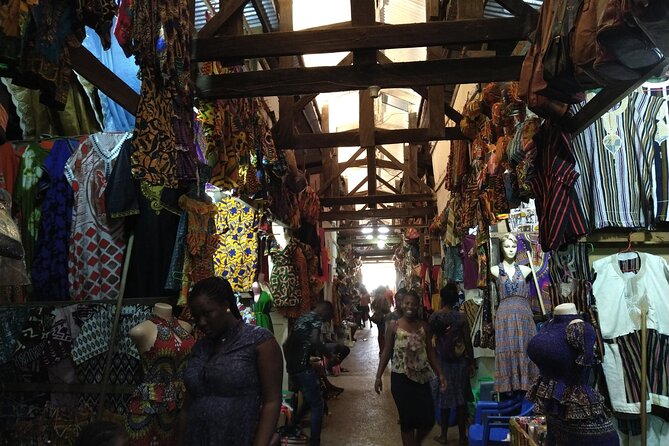
This tour is a great fit if you want Ghanaian daily life, not just landmarks. If you like food markets, shopping streets, and learning how people actually source ingredients, you will probably enjoy the structure.
It also works well if you want help negotiating and navigating. People who have never been to Makola before often feel better when someone local guides them through the busiest sections and explains what each area is for.
If you only want quiet sightseeing, this might not be your ideal match. This is a market experience, and the energy stays high. The benefit is authenticity, the tradeoff is you cannot expect a relaxed pace.
Should you book the Makola Market Walking Tour?
I think this is worth booking if you want to shop with confidence and learn as you walk. The route covers real categories of life, food ingredients, cosmetics, textiles, jewelry, pharmaceuticals, groceries, electronics, plus optional deeper stops like Agblobloshie vegetables and Broni wawu used clothing.
You should think twice if you hate crowds or you prefer highly structured, low-walking tours. In that case, Makola could feel more stressful than fun, even with a guide.
If you are on the fence, here is the simplest test: if you like markets and want local help to find the right sections and talk prices, book it. If your perfect day is quiet and slow, choose something else.
FAQ
How long is the Makola Market Walking Tour?
The tour lasts about 2 to 3 hours.
Is there a live guide, and what language is it in?
Yes, it includes a live tour guide, and the tour is available in English.
What is included in the tour price?
Water is included, along with guiding services from your local expert.
Where does the tour start and end?
Pickup depends on the selected option, and the tour ends by returning you to the place of meeting. Drop-off locations are in Accra Metropolis and Accra Metropolitan Assembly.
Is this tour a private group?
Yes, the tour is offered as a private group.
What cancellation options are available?
You can cancel up to 24 hours in advance for a full refund. The activity also offers reserve now, pay later to keep plans flexible.
A Wider Spread of Ghana Tours
- The Cape Coast Day Tour
★ 5.0 · 525 reviews - The Cape Coast Tour
★ 5.0 · 177 reviews - From Accra: Cape Coast, Elmina Castle & Kakum Park Day Tour
★ 4.6 · 144 reviews - Accra Detailed City Tour
★ 4.5 · 118 reviews - Accra Guided City Tour Experience
★ 4.7 · 88 reviews
More Ghana Tours Out of the Review Pile
- The Cape Coast Day Tour
★ 5.0 · 525 reviews - Experience the Beauty, History and the Culture Of Accra in a Day
★ 5.0 · 323 reviews - The Cape Coast Tour
★ 5.0 · 177 reviews - From Accra: Cape Coast, Elmina Castle & Kakum Park Day Tour
★ 4.6 · 144 reviews - Accra Detailed City Tour
★ 4.5 · 118 reviews
More Market Days in Accra
- Makola Market Walking Tour
★ 5.0 · 14 reviews - Private Accra Market Tour
★ 5.0 · 10 reviews - Accra Street Food Tour: Makola Market Tour With Full Lunch
★ 4.1 · 9 reviews - Accra Street Food Tour: Osu Night Market Tour Experience
★ 4.7 · 8 reviews - Accra, Ghana Guided Local Market Tour
★ 5.0 · 6 reviews
Latest Accra reviews added here





Accra Markets & Street Food Tours, compared.
 ★ 5.0Makola Market Walking TourFrom $4114 reviews
 ★ 5.0Private Accra Market TourFrom $10010 reviews
 ★ 4.1Accra Street Food Tour: Makola Market Tour With Full LunchFrom $749 reviews
 ★ 4.7Accra Street Food Tour: Osu Night Market Tour ExperienceFrom $788 reviews
 ★ 5.0Accra, Ghana Guided Local Market TourFrom $856 reviews
 ★ 4.5Accra Markets TourFrom $1355 reviews
Browse the lists this tour appears in