
REVIEW · ACCRA SIGHTSEEING TOURS
Accra Detailed City Tour
Accra can feel like a lot at once. This tour helps you get your bearings fast, then adds culture with stops that explain why the city looks the way it does. I love how the pacing gives you time to ask questions with your driver guide, and you still end with a proper break at the beach, not just another photo stop. I also like that the day mixes big landmarks with everyday places like Makola Market. One possible drawback: traffic and day-of closures can change how long you spend at each site, and transport may switch to air-conditioned ride services to keep things moving.
You’ll get two big wins right away. First, the tour starts with strong grounding at the National Museum of Ghana, where you can connect artifacts to modern identity. Second, you get real street energy at Makola Market and the nearby craft market areas, with time to shop and bargain. If you dislike crowds, heat, or bargaining culture, you’ll want to plan for sun-smart breaks and a more relaxed mindset.
The only real consideration is logistics. Accra is busy, and some parts of the route rely on traffic strategy, so you might use Uber, Yango, or local air-conditioned taxis for certain legs instead of one continuous private car. If you were expecting a fixed, single-vehicle setup the whole time, read that carefully before you book.
In This Review
- Key highlights in plain terms
- Why this Accra city tour works as a first-day plan
- National Museum of Ghana: start with the why behind the what
- Makola Market: the busy, joyful Accra you can actually talk to
- Independence Square: architecture as national memory
- Centre for National Culture: souvenirs with real local flavor
- Jamestown walking tour: colonial-era forts and old neighborhood texture
- W.E.B. Du Bois Center: Pan-African ideas, close up
- Kwame Nkrumah Memorial Park: Ghana’s first President through lived memory
- Labadi Pleasure Beach: the payoff end-stop for a hot day
- Transport and timing: how the tour stays on schedule in Accra traffic
- What the guide quality looks like in real life
- Value for money: what $80 gets you beyond the drive
- Who should book this tour, and who should think twice
- Should you book? My straight recommendation
- FAQ
- How long is the Accra Detailed City Tour?
- What’s included in the price?
- Where does the tour start and end?
- Is the tour private?
- Do you provide pickup?
- Are there tickets to pay during the tour?
- Will I have help getting around traffic?
- Is the tour suitable for most people?
- What hours does the experience operate?
Key highlights in plain terms
- Museum context that turns monuments into stories at the National Museum of Ghana and the W.E.B. Du Bois Center
- Market time that feels local, not staged, especially at Makola Market
- Old Accra in Jamestown, including the colonial forts of James Fort and Ussher Fort
- Pan-African memory stop at the Kwame Nkrumah Memorial Park
- A beach finish with food and downtime at Labadi Pleasure Beach
Other ways to see Accra, from half-day loops to full-day drives
- Experience the Beauty, History and the Culture Of Accra in a Day★ 5.0 · 323 reviews
- Accra Guided City Tour Experience★ 4.7 · 88 reviews
- Accra Guided City Tour Experience★ 5.0 · 76 reviews
- Know Ghana in 4 hrs – Accra City Tour★ 4.5 · 47 reviews
Why this Accra city tour works as a first-day plan
If it’s your first time in Accra, you need two things: orientation and meaning. This tour gives both. You’ll hit major landmarks that you can easily point to on a map, then you’ll pair them with places that explain the country behind the photos. The best part is that your guide is there in real time, so you are not just watching a slideshow in the sun.
I also like that the trip has a built-in rhythm. It moves from indoor history to outdoor markets, then into older neighborhoods, then ends with Labadi Pleasure Beach for a breather. That structure matters because Accra can wear you down fast with heat and crowds. By the end, you can cool off without feeling like you wasted your day.
National Museum of Ghana: start with the why behind the what
Your day begins at the National Museum of Ghana, the largest and oldest of the six museums managed by the Ghana Museums and Monuments Board. It opened on March 5, 1957, and that date matters because it ties the museum to Ghana’s early national identity.
What you’ll notice quickly is how wide the museum’s range is. In archaeology, there are objects spanning from the Stone Age to more recent historical periods. In the ethnography section, you can see chief’s regalia, traditional musical instruments, gold weights, beads, textiles, stools, and pottery. If you like learning through objects rather than lectures, this is a strong start.
A useful detail for your planning: the permanent displays include examples that were acquired through exchange with other African countries. That helps you connect Ghana’s story to wider regional history, not just a single-country timeline.
Timing tip: plan to spend at least the full hour. The museum is not a “hit the highlights and leave” kind of place unless you already know exactly what you want to find.
Makola Market: the busy, joyful Accra you can actually talk to
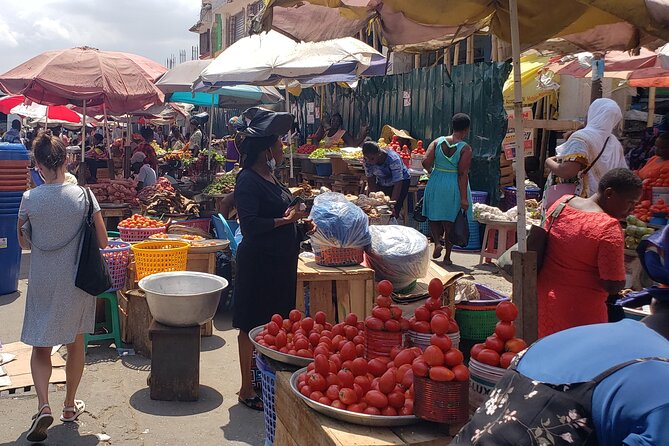
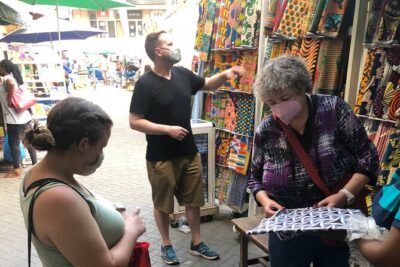
Next comes Makola Market, Accra’s central shopping district and one of the city’s most famous market zones. This stop is about more than shopping. It’s about watching the daily rhythm of the city, especially the women traders who drive a lot of the energy.
You’ll get time to browse and take pictures while you move through indoor and outdoor sections. It’s also a chance to practice bargaining, because craft and everyday goods here are part of the culture of commerce.
What I like about this stop is that it gives you permission to slow down. Markets can make people rush. Here, the goal is to stand close, ask questions, and buy what you actually want to take home. Just keep in mind that you will be in a real crowd, so it helps to wear comfortable shoes and expect some hustling.
If you hate negotiating, bring a light mood and set your own budget before you get pulled into conversations.
Independence Square: architecture as national memory

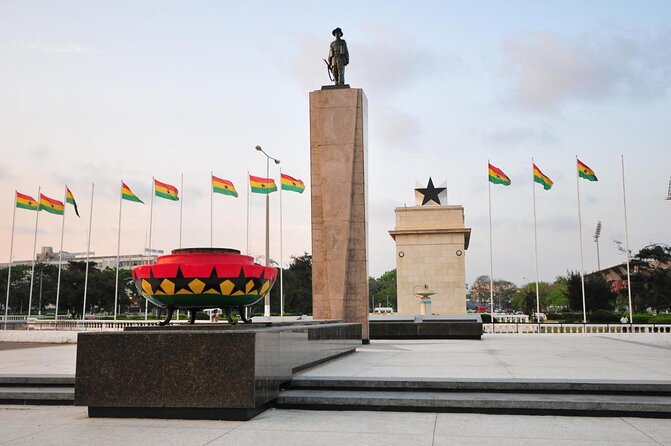
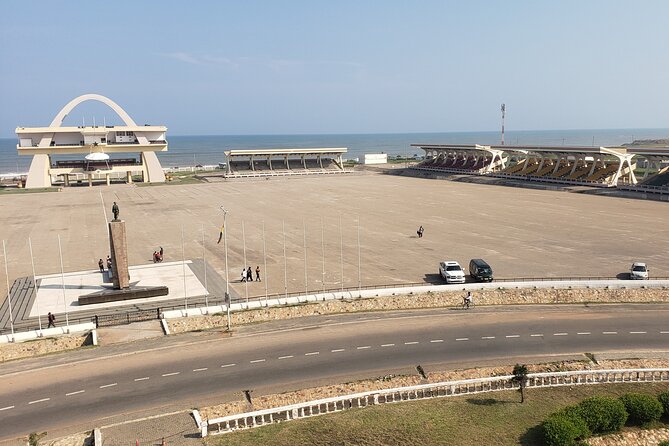
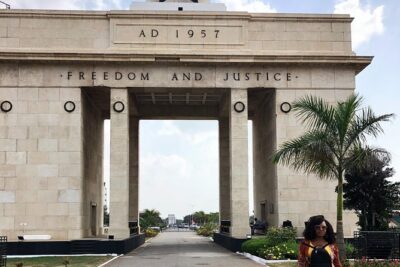
Then you move to Independence Square, anchored by the Independence Arch and connected monuments tied to Ghana’s independence struggle. This is where the city’s political history shows up as stone, scale, and layout.
The main idea here is simple: you are not just visiting a monument. You are standing in a space designed to make independence feel public and permanent, with nearby elements like the Black Star Gate and the Liberation Day Monument contributing to the overall story.
Photo note: this stop is short, so if there is a detail you want to photograph, speak up early. Your guide can help you prioritize angles that work in the light and help you avoid getting stuck in crowds.
Centre for National Culture: souvenirs with real local flavor
After the monuments, you head to the Centre for National Culture, often described as the largest craft market in Ghana. This is where your shopping time becomes more structured and a bit less chaotic than Makola.
You’ll have time to shop among the stalls and bargain for souvenirs. There is also an added cultural touch here, with the possibility of extra drumming and local instrumental lessons with people at the site.
This stop is a good middle ground. It’s still hands-on, still social, and still “Ghana,” but it tends to feel more craft-focused than market-focused. If you want textiles, drums, or giftable items, this is where you can compare options.
Bargaining sanity rule: if you are unsure what a fair price looks like, aim to bargain slowly and ask what something is made of. Material and method help you judge value better than a quick guess.
City runs in other Ghanaian towns
Jamestown walking tour: colonial-era forts and old neighborhood texture
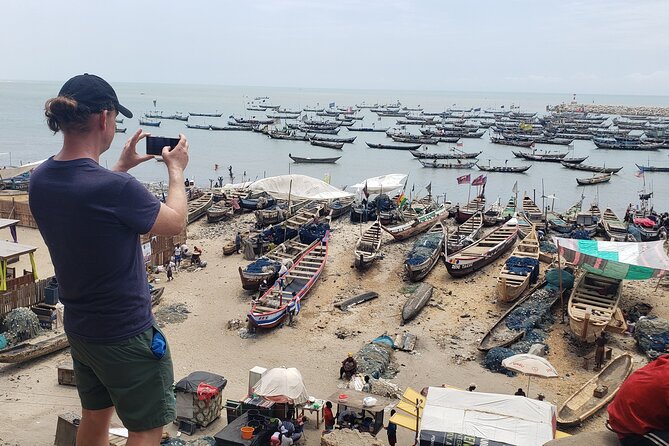
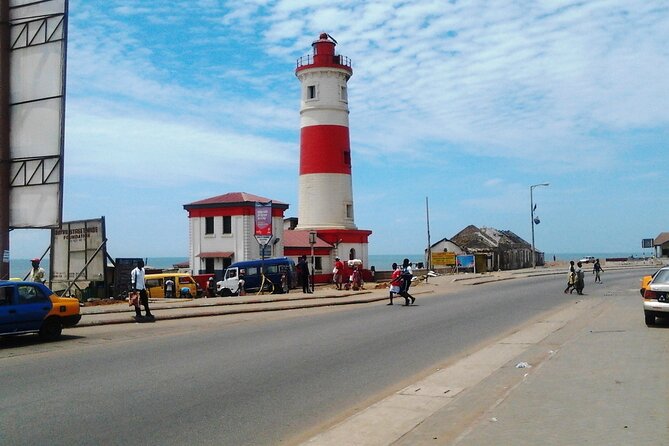
One of the most memorable parts for many people is the walking tour of historic Jamestown, one of Accra’s oldest districts. You’ll explore the area on foot, then see the two major colonial-era forts in old Accra: James Fort and Ussher Fort.
This is where the tour turns from “places on a map” to “place you can feel.” Even without going deep into every detail, the forts give you a physical sense of how coastal defense and European presence shaped parts of the city.
What to watch for: a walking segment means more time outside. Wear something breathable, bring water, and expect sun. If you want the most out of it, slow down and look at how the buildings and coastline connect.
W.E.B. Du Bois Center: Pan-African ideas, close up
Next is the W.E.B. Du Bois Center, the home, library, and final resting place of American-born social justice crusader William Edward Burghardt Du Bois. This is one of those stops where you get the sense of a life and work being preserved, not just a name placed on a wall.
The center includes a museum with memorabilia and Du Bois’s personal library. It also has an open-air theatre where intellectual seminars, lectures, and workshops are held, along with cultural events.
If you care about ideas, this stop gives you a direct link between history and modern discussions about justice and identity. It’s not only about Ghana. It’s about transatlantic history and the networks of thought that influenced Pan-Africanism.
Pacing tip: keep your questions ready. A good guide can connect what you’re seeing to the bigger theme of Ghana’s role in wider African and Black global history.
Kwame Nkrumah Memorial Park: Ghana’s first President through lived memory
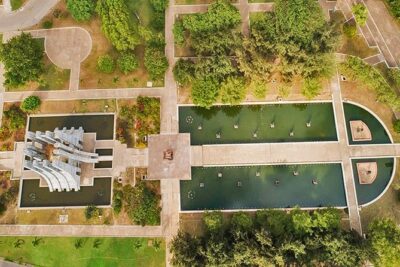
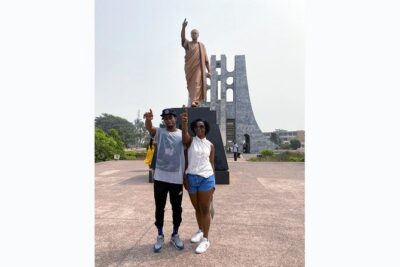
After Du Bois, you go to the Kwame Nkrumah Memorial Park. This is dedicated to Ghana’s first Pan-African Prime Minister and President, Dr. Kwame Nkrumah, who lived from September 21, 1909 to April 27, 1972.
Memorial parks can sometimes feel like they are rushing you through symbolism. Here, the value is that you connect person to movement. Nkrumah is not presented only as a political figure. The site frames him as a Pan-African thinker associated with broader liberation and unity themes.
It is a strong stop for anyone who wants to understand why Ghana’s independence matters beyond its borders.
Labadi Pleasure Beach: the payoff end-stop for a hot day
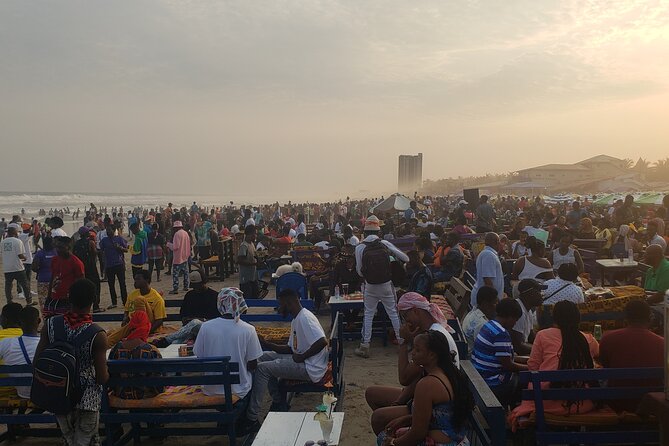
Finally, the tour ends at Labadi Pleasure Beach, also known as La Pleasure Beach. It’s described as the busiest beach on Ghana’s coast and a place maintained locally, which gives it a lived-in feel rather than a dead, resort-only vibe.
This is your cooldown moment. After museums, markets, and walking, you get to sit, relax, and watch the beach scene. The area also offers different kinds of local, continental, and international foods and drinks, so you can turn the ending into an easy meal plan.
Best use of this stop: treat it as your decompression time. Do not rush for photos. Sit for a bit, let the noise settle, then decide what you actually want to eat.
Transport and timing: how the tour stays on schedule in Accra traffic
Here’s the practical reality. Accra is congested. Even the best plans can hit traffic. The tour addresses this by using alternative transportation options like Uber, Yango, or local taxi services when needed to navigate efficiently, and the ride options mentioned are air-conditioned.
I think this approach can be a plus if you care about time. Instead of getting stuck waiting for one long route to clear, the guide can adjust and keep the day moving across the city. Still, it may be a mismatch if you were expecting a single, continuous private vehicle the entire time.
Also, some stops may be affected by closures on certain days. If you’re booking with tight timing, it helps to plan your must-see priorities, then keep a flexible attitude for the rest.
What the guide quality looks like in real life
One clear pattern from guide feedback is that punctuality, responsiveness, and safety come up again and again. Names that show up often include Clinton and Alex, and both are described as attentive and able to adjust when conditions change.
That matters because a city tour lives or dies on small moments. When your guide helps you bargain in the right way, or explains what you are looking at without taking over the whole conversation, you get the value of the tour instead of just transportation.
If you can, pick a guide day that matches your pace. Ask for tips before you hit the markets, and ask what to prioritize at any stop that feels shorter than you hoped.
Value for money: what $80 gets you beyond the drive
At about $80 per person, the value here is the mix of paid entry points plus guided context. Several stops include admission tickets in the tour structure, which reduces the hassle of paying separately and helps you budget.
The other value is less measurable. You’re not spending your first day in Accra figuring out routes between far-flung parts of the city. You get a plan with enough variety to learn something, shop something, and still leave with energy intact.
Also, the tour is described as private for your group. That usually means you can move at a pace that fits you rather than being boxed into a fixed departure rhythm.
Who should book this tour, and who should think twice
This tour is a great fit if you want a balanced Accra intro: history, culture, everyday city life, and a real end-stop at the beach. It also works well if you enjoy guided context and want help asking questions without having to research every site on your own.
Think twice if you:
- Need a single, uninterrupted vehicle for every leg and strongly prefer one specific transport arrangement
- Dislike walking in heat or crowds, especially during market and Jamestown sections
- Want a super slow, fully in-depth museum day with no movement
Should you book? My straight recommendation
If your goal is a smart first-day tour that covers major Accra highlights while giving you time to ask questions, I would book it. You get a solid mix: National Museum of Ghana for context, Makola Market and the Centre for National Culture for shopping and local culture, Jamestown forts for old Accra atmosphere, Du Bois and Nkrumah for deeper meaning, then Labadi Beach to finish without feeling stranded.
If you are sensitive to the transport model or day-of changes, message the operator before you go and confirm how they plan to handle traffic for your specific day. Otherwise, go in with comfortable shoes and a flexible mindset, and you’ll likely leave with a much clearer sense of Accra than you would on your own.
—
FAQ
How long is the Accra Detailed City Tour?
The tour runs about 3 to 6 hours.
What’s included in the price?
Admission tickets are included for the listed stops, and the tour includes local guidance, with pickup offered.
Where does the tour start and end?
It starts at Accra Mall, Plot C11 Tetteh Quarshie Interchange, Spintex Rd, Accra, Ghana, and it ends back at the meeting point.
Is the tour private?
Yes. It is private, meaning only your group participates.
Do you provide pickup?
Pickup is offered, and the day returns you to the meeting point.
Are there tickets to pay during the tour?
Admission tickets are included for the stops listed in the tour plan.
Will I have help getting around traffic?
The tour may use alternative transportation such as Uber, Yango, or local taxi services to navigate congested streets efficiently, and these options are described as air-conditioned.
Is the tour suitable for most people?
Most travelers can participate. Service animals are allowed.
What hours does the experience operate?
It lists operating hours from Monday to Saturday, 9:30 AM to 11:30 PM.
A Wider Spread of Ghana Tours
- The Cape Coast Day Tour
★ 5.0 · 525 reviews - The Cape Coast Tour
★ 5.0 · 177 reviews - From Accra: Cape Coast, Elmina Castle & Kakum Park Day Tour
★ 4.6 · 144 reviews - Accra Guided City Tour Experience
★ 4.7 · 88 reviews - Accra Guided City Tour Experience
★ 5.0 · 76 reviews
More Ghana Tours Out of the Review Pile
- The Cape Coast Day Tour
★ 5.0 · 525 reviews - Experience the Beauty, History and the Culture Of Accra in a Day
★ 5.0 · 323 reviews - The Cape Coast Tour
★ 5.0 · 177 reviews - From Accra: Cape Coast, Elmina Castle & Kakum Park Day Tour
★ 4.6 · 144 reviews - Accra Guided City Tour Experience
★ 4.7 · 88 reviews
Seeing Accra Another Way
- Experience the Beauty, History and the Culture Of Accra in a Day
★ 5.0 · 323 reviews - Accra Guided City Tour Experience
★ 4.7 · 88 reviews - Accra Guided City Tour Experience
★ 5.0 · 76 reviews - Know Ghana in 4 hrs – Accra City Tour
★ 4.5 · 47 reviews - Accra: Guided City Tour with Lunch
★ 4.5 · 40 reviews
Latest Accra reviews added here





Accra Sightseeing Tours, compared.
 ★ 5.0Experience the Beauty, History and the Culture Of Accra in a DayFrom $80323 reviews
 ★ 4.7Accra Guided City Tour ExperienceFrom $4588 reviews
★ 5.0Accra Guided City Tour ExperienceFrom $7076 reviews
★ 4.7Accra Guided City Tour ExperienceFrom $4588 reviews
★ 5.0Accra Guided City Tour ExperienceFrom $7076 reviews
 ★ 4.5Know Ghana in 4 hrs – Accra City TourFrom $10047 reviews
 ★ 4.5Guided City Tour with LunchFrom $10640 reviews
 ★ 4.5Escape Accra City to Aburi Gardens and Tetteh Quarshie Cocoa FarmsFrom $17032 reviews
 ★ 4.7ACCRA GUIDED CITY TOUR, GHANAFrom $13029 reviews
 ★ 5.0Full-Day Private Culture and History Tour of AccraFrom $8523 reviews
Browse the lists this tour appears in