
REVIEW · OVERNIGHT & MULTI-DAY TRIPS
Cultural Tour Of Ghana And South Africa 12 Days
One of the toughest days to imagine, then one of the easiest days to plan. This Cultural Tour of Ghana and South Africa strings together big, meaningful stops: UNESCO sites in Cape Coast and Elmina plus Table Mountain and Robben Island. I especially like that you get both the head and the feet kind of travel, history-heavy mornings paired with guided time outdoors. I also like the small-group feel, the private-vehicle setup, and the hands-on help that makes arrivals and in-between days feel manageable. One possible drawback to plan for up front is that the emotional weight in Ghana is real, so pace yourself and give your guide your questions.
What makes the trip work is the way it moves like a story. You start in Accra with Pan-African ideas, follow the thread down to the castles on the coast, then fly to South Africa to trace apartheid history through Soweto and beyond. In Ghana, the team names show up again and again in the feedback, with guides like Elvis and Edith, plus careful drivers such as Michael and Joseph, praised for patience and clear explanations. If that matters to you, you are in the right place, because this is a guide-led journey, not a self-guided buffet.
In This Review
- Key highlights that make this tour worth your time
- Accra to Cape Coast: grounding yourself in Ghana’s story
- Cape Coast and Elmina UNESCO slave castles, handled with care
- Johannesburg and Soweto: reading apartheid through places that still show damage
- Pilanesberg Big Five safari plus Lesedi Cultural Village nights
- Cape Town near the Waterfront: Table Mountain, coast roads, and winelands
- Robben Island and township tours in Cape Town, plus breathing room
- Price and value: what $8,695 really buys you
- Who should book, and what to prepare
- Should you book this Ghana and South Africa cultural tour?
- FAQ
- Are airport transfers included?
- Are admission tickets included for the listed sights?
- Are flights included in the price?
- What meals are included?
- How large is the group?
- Does the tour include help with visas?
- What time does the tour start and where does it end?
Key highlights that make this tour worth your time
- Accra history that actually connects, from the W.E.B. Du Bois Centre to the Kwame Nkrumah Memorial Park upgrades
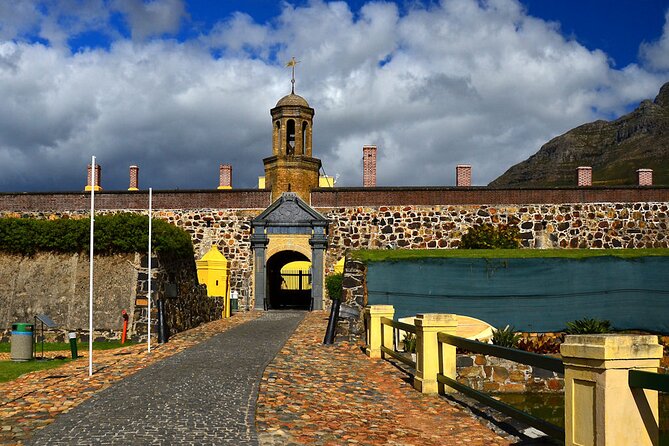
- Cape Coast and Elmina UNESCO stops, including Cape Coast Castle’s Door of No Return and Elmina Slave Castle (built in 1482)
- The fiankra Return to the Homeland ceremony, designed to explain how people were taken from home
- Pilanesberg safari with Big Five odds, plus a late-afternoon flow into Lesedi Cultural Village
- Cape Town, done the practical way, with Table Mountain, Robben Island, and a township tour built around real communities
Longer routes through Ghana, two nights and upward
- 10 Days Trip to Cape Coast and Elmina Castles from Accra★ 5.0 · 31 reviews
- 10 Days Ghana Cultural and Heritage Trip★ 5.0 · 31 reviews
- Explore Ghana Multi Day Tour★ 5.0 · 29 reviews
- Ghana City 2-day Tour★ 5.0 · 21 reviews
Accra to Cape Coast: grounding yourself in Ghana’s story
Your trip starts at Kotoka International Airport in Accra, where you get met and moved to your hotel in a private air-conditioned vehicle. That first transfer sounds basic, but it matters. You arrive tired, then you get checked in, briefed, and set up for the pace ahead. The plan also keeps you from wasting your first day figuring out directions and transit.
Day 1 places you at the Movenpick Ambassador Hotel. It’s a solid base for an arrival night because it gives you a calm landing before cultural days kick in. Your guide stays with you through your stay, which is a huge deal in a history-focused itinerary. You are not repeating your “where am I from, what do I know already” speech every time the group changes.
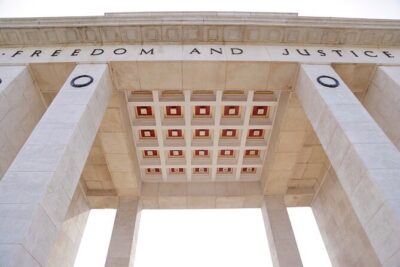
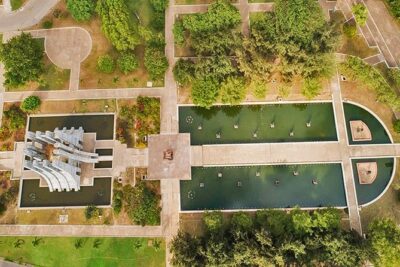
Day 2 is Accra in an organized sweep. You visit the W.E.B. Du Bois Centre, which sets a clear intellectual tone for the trip. Then you pass by Flagstaff House, the president’s residence, before moving to the newly upgraded Kwame Nkrumah Memorial Park. The park now includes features like a library, conference center, synchronized fountain, mini-amphitheater, and picnic area. That combination is useful. You are not only reading about Ghana’s leadership, you also see how modern civic spaces are built around ideas.
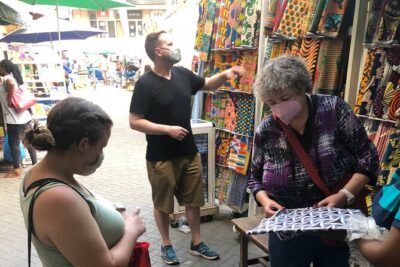
Next comes the Accra Arts & Crafts Centre. This is your practical break for hands-on culture. You can browse and bargain for items like kente cloth, sculptures, and jewelry. My advice: if you like shopping, bring smaller bills and expect bargaining to be part of the experience. If you dislike it, use the time to look for what catches your eye, then set a spending limit early so you do not get talked into a bigger purchase than you planned.
Cape Coast and Elmina UNESCO slave castles, handled with care
The hardest emotional arc starts when you head from Accra to Cape Coast. After a leisurely morning, you travel to Ghana’s Central Region, then stop at Mankessim to visit the Posuban Shrine and Fante Village. That stop helps you remember that this region is not only a memorial landscape. It is also about lived culture.
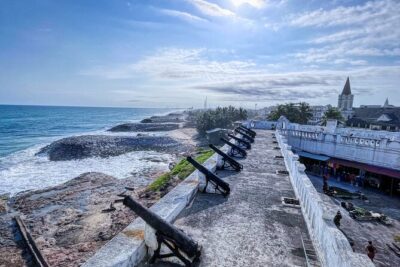
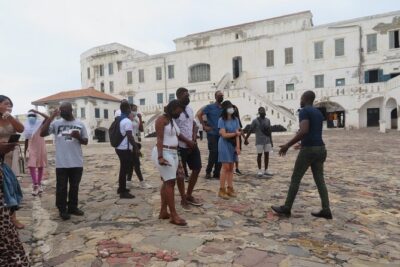
Cape Coast arrives with guided touring of Cape Coast Castle and the Castle Museum, with a focus on the UNESCO story. Cape Coast Castle is one of the main departure points for Africans sent to slavery in the Americas, and it includes the Door of No Return, a powerful site name you will not forget. Even if you’ve read about this before, the castle setting forces the scale to become real.
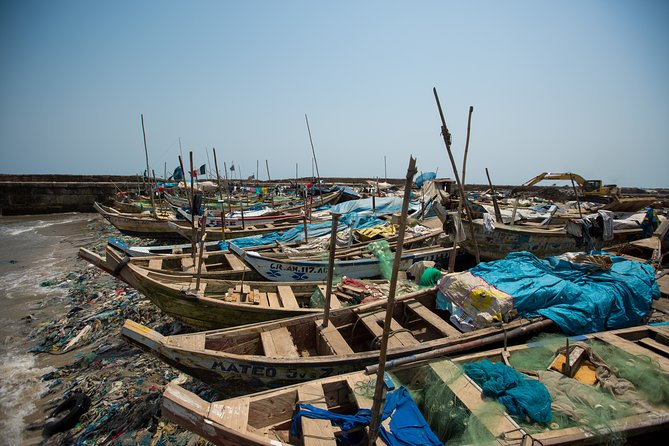
That evening adds another layer. You go on a guided tour through the ancient town of Elmina and see the colorful harbor fish activity. It’s a reminder that history exists inside everyday places. Just keep your energy steady, because the next day continues the same theme with deeper content.
Day 4 starts with Elmina Slave Castle, built in 1482. It is described as the first European structure built in sub-Saharan Africa. That kind of fact helps you frame the timelines as you move through the rooms. You then attend the “Return to the Homeland” ceremony called fiankra. The ceremony illustrates how people were taken from the homeland without bidding goodbye, and it is also framed as an initiation rite for African returnees.
This is the part of the tour where I would tell you to slow down mentally. You are not just sightseeing. You are getting taught how to interpret a painful past. If you tend to get overwhelmed easily, plan to take breaks, drink water, and let your guide know when you need a slower pace.
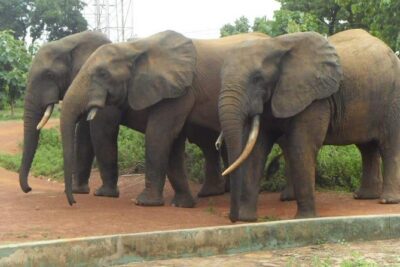
After the historical intensity, the afternoon changes gears at Kakum National Park. You take a walking tour on the forest floor with birds and butterflies, and you might even spot monkeys. The park is described as having over 40 species of mammals including the forest elephant, which is reclusive. This is a smart contrast day. You get the mind-and-heart work in the morning, then nature in the afternoon. Comfortable shoes matter here, and so does a light layer, since weather can shift in forested areas.
Johannesburg and Soweto: reading apartheid through places that still show damage
Once you leave Ghana, the itinerary moves with clear logistics. Day 5 includes checking out, heading to Accra, and using a day room before your flight to South Africa. The data notes that nonstop flights from Accra to Johannesburg are available Tuesday, Thursday, and Saturday. That matters because the route depends on flight days. If you are booking without flexibility, double-check your exact travel date against that rhythm.
When you arrive in Johannesburg early morning on Day 6, you check in and then go straight into the South Africa story with a Soweto-focused route tied to freedom fighters. The stops are specific and memorable:
- Hector Pieterson Memorial, marking where 12-year-old Hector was shot during the Soweto uprisings
- Regina Mundi Church, described as a sanctuary for activists during apartheid, with bullet holes remaining
- Chris Hani Baragwanath Hospital, presented as the world’s largest hospital, honoring ANC leader Chris Hani
- Mandela’s House, with memorabilia, photos, and awards
- Freedom Square, where the Freedom Charter was adopted
What I like about this sequence is that it’s not just political theory. It’s places you can stand in and visually connect to the events. You also get a range of settings, from memorial sites to working institutions. If you want to understand how apartheid affected both streets and systems, this route is built for that.
One note to keep in mind: this is a lot of walking and a lot of standing. Your itinerary is organized, but your body still needs breaks. Moderate physical fitness is noted for the trip, so plan your mindset as well as your shoes.
Pilanesberg Big Five safari plus Lesedi Cultural Village nights
Day 7 is where the itinerary shifts from historical memory to wildlife and cultural performance. You head to Pilanesberg National Park for a safari. The park is presented as home to the Big Five, including lions, buffalo, leopards, elephants, and rhinos, plus species like cheetahs, giraffes, and hippos, and over 360 bird species.
Even if you’ve gone on safari before, I think the value here is that Pilanesberg is paired with something that is not animal-focused. Lesedi Cultural Village is later in the day, so you are not just driving around for hours. The flow matters because it keeps your day from feeling like one long vehicle session.
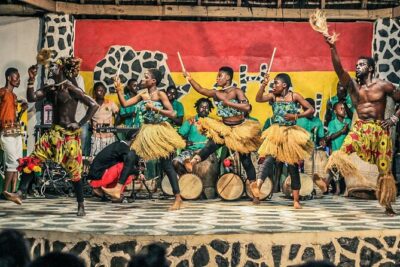
En route to Lesedi, you stop at a market for Southern African goods. Then at Lesedi, you get welcomed in the Ndebele village, followed by a multimedia presentation on South Africa’s history. After that, you tour four cultural villages showing local customs and language. The day ends with a traditional performance and a buffet dinner.
If you care about cultural context, this is a strong combo. You get wildlife in the afternoon and then human culture in the evening. If you dislike performances, you may still enjoy the language and village structure since the tour is arranged as guided visits across multiple cultural areas.
Cape Town near the Waterfront: Table Mountain, coast roads, and winelands
After your Johannesburg days, Day 8 flies you to Cape Town. On arrival, you are met and transferred to a hotel located near the Victoria and Alfred Waterfront. The rest of the day is at leisure, and the plan points you toward all the normal city comforts: architecture, cuisine, music, and shopping options like Greenmarket Square Flea Market and malls.
This leisure day is not filler. It gives you time to reset after a fast history phase. It also helps you adjust to Cape Town itself, which can feel like multiple neighborhoods layered on top of each other.
Day 10 is the big Cape Town and Cape Peninsula day. It starts with a ride on the 360-degree rotating cable car to the top of Table Mountain. That view promise is straightforward, and the cable car aspect keeps it less complicated than hiking would.
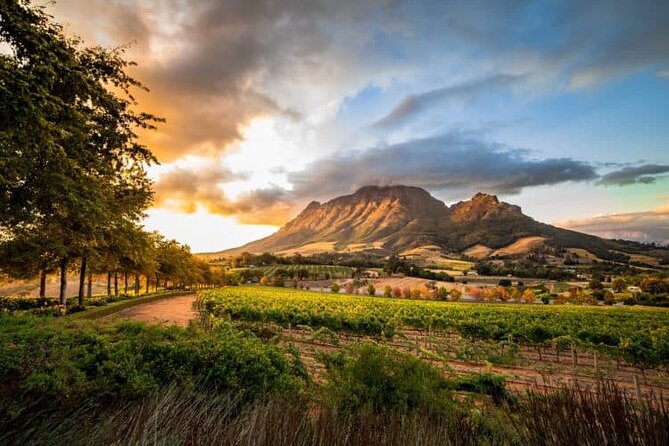
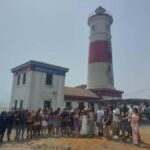
Then you head along the Cape Peninsula. The itinerary includes a visit to a wine cellar, and the scenic drive includes Clifton, Camps Bay, and Hout Bay, plus Chapman’s Peak Drive through Scarborough to the Cape of Good Hope. You enjoy tea or coffee by the iconic signboard. After that, you ride the Flying Dutchman Funicular for views from the old Cape Point lighthouse.
Lunch is at Seaforth near Boulders. Then you move to the Constantia Valley Wine Route for a wine tasting at a selected estate. The day ends with a scenic return drive past the Botanical Gardens to Cape Town.
This is a day that can feel like a lot, but it also functions like good value planning. You hit major sights without needing to coordinate buses or rental car decisions. Practical tip: keep water handy and wear sunscreen. You are outdoors for long stretches with stops that involve viewpoints and walking.
History-led days out across Ghana
Robben Island and township tours in Cape Town, plus breathing room
Day 9 brings you to Robben Island and the township context. You start after breakfast with a ferry ride to Robben Island, the former prison where Nelson Mandela spent many years incarcerated. Robben Island is a UNESCO World Heritage site, and the itinerary frames it as part of the learning process around democracy and the country’s struggle.
After Robben Island, you join a Cultural Tour of Cape Townships. You interact with different communities, including Langa, which is described as Cape Town’s oldest formal township. You also visit Gugulethu township, and the itinerary notes a community-driven project where you can observe artisans and crafters at work.
That combination helps you avoid the “only monuments” feeling. You see the place of imprisonment, then you see current community life and creative work. I’d take this day slower than you think you need to. It has emotional weight, plus the transport time of ferry and township routes.
Day 11 is mostly at your own pace. You have breakfast and dinner included, with leisure for shopping, dining, or just taking Cape Town at your speed. Day 12 continues that theme. After breakfast, you have leisure until you’re transferred to the airport for your onward flight.
Two included dinners and several free windows can help you manage your energy. This matters on a multi-country tour with mixed content. You want time to process what you saw, not just check boxes.
Price and value: what $8,695 really buys you
The price listed is $8,695.00 per person. For that amount, you are paying for a guided, admissions-included route across two countries, with private transport and hotel nights tied to the itinerary. Based on what’s included, you get meeting and assistance on arrival and departure, bottled water per person per day, help with visa application, admission to the listed sites, an experienced cultural tour guide, and transportation in a private vehicle with round-trip airport and hotel transfers.
Big picture, this is a “stress management” package. Flights are not included, and that can be a significant add-on depending on where you start from. Still, avoiding the logistics headache of coordinating multiple guides, ticket lines, and transfers across cities is often what makes this kind of itinerary workable for most people.
One more planning note: the overview calls it an all-inclusive 14 day tour, while the duration is listed as 12 days (approx.). That mismatch is not a dealbreaker, but it is worth checking with the provider during booking so you know your exact schedule and number of nights.
Also, the tour notes a maximum of 10 travelers. Small groups usually mean less waiting, more direct guide attention, and smoother pacing when you switch from city stops to longer drives.
Who should book, and what to prepare
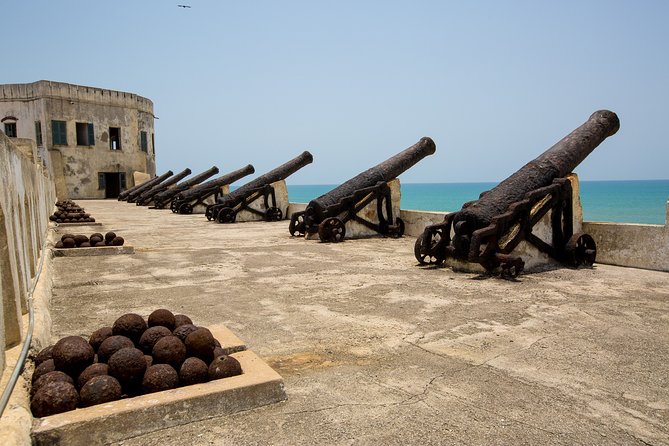
This tour fits you best if you want a guided history itinerary plus safari plus major Cape Town sights, all without arranging everything yourself. The route is also ideal for people who like thoughtful context, not just quick photos. Stops like the fiankra ceremony and the apartheid sites in Soweto are the kind of experiences that benefit from an expert guide who can explain what you are seeing.
You should also expect a moderate physical fitness level requirement. Walking through sites like castles and memorials, plus time outdoors at Kakum and on coastal drives, adds up. Pack comfortable shoes and plan to move at a steady pace.
On the “team quality” front, the feedback highlights how much the guides and drivers matter. Names like Elvis and Edith come up for patience and clear explanation, and drivers like Michael and Joseph are praised for care. If you book, ask the provider who your guide and driver will be, and you will likely feel that difference in how smooth the days feel.
Should you book this Ghana and South Africa cultural tour?
I’d recommend booking if you want a structured, human-guided itinerary through two countries with some heavy history, then a payoff shift into safari and Cape Town viewpoints. The blend is smart: Accra sets the intellectual theme, Cape Coast and Elmina ground the past, Soweto and Johannesburg connect it to politics and resilience, Pilanesberg adds wonder, and Cape Town ties it together with both iconic scenery and real community life.
I would hesitate if you hate emotional subject matter, or if you want lots of unscheduled time. Even with leisure days in Cape Town, the core days are packed with guided stops. This is not a “wander and see” tour. It’s a learn-and-travel tour.
If you are the type who likes having a plan, a guide who can explain, and admissions already handled, this one makes a lot of sense.
FAQ
Are airport transfers included?
Yes. The tour includes round-trip airport and hotel transfers, plus meeting and assistance on arrival and departure.
Are admission tickets included for the listed sights?
Yes. Admission to the listed sites is included, and bottled water is also provided per person per day.
Are flights included in the price?
No. Flights are listed as not included. The itinerary notes nonstop flights are available on certain days for the Accra to Johannesburg segment, but you will still need to handle air travel.
What meals are included?
Breakfast is included 11 times, and dinner is included 9 times. For example, Day 9 includes breakfast and dinner, and Day 11 includes breakfast and dinner.
How large is the group?
The tour has a maximum of 10 travelers.
Does the tour include help with visas?
Yes. Assistance with visa application is included.
What time does the tour start and where does it end?
The start is at 8:30 am at Kotoka International Airport in Accra. The activity ends back at the meeting point.
A Wider Spread of Ghana Tours
- The Cape Coast Day Tour
★ 5.0 · 525 reviews - The Cape Coast Tour
★ 5.0 · 177 reviews - From Accra: Cape Coast, Elmina Castle & Kakum Park Day Tour
★ 4.6 · 144 reviews - Accra Detailed City Tour
★ 4.5 · 118 reviews - Accra Guided City Tour Experience
★ 4.7 · 88 reviews
More Ghana Tours Out of the Review Pile
- The Cape Coast Day Tour
★ 5.0 · 525 reviews - Experience the Beauty, History and the Culture Of Accra in a Day
★ 5.0 · 323 reviews - The Cape Coast Tour
★ 5.0 · 177 reviews - From Accra: Cape Coast, Elmina Castle & Kakum Park Day Tour
★ 4.6 · 144 reviews - Accra Detailed City Tour
★ 4.5 · 118 reviews
Longer Routes Through Ghana
- 10 Days Trip to Cape Coast and Elmina Castles from Accra
★ 5.0 · 31 reviews - 10 Days Ghana Cultural and Heritage Trip
★ 5.0 · 31 reviews - Explore Ghana Multi Day Tour
★ 5.0 · 29 reviews - Ghana City 2-day Tour
★ 5.0 · 21 reviews - 2-Day Private Tour to the Mount Afadjato and Wli Waterfalls
★ 5.0 · 17 reviews
Latest Accra reviews added here

Overnight & Multi-Day Trips, compared.
 ★ 4.55 Days Adventurous Wildlife SafariFrom $92249 reviews
 ★ 5.010 Days Ghana Cultural and Heritage TripFrom $3,50031 reviews
 ★ 5.010 Days Trip to Cape Coast and Elmina Castles from AccraFrom $4,69531 reviews
 ★ 5.0Explore Ghana Multi Day TourFrom $2,70529 reviews
 ★ 5.0Ghana City 2-day TourFrom $30721 reviews
 ★ 5.07-Day Private Cultural and Heritage Tour in GhanaFrom $1,99817 reviews
 ★ 5.02-Day Private Tour to the Mount Afadjato and Wli WaterfallsFrom $46417 reviews
 ★ 5.0Volta Region 3 Days 2 nights Nature Private TourFrom $70011 reviews
Browse the lists this tour appears in