

REVIEW · OVERNIGHT & MULTI-DAY TRIPS
10 Day Ghana Adventure and Culture Tour
Ghana feels active on this 10-day plan. I like how the itinerary pairs Volta River adventure with hands-on craft days, so you get action and culture in the same breath. I also like that a certified guide keeps things moving while you focus on the sights. One consideration: this isn’t a sit-and-stare tour, you should expect hikes and outdoor time, and you’ll want moderate fitness for the higher-effort days.
Accra is a clean starting point, with a welcome ride from Kotoka International Airport, plus a gentle first afternoon that includes Accra Mall and a quick city orientation if time allows. By the time you reach the craft villages and the coast, the trip feels like it already found its rhythm. In multiple guest notes, the name Jojo comes up as a standout guide, and that matters here because the days are packed and you’ll get more from each stop when someone knows the flow.
The tour also has a practical value angle: the price is high, but it includes your certified guide, air-conditioned vehicle, accommodations, entrance fees, and nine breakfasts. The main tradeoff is that some experiences are marked as extra fee add-ons, so you’ll want a bit of spare cash for optional ceremonies and castle visits.
In This Review
- Key highlights to know before you go
- Accra starts your trip the right way, from Kotoka to first evening time
- Nkrumah, Independence Square, and W.E.B. Du Bois in one tight culture day
- Volta River action in Akosombo: hike, paintball, Vulcan Rock abseil, and 4 km kayak
- Tafi Atome monkeys and Ewe Kente village time, then Wli Waterfalls
- Wli hike options, Mount Afadja challenge, and Kpando pottery in one long day
- Ashanti craft focus: Adanwomase Kente, Ntonso Adinkra stamping, and naming ceremony options
- Lake Bosumtwi and Manhyia Palace: canoe time on an impact crater, plus Ashanti royal context
- Cape Coast Castle and Assin Manso: serious history with optional meaning ceremonies
- Kakum’s canopy walkway and Elmina’s fishing life, plus a real beach wind-down
- Posuban shrines on the way back, then airport drop-off before dark
- Price and value: what $2,595.50 buys beyond transportation
- Who this Ghana Adventure tour is for, and who should skip it
- Should you book this tour?
- FAQ
- How many days is the tour?
- Where does the tour start and how do you handle airport arrival and departure?
- Is this a private tour?
- What is included in the price?
- Are international flights included?
- What about physical fitness and activity level?
- Is there a mobile ticket?
- What if weather affects outdoor activities?
Key highlights to know before you go

- Private-group feel with pickup and drop-off support in Accra, so your schedule stays tight and personal.
- Volta River day 3 mixes a hike, paintballing, a 100-ft Vulcan Rock abseil, and a 4 km kayaking outing.
- Craft workshops across Kente and Adinkra, including hands-on stamping and optional naming ceremonies.
- Nature plus culture at Wli Waterfalls and Kakum National Park’s canopy walkway, plus birdwatching time.
- Cape Coast history via Cape Coast Castle and Assin Manso Slave River, with an optional Door of Return ceremony.
- Lake Bosumtwi gives you a calmer day with canoe time on Africa’s largest meteorite impact lake.
Longer routes through Ghana, two nights and upward
- 10 Days Trip to Cape Coast and Elmina Castles from Accra★ 5.0 · 31 reviews
- 10 Days Ghana Cultural and Heritage Trip★ 5.0 · 31 reviews
- Explore Ghana Multi Day Tour★ 5.0 · 29 reviews
- Ghana City 2-day Tour★ 5.0 · 21 reviews
Accra starts your trip the right way, from Kotoka to first evening time

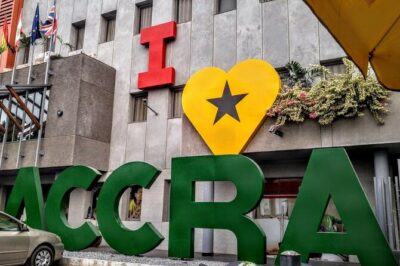
Most Ghana trips either start with chaos or start with structure. This one leans structure. You’re met at Kotoka International Airport at a pre-arranged time, then you head to Accra in an air-conditioned vehicle for a welcome refreshment (AKWAABA). If there’s time, you also get a quick city orientation, which helps you read the city later when you’re walking Oxford Street and checking out local shops.
Day 1 is purposely light. Accra Mall and a hotel unwind period give you breathing room after travel. That matters because from Day 2 onward, you’ll be moving most of the day. If you’re prone to getting tired fast, I’d still treat Day 1 as a recovery window rather than an extra sightseeing sprint.
One more thing I like: the tour is designed so you’re not constantly searching for transport. When your ground time is busy, reliable logistics are a quality-of-life feature, not a small detail.
Nkrumah, Independence Square, and W.E.B. Du Bois in one tight culture day
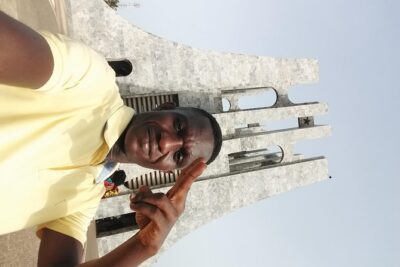
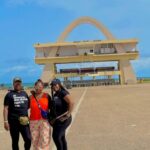
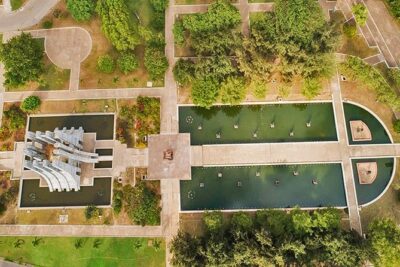
Day 2 is one of those “big ideas, short distance” days in Accra. You start at the Kwame Nkrumah Memorial Park, visiting the Nkrumah Monument and Independence Square. It’s the kind of stop that makes the rest of Ghana make more sense because Ghana’s independence story is woven into so much you’ll see later.
Then you shift to hands-on and social culture. The Arts Center time is a good blend of local products and drumming lessons, which is much more memorable than just buying souvenirs. Next comes the W.E.B. Du Bois Center, a hub for Pan-African history and heritage, so you’re not only learning Ghana’s story, you’re seeing how it connects to wider African and diaspora narratives.
Finally, Oxford Street rounds the day out. It’s where Accra shows its after-dark personality, and you can keep it flexible since that stop is more about atmosphere than a set program.
If you want an early night on Day 2, that’s smart. The next day jumps into full adventure mode.
Volta River action in Akosombo: hike, paintball, Vulcan Rock abseil, and 4 km kayak
Day 3 is the “adventure headline” of the whole trip. You leave early for the Volta River area and arrive in Akosombo by about 8:30 AM. The schedule is built around variety, not just one activity.
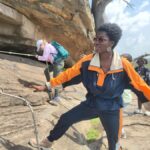
You begin with a scenic hike down toward the riverbanks. Then it turns into adrenaline. You get paintballing, a 100-ft Vulcan Rock abseil, and a 4 km kayaking experience on the Volta River. That combination is rare because many tours do either hiking or water time. Here, you get both, plus a vertical challenge.
Practical note: this day is physically demanding even if you’re not trying to “train.” You’ll be moving a lot, and you’ll want to show up with dry clothes planned and water-friendly footwear. If you wear gear that’s hard to keep secure, you’ll lose time worrying and not enjoying.
Also, your best energy strategy is to treat the morning as your big output and keep the afternoon focused on recovery. The tour has you returning to your hotel to unwind afterward, which is exactly what your body needs after a day like this.
Tafi Atome monkeys and Ewe Kente village time, then Wli Waterfalls

Day 4 turns the adventure dial into culture and nature. After a morning at the Volta River where you can swim or relax, you head to the Volta Region and meet Ewe culture more directly.
At Tafi Atome Monkey Sanctuary and Cultural Village, you visit a sacred grove that protects Mona monkeys in their natural tropical forest habitat. It’s not just a photo stop. The sanctuary setting gives you a sense of why this kind of protected space matters, especially when you’re also seeing the local way of life nearby.
Next comes Tafi Abuife Kente Village, where you can watch Kente cloth artistry and weaving. If you want to buy something, this is one of the best times to do it because you can connect the cloth to the process you saw earlier. Kente is also a visual language, so seeing how it’s made helps you read what you’re seeing later in Ashanti areas too.
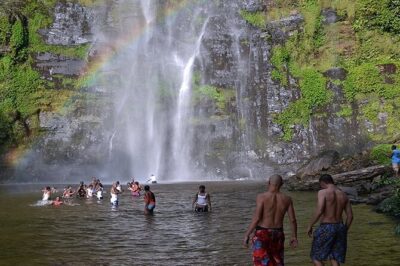
Then you continue to Wli Waterfalls, described as the highest waterfall in West Africa, locally known as Agoomat. The tour keeps the pace moving, but the waterfall part is where the day becomes scenic rather than instructional.
If you’re sensitive to humidity or want to manage energy, I’d plan to take the waterfall time slower. It’s easy to rush and end up too tired to enjoy the view.
Wli hike options, Mount Afadja challenge, and Kpando pottery in one long day

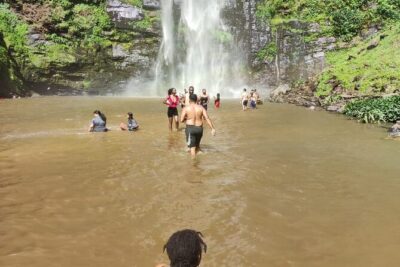
Day 5 is for people who like choices. At Wli Waterfalls, you can do a challenging hike to the upper falls, or take the calmer option with a swim at the lower falls before you move on.
Then the itinerary offers a bigger test: Mount Afadjato, identified as West Africa’s highest peak. The trek is described as strenuous, and the cultural motto is shared as If you can conquer Mount Afadja, then you can conquer the world. Whether you take that line literally or as motivation, it tells you what kind of effort to expect.
After the mountain, the day adds a quieter craft stop in Kpando, with a visit to a women’s pottery cooperative. You get to watch traditional African ceramic production with a guided tour. It’s a nice contrast after the physical workout. Your legs are tired, but your mind gets refreshed by the focus of craft work.
If you’re the type who overcommits, be honest about your energy on this day. Wli plus Afadja plus pottery is a lot even if the time blocks look manageable on paper. If you prefer one big highlight, choose the waterfall level that matches your comfort, and treat Afadja as either your personal challenge or your pass for this trip.
Ashanti craft focus: Adanwomase Kente, Ntonso Adinkra stamping, and naming ceremony options

Day 6 is where Ghana’s textile traditions become more than “a product you buy.” You start near the Volta River, watching fishermen arrive with early catches, and you can swim or simply unwind. Then you head toward the Ashanti Kingdom.
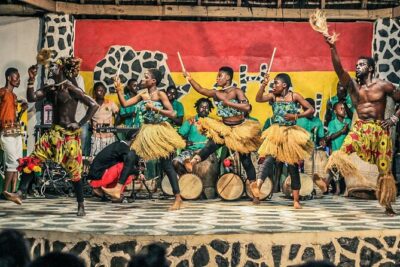
At Adanwomase, you witness Kente weaving and you can purchase Kente cloth. The tour also offers an optional traditional naming ceremony at the chief’s palace, with drumming and dancing, and you’ll be adorned in Kente for the event. That’s an extra fee item, so you’ll want to decide in advance whether you want this cultural participation level.
Next you go to Ntonso village for Adinkra stamping. You create your own textile strip by stamping various Adinkra symbols, each with its own meaning. This is a very practical souvenir experience. Instead of buying something that feels generic, you’ll have a piece you made, tied to symbol understanding you can actually explain later.
This is one of the best days for shopping, but also one of the easiest days to spend too much money. Go with a plan: pick a budget and a few symbol themes you want represented, then stop while you’re still satisfied.
Lake Bosumtwi and Manhyia Palace: canoe time on an impact crater, plus Ashanti royal context

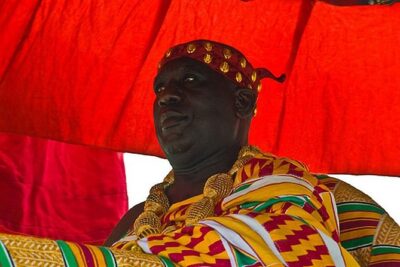
Day 7 blends royal Ashanti history, museum time, and a nature reset. You begin at Manhyia Palace, the official residence of the Ashanti King. You also visit the National Cultural Center to see important cultural artifacts, including the mystic Komfo Anokye sword.
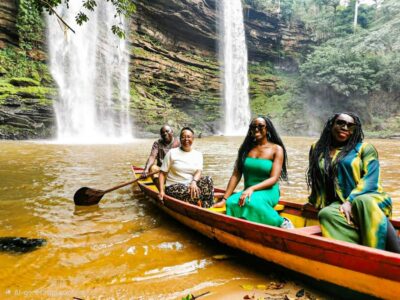
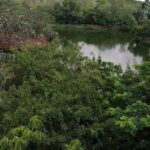
Then you shift to Lake Bosumtwi, described as Africa’s largest meteorite impact lake. You get a canoe ride with a local guide. There’s also an option for horse riding if you want extra exploration around the lake.
After you’ve been hiking and doing active days for two weeks, canoe time offers a different kind of engagement. It’s slower, more observational, and you’ll get better photo results if you keep your pace calm.
The day also includes time around the National Cultural Centre area near Kejetia Market, with shops for handmade crafts. That helps you finish the “I learned it today, so I can buy it wisely today” loop.
If you’re prone to rushing through museums, try not to. The Komfo Anokye sword and the palace context make your later coastal history stops feel more anchored in Ghanaian cultural continuity.
Cape Coast Castle and Assin Manso: serious history with optional meaning ceremonies

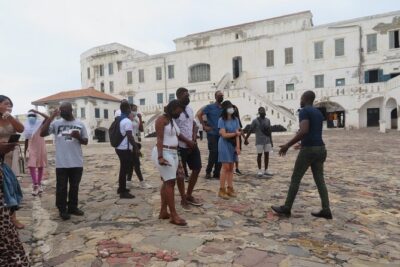
Day 8 heads to the coast and keeps the tone serious. You travel to Cape Coast, with a first major stop at Assin Manso Slave River, described as a slave cemetery and market. Then you visit Cape Coast Castle, a former slave dungeon, with history tied to the African Diaspora.
There’s also an optional Door of Return ceremony, designed to symbolize return after the slave trade. If that kind of symbolic participation matters to you, consider budgeting the extra fee. If it doesn’t, you can still take in the main sites fully.
In the evening, there’s a cultural performance available for an extra fee. Since the main day is emotionally heavy, this can work well as a release, or it can feel like the wrong tone if you prefer quieter recovery. Choose based on your emotional needs, not on the itinerary alone.
This is the kind of day where you’ll want to slow down and take notes if you’re the type who forgets details later. The names of places and the sequence of the slavery path matter when you try to connect it to the broader story of the coast.
Kakum’s canopy walkway and Elmina’s fishing life, plus a real beach wind-down
Day 9 is a balanced day: nature, coastal community, and then rest.
You start at Kakum National Park, described as Ghana’s most popular attraction with lush tropical forests and an exhilarating canopy walkway experience. The park is also mentioned as one of the best birdwatching sites in Ghana, so if you own binoculars, bring them.
After Kakum, you head to Elmina, including a walking tour around the fishing village and port. You see colorful fishing boats and you also stop at smaller locations like Fort San Jago. You get a view of Elmina Castle, and a castle tour is available for an additional fee.
Then the tour adds something I really appreciate: you return to a beach area to relax. After castles, slave history, and long walking, this downtime is not optional fluff. It’s how you absorb the day and prevent the trip from feeling like nonstop exertion.
If you plan to buy crafts or watch daily routines, aim for respectful observation. The fishermen and market scenes are part of real life, not a staged show for tourists.
Posuban shrines on the way back, then airport drop-off before dark
Day 10 is a thoughtful ending. You start with a morning at your hotel, then you return to Accra. On the way, you stop at Mankessim to explore Posuban shrines, described as remaining shrines in the region and rich in history.
Then you do a coastal drive back to Accra and aim to arrive before dark. The tour gives you a chance for last-minute shopping and goodbyes. Finally, you get dropped off at the airport two hours before your flight time, which is exactly the kind of practical timing that saves stress.
If you like to souvenir-shop, Day 10 is where I’d prioritize. You’ll be better at recognizing what you want by now, especially after Kente and Adinkra days.
Price and value: what $2,595.50 buys beyond transportation
At $2,595.50 per person for a 10-day private experience, this tour is not a budget trip. But it is priced like a full-service, high-activity cultural itinerary.
Here’s where the value comes from, in plain terms:
- Private-group convenience: you’re not sharing the schedule with strangers, and you’re not constantly negotiating transport.
- Included logistics: air-conditioned vehicle, accommodations, and a certified guide.
- Entrance fees included: many stops are marked with admission tickets included, which reduces surprise costs once you arrive.
- Structured daily rhythm: you get early starts on activity days and recovery time back at hotels.
Where costs may still creep up is in the optional add-ons. Several parts of the itinerary mention extra fees: the Door of Return ceremony, a cultural performance, Elmina Castle tour, and naming ceremonies. There may also be additional spending during shopping stops.
My practical advice: treat this as an all-in itinerary with a few optional chapters. If you budget modestly for add-ons and you stay honest about your energy level on the hike-heavy days, you’ll feel the money working for you.
Who this Ghana Adventure tour is for, and who should skip it
This tour fits best if you:
- Want a mix of active outdoors and culture with hands-on learning
- Like organized travel and a guide who can keep you on schedule
- Are comfortable with moderate fitness needs and long travel days
It may not be your best match if you want:
- Only easy, flat sightseeing with minimal hiking
- A long stretch of beach resort time with no daily movement
- A trip centered on rest rather than on doing
If you’re traveling with family members, I’d look closely at fitness comfort for the mountain trek and canopy walkway days. If you’re an active solo traveler or a couple who likes variety, this itinerary’s pace will feel energizing.
Should you book this tour?
I’d recommend it if your Ghana trip should include both adventure and culture, and you want someone to handle the driving, timing, and the important entry fees. The itinerary’s strongest advantage is how often it swaps between activity and meaning: a high effort Volta River day, craft workshops where you make something, and the coastal history sites that shape how you understand modern Ghana.
Book it especially if you’ve been searching for a tour where the guide matters. Multiple guests call out Jojo by name for helpfulness and for taking them to spots on the itinerary that made the experience better. Add in clean, well-kept vehicles and the fact that you’re not doing this alone with a random guide, and the “private tour” promise feels real.
If you want a gentler pace, or if you’re not comfortable with hiking and outdoor challenges, you might be happier with a less active Ghana plan. But if you’re ready for a trip that keeps moving in a good way, this Ghana adventure has a lot going for it.
FAQ
How many days is the tour?
The tour is listed as 10 days (approx.).
Where does the tour start and how do you handle airport arrival and departure?
You are greeted upon arrival at Kotoka International Airport at a pre-arranged time, and you are returned to the airport two hours before your flight time for departure.
Is this a private tour?
Yes. It is private, and only your group will participate.
What is included in the price?
The tour includes a certified tour guide, air-conditioned vehicle, accommodations, entrance fees, and breakfast (9). It also lists 24/7 office support. Guide and driver meals and accommodation are included.
Are international flights included?
No. International air flights are not included.
What about physical fitness and activity level?
The tour notes that travelers should have a moderate physical fitness level.
Is there a mobile ticket?
Yes. Mobile ticket is listed as a feature.
What if weather affects outdoor activities?
The experience requires good weather. If it is canceled due to poor weather, you’ll be offered a different date or a full refund.
A Wider Spread of Ghana Tours
- The Cape Coast Day Tour
★ 5.0 · 525 reviews - The Cape Coast Tour
★ 5.0 · 177 reviews - From Accra: Cape Coast, Elmina Castle & Kakum Park Day Tour
★ 4.6 · 144 reviews - Accra Detailed City Tour
★ 4.5 · 118 reviews - Accra Guided City Tour Experience
★ 4.7 · 88 reviews
More Ghana Tours Out of the Review Pile
- The Cape Coast Day Tour
★ 5.0 · 525 reviews - Experience the Beauty, History and the Culture Of Accra in a Day
★ 5.0 · 323 reviews - The Cape Coast Tour
★ 5.0 · 177 reviews - From Accra: Cape Coast, Elmina Castle & Kakum Park Day Tour
★ 4.6 · 144 reviews - Accra Detailed City Tour
★ 4.5 · 118 reviews
Longer Routes Through Ghana
- 10 Days Trip to Cape Coast and Elmina Castles from Accra
★ 5.0 · 31 reviews - 10 Days Ghana Cultural and Heritage Trip
★ 5.0 · 31 reviews - Explore Ghana Multi Day Tour
★ 5.0 · 29 reviews - Ghana City 2-day Tour
★ 5.0 · 21 reviews - 2-Day Private Tour to the Mount Afadjato and Wli Waterfalls
★ 5.0 · 17 reviews
Latest Accra reviews added here

Overnight & Multi-Day Trips, compared.
 ★ 4.55 Days Adventurous Wildlife SafariFrom $92249 reviews
 ★ 5.010 Days Ghana Cultural and Heritage TripFrom $3,50031 reviews
 ★ 5.010 Days Trip to Cape Coast and Elmina Castles from AccraFrom $4,69531 reviews
 ★ 5.0Explore Ghana Multi Day TourFrom $2,70529 reviews
 ★ 5.0Ghana City 2-day TourFrom $30721 reviews
 ★ 5.07-Day Private Cultural and Heritage Tour in GhanaFrom $1,99817 reviews
 ★ 5.02-Day Private Tour to the Mount Afadjato and Wli WaterfallsFrom $46417 reviews
 ★ 5.0Volta Region 3 Days 2 nights Nature Private TourFrom $70011 reviews
Browse the lists this tour appears in