

REVIEW · CAPE COAST CASTLE TOURS
HERITAGE GHANA(Cape Coast Castles and Kakum National Park)
A trip to Ghana’s slave trade sites can change how you see the world. This day tour pairs Elmina Castle and Cape Coast’s Door of No Return with a calmer break at Kakum National Park’s canopy walkway, all while focusing on the human story behind the Trans-Atlantic Slave Trade.
What I like most is the way the stops connect, Elmina’s Portuguese, Dutch, and British layers, then Cape Coast’s famous last-chance doorway. I also like that the package is built for a long day, with air-conditioned vehicle, lunch, bottled water, and entry fees handled. One drawback to keep in mind: the castle content is heavy, and you’ll also do walking for the canopy walk, so moderate physical comfort helps.
In This Review
- Key highlights worth your attention
- What you’re really signing up for: story, not just sightseeing
- Price and value: why $150 can feel like a smart deal
- Elmina Castle: the trading post that became a prison system
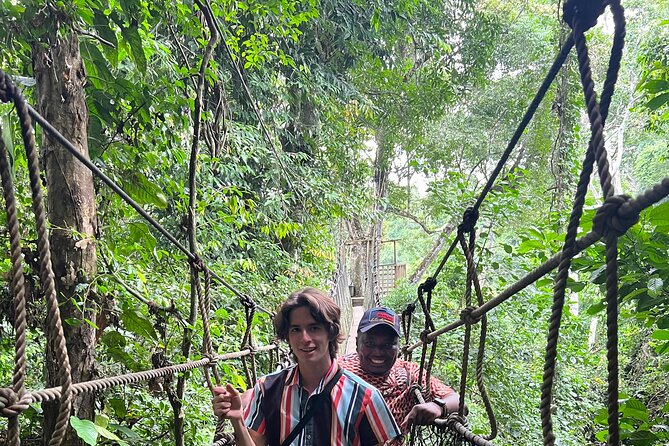
- Kakum National Park canopy walkway: a needed reset with moderate movement
- Cape Coast Castle: the Door of No Return at the heart of the day
- Guides make the day: Jeff, Binney/Biney, and clear pacing
- Timing, pickup, and how to plan your day around it
- Who this fits best (and who should think twice)
- Should you book Heritage Ghana (Cape Coast Castles and Kakum)?
- FAQ
- How long is the Heritage Ghana tour?
- How much does the tour cost?
- Where does the tour start?
- What are the main stops?
- Are admission tickets included?
- What’s included for meals and drinks?
- Is it a private tour?
- What are the operating hours for the tour?
- Is there free cancellation?
Key highlights worth your attention
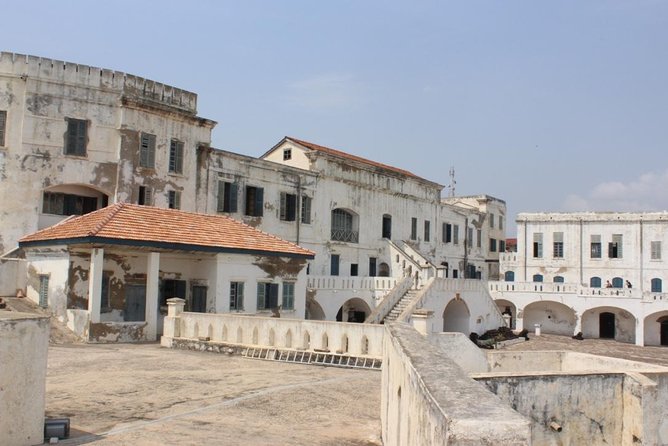
- Elmina Castle’s layered European history, Portuguese 1482 to Dutch capture in 1637, plus British detention of Prempeh I
- The informative castle walkthrough included in the entry fee, with grim spaces like dungeons and punishment cells
- Kakum National Park canopy walkway time, about 2 hours, with admission included
- Door of No Return focus at both castles, so the day stays anchored to one powerful theme
- Comfort for the day trip, including AC vehicle, bottled water, and lunch
Other trips down to Cape Coast, side by side
- The Cape Coast Day Tour★ 5.0 · 525 reviews
- From Accra: Cape Coast, Elmina Castle & Kakum Park Day Tour★ 4.6 · 144 reviews
- Accra To Cape Coast And Elmina Day Tour★ 5.0 · 75 reviews
- Cape Coast ,Elmina Castle and Kakum Full-Day Tour★ 5.0 · 62 reviews
What you’re really signing up for: story, not just sightseeing
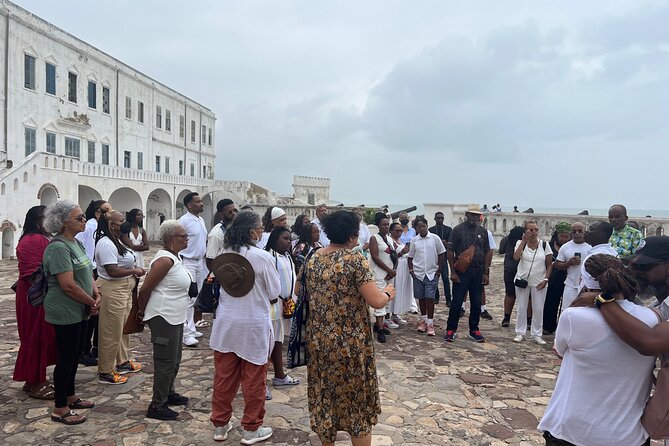
This isn’t a casual photo loop. The tour is designed to educate you about the Trans-Atlantic Slave Trade and how it affected Africans and the wider world. The key is that the learning happens inside the places where the trade was processed, stored, and punished.
At Elmina, you start with a trading post that grew into something far darker when enslaved people replaced gold as the main commodity. That shift matters, because it helps you understand how ordinary commerce became a machine for human suffering. You’re guided through spaces that are meant to be unforgettable, like the grim dungeons and punishment cells.
Then you move to Cape Coast, where the tone stays serious, especially around the Door of No Return. Even with a nature stop at Kakum later, the day has a through-line: how people were seized, held, and marched toward ships, and how the world was reshaped by what happened next.
Price and value: why $150 can feel like a smart deal
At $150 per person, this is in the “serious day trip” category. The value comes from what’s bundled rather than what’s missing.
Here’s what you get included:
- Admission tickets for the castle sites and Kakum National Park
- Lunch, plus bottled water
- Air-conditioned vehicle for the long stretches between stops
- All fees and taxes
- Pickup is offered, and the day is structured around a private group for your party
That packaging matters when you’re trying to manage time and avoid the hassle of buying tickets on the spot. It also helps if you’re doing this from Accra and want one dependable plan instead of stitching together transport, entries, and meals yourself.
The only “cost” you should budget for mentally is that your attention will be pulled in two directions: history and emotion at the castles, then concentration and careful footing at Kakum. If you’re the type who wants uplifting sightseeing all day, you might find this heavy.
Elmina Castle: the trading post that became a prison system
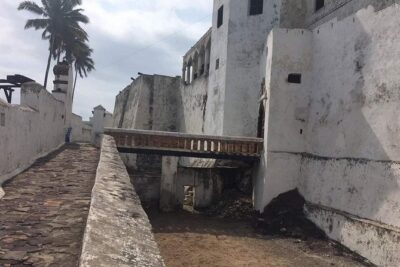
Elmina Castle, officially St George’s Castle, is a UNESCO heritage site. The big story starts with the Portuguese building it in 1482 as a trading post. Later, the Dutch captured it in 1637 and expanded its role as European commerce intensified.
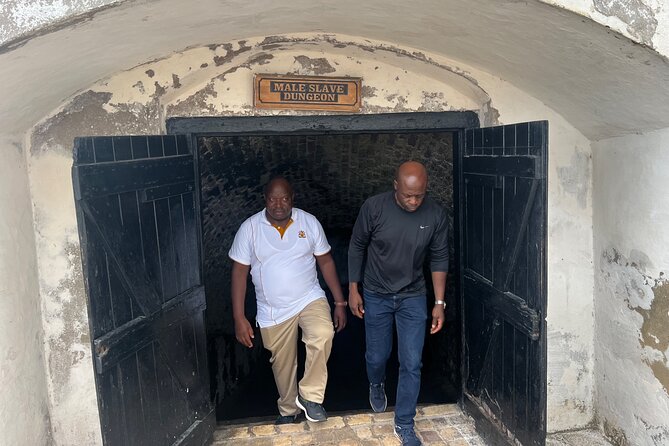
When the major object of trade shifted from gold to enslaved people, the castle changed function. Storerooms were converted into dungeons, turning storage space into confinement. This is why your visit feels so stark: you’re not just touring a museum. You’re moving through spaces that were built to control bodies.
During the included informative tour (covered through entry), you go to:
- the grim dungeons
- punishment cells
- the Door of No Return
- and the turret room connected to British imprisonment of the Ashanti king, Prempeh I, for four years
One of the most interesting details here is how Elmina sits geographically and historically. It was the first trading post built on the Gulf of Guinea, and it’s described as the oldest European building still in existence in sub-Saharan Africa. Even between serious moments, Elmina’s setting as a picturesque fishing town on the coast helps the place feel real, not sealed off.
Practical note: plan on walking and standing in older stone areas. Bring comfortable shoes, and keep your pace steady, especially before Kakum later.
Kakum National Park canopy walkway: a needed reset with moderate movement
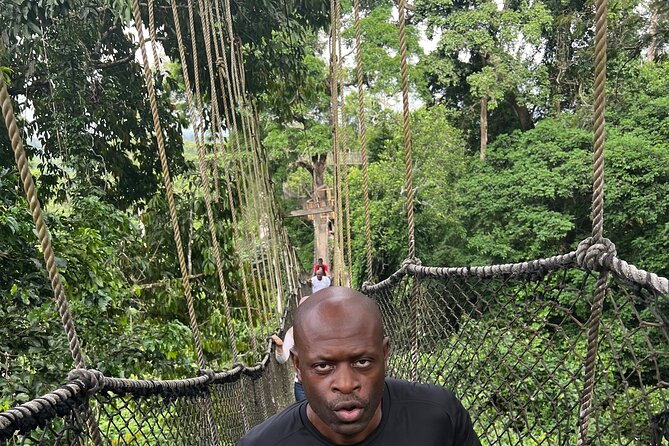
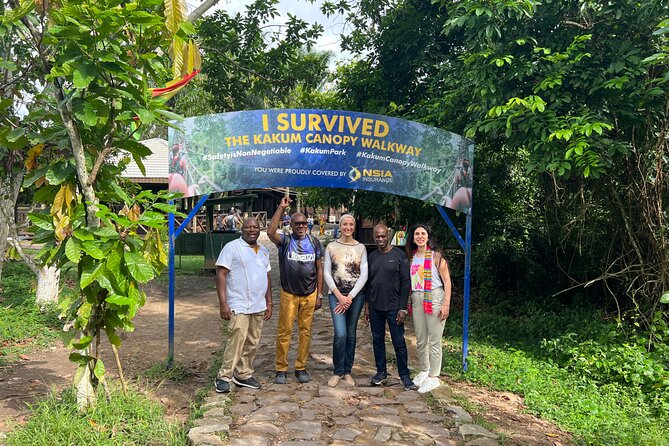
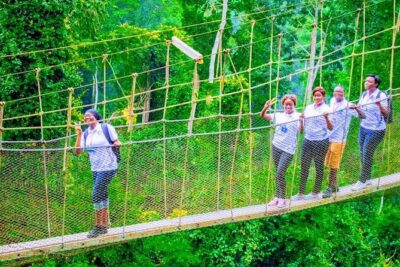
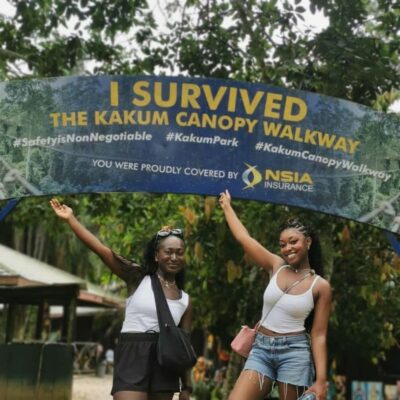
After the castles, Kakum National Park gives you a breather. Your time there centers on the canopy walkway, with about 2 hours allocated and admission included.
This is the point in the day where the rhythm changes. You swap indoor stone spaces for outdoor forest air, and the tour becomes about height, careful steps, and slow attention to the surroundings. That change is more than a break. It helps you digest what you just learned, instead of trying to carry it through the rest of the day at full emotional intensity.
A heads-up from the tour’s own guidance: you should have moderate physical fitness. That doesn’t mean you need to be an athlete, but it does mean you should be comfortable walking and moving at times during the canopy experience. If stairs, uneven ground, or sustained standing are tough for you, go in with eyes open.
Also, this is a half-day feeling inside a long day trip. You may want to use this stop to refuel with water (it’s included) and a calmer pace before heading back toward Cape Coast and the Door of No Return theme.
Cape Coast Castle: the Door of No Return at the heart of the day
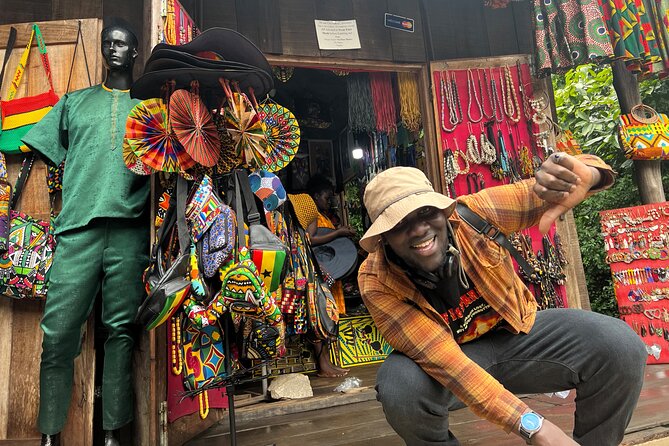
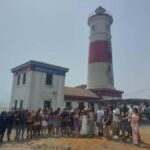
At Cape Coast Castle, your focus includes the Door of No Return. The stop is about 1 hour, with admission ticket included, so this is a concentrated experience rather than a long wander.
What I like about this structure is that it keeps the day coherent. Elmina gave you the historical machinery, with multiple European layers and specifics like Prempeh I’s imprisonment. Cape Coast then brings that same theme to a different location and an equally powerful symbol.
That’s also why this stop can hit hard. The Door of No Return is not presented as a vague landmark. It’s part of the story of where people were processed and the route they took toward forced departure.
Expect a mix of walking inside the castle grounds and time spent on key areas connected to the trade route narrative. If you get overwhelmed easily by memorial-type sites, plan mentally to step back briefly if you need a pause. And if you’re ready for it, this is the moment that makes the day’s education feel sharp and personal.
More rainforest days at Kakum, with and without the castles


Guides make the day: Jeff, Binney/Biney, and clear pacing
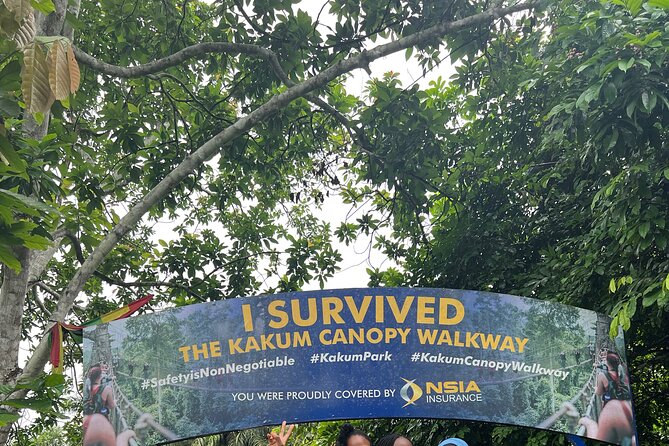
The difference between a good heritage trip and a great one is often the guide. In this case, guides like Jeff and Binney (sometimes spelled Biney) show up in feedback for giving clear explanations and helping people feel oriented without rushing.
What I take from those comments is simple: the day works when someone helps you read what you’re seeing. At places like Elmina and Cape Coast, the rooms can look similar, and the details matter. A strong guide links dates, powers, and purpose so you’re not just staring at walls.
You’ll also want someone to manage the pace. Even with a private setup, you’re moving through multiple major sites in one day. If the day starts late, or if there’s a snag in communication, that can compress your timing. One review notes a delayed start due to miscommunication, which is a good reminder to keep a little flexibility in your schedule on the day you book.
Timing, pickup, and how to plan your day around it
This is built for a long stretch, roughly 5 to 10 hours. Opening hours run from 5:30 AM to 5:00 PM, Monday through Sunday, across January 13, 2024 through June 18, 2026.
Because pickup is offered and the tour is private to your group, you’ll want to be ready when your driver arrives. The whole schedule depends on everyone starting close to the planned time, especially when you have a park stop plus entry times at two castles.
Comfort also matters. The vehicle is air-conditioned, and the tour includes lunch and bottled water. That makes the day trip workable, even if you’re not traveling with your own car.
If you’re planning other things that day, I’d keep them light. This tour asks for attention, and after Cape Coast you may want time to process, not race to your next stop.
Who this fits best (and who should think twice)
This tour is a strong match if you want:
- a heritage-focused day that explains the Trans-Atlantic Slave Trade in the places it happened
- an itinerary that balances history and a restorative nature stop at Kakum
- a private experience with comfort items built in, especially AC vehicle plus lunch
It’s also a good fit for first-time visitors to Ghana’s coast who want one high-impact day without trying to coordinate transport and tickets alone from Accra.
Think twice if:
- you know you’re not comfortable with emotionally difficult content in historic sites tied to enslavement
- you struggle with moderate physical activity, since Kakum’s canopy walkway is part of the plan
Should you book Heritage Ghana (Cape Coast Castles and Kakum)?
If you want a day that teaches you something real, this is worth booking. The value is strongest when you care about guided context in Elmina, the symbol-heavy stops at Door of No Return locations, and the chance to reset at Kakum with the canopy walkway.
My advice for the decision: book it if you can handle serious history and you’re physically comfortable with a moderate walking component. If you’d rather keep things upbeat all day, choose a different coastal outing. For the right traveler, this is one of the most meaningful ways to see Ghana’s coastal heritage in a single, organized day.
FAQ
How long is the Heritage Ghana tour?
It runs approximately 5 to 10 hours.
How much does the tour cost?
The price is $150.00 per person.
Where does the tour start?
The tour is based in Accra, Ghana, and pickup is offered.
What are the main stops?
The stops are Elmina Castle, Kakum National Park (canopy walkway), and Cape Coast Castle.
Are admission tickets included?
Yes. Admission tickets for Elmina Castle, Kakum National Park, and Cape Coast Castle are included.
What’s included for meals and drinks?
Lunch and bottled water are included.
Is it a private tour?
Yes. It is private, and only your group will participate.
What are the operating hours for the tour?
Tours run from 5:30 AM to 5:00 PM, Monday through Sunday.
Is there free cancellation?
Yes. You can cancel for a full refund up to 24 hours before the experience’s start time.
More Ghana Tours Out of the Review Pile
- The Cape Coast Day Tour
★ 5.0 · 525 reviews - Experience the Beauty, History and the Culture Of Accra in a Day
★ 5.0 · 323 reviews - The Cape Coast Tour
★ 5.0 · 177 reviews - From Accra: Cape Coast, Elmina Castle & Kakum Park Day Tour
★ 4.6 · 144 reviews - Accra Detailed City Tour
★ 4.5 · 118 reviews
Kakum, Other Ways In
- From Accra: Cape Coast, Elmina Castle & Kakum Park Day Tour
★ 4.6 · 144 reviews - Cape Coast ,Elmina Castle and Kakum Full-Day Tour
★ 5.0 · 62 reviews - Cape Coast/Elmina Slave Dungeon and Canopy Walkway Private Tour
★ 5.0 · 24 reviews - One Day Tour To Cape Coast, Elmina Castle, Kakum National Park
★ 5.0 · 21 reviews - Cape Coast Castle, Assin Manso Slave River & Kakum Day Tour.
★ 5.0 · 19 reviews
More Trips Down to Cape Coast
- The Cape Coast Day Tour
★ 5.0 · 525 reviews - The Cape Coast Tour
★ 5.0 · 177 reviews - From Accra: Cape Coast, Elmina Castle & Kakum Park Day Tour
★ 4.6 · 144 reviews - Accra To Cape Coast And Elmina Day Tour
★ 5.0 · 75 reviews - Cape Coast ,Elmina Castle and Kakum Full-Day Tour
★ 5.0 · 62 reviews
Latest Accra reviews added here



Cape Coast Castle Tours, compared.
 ★ 5.0The Cape Coast Day TourFrom $155525 reviews
 ★ 5.0The Cape Coast TourFrom $170177 reviews
 ★ 4.6From Accra: Cape Coast, Elmina Castle & Kakum Park Day TourFrom $110144 reviews
 ★ 5.0Accra To Cape Coast And Elmina Day TourFrom $16575 reviews
 ★ 5.0Cape Coast ,Elmina Castle and Kakum Full-Day TourFrom $15562 reviews
 ★ 5.0Cape Coast and Elmina Castles TourFrom $15731 reviews
 ★ 5.010 Days Trip to Cape Coast and Elmina Castles from AccraFrom $4,69531 reviews
 ★ 5.0The Homecoming Experience To Cape-coast And Elmina.From $18028 reviews
Browse the lists this tour appears in