

REVIEW · CAPE COAST CASTLE TOURS
3 Days Accra City Tour & Cape Coast Tour
Two cities, one unforgettable thread. This 3-day Accra + Cape Coast tour blends everyday Ghanaian life with the kind of history that stays with you. You’ll start in Accra with parks, monuments, and the national culture museum, then head to the coast for nature in Kakum National Park and heavy, important sites tied to the trans-Atlantic slave trade.
I especially like how the plan balances mood. You get time for reflective places like Asomdwe Park and Assin Manso Slave River Park, then you also walk high above the forest on the Kakum Canopy Walk. I also like that the experience is designed for real comfort, with pickup offered, and it runs as a private tour just for your group.
One thing to consider is the schedule starts early, with a 6:00 am start time. Expect a full rhythm each day, plus some travel time between Accra and Cape Coast.
In This Review
- Key highlights to look for
- Accra’s first morning: Asomdwe Park to Independence Square
- Centre for National Culture: Ghana and West Africa under one roof
- Kakum National Park’s Canopy Walk: a jungle view from above
- Assin Manso Slave River Park: remembrance with a specific place in the story
- Cape Coast Castle: the museum and dungeons you do not forget
- Elmina: Portugal to the Dutch to Britain, all on the same coast
- Price and value: what $490 per person really buys you
- Guides, customization, and that feeling of safety on the ground
- Who this tour fits best, and who should consider a different plan
- Should you book Here is Ghana Tours for Accra and Cape Coast?
- FAQ
- How much does the 3 Days Accra City Tour & Cape Coast Tour cost?
- How long is the tour?
- What time does the tour start?
- Is pickup offered, and do we return to the meeting point?
- Is this tour private or shared?
- What are the main stops on the tour?
- Are entrance fees included?
- What is the cancellation policy?
- Can I cancel for a full refund?
Key highlights to look for

- Private group touring that keeps the pace focused on what your group wants
- Early-morning start that gives you more daylight for the canopy walk and castle visits
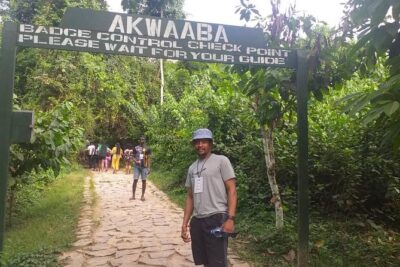
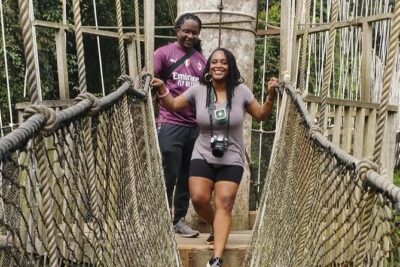
- Kakum Canopy Walk with wooden suspension bridges high overhead
- Assin Manso Slave River Park as a sacred remembrance point with the Slave River story
- Cape Coast Castle and dungeons showing how the colonial system worked
- Elmina’s layered trading-post history from Portugal to the Dutch to Britain
Other ways to see Accra, from half-day loops to full-day drives
- Experience the Beauty, History and the Culture Of Accra in a Day★ 5.0 · 323 reviews
- Accra Detailed City Tour★ 4.5 · 118 reviews
- Accra Guided City Tour Experience★ 4.7 · 88 reviews
- Accra Guided City Tour Experience★ 5.0 · 76 reviews
Accra’s first morning: Asomdwe Park to Independence Square

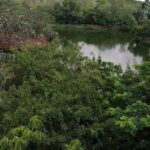
On Day 1, Accra starts with a calm change of pace. Asomdwe Park is the setting for the mortal remains of the Late Former President J.E.A Mills. For a lot of visitors, that detail matters because it gives the day a human anchor, not just a list of sights. The grounds feel serene, and it also works like a small animal area, with mentions of ostrich, fishes, and birds. It’s a nice way to stretch your legs before the day turns more monumental.
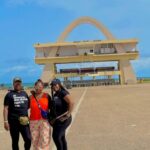
From there, you move to one of Accra’s signature symbols, Independence Square. This is where the Independence Arch sits alongside the Black Star Gate and the Liberation Day Monument. If you’re trying to understand Ghana beyond headlines, this stop helps you connect independence to physical space. You’re not just reading about nationhood, you’re standing inside the way it’s been commemorated.
Practical tip: build in a few slow minutes at Independence Square for photos and just watching people pass through the area. Monuments are easier to enjoy when you’re not racing the clock.
Centre for National Culture: Ghana and West Africa under one roof
After the monuments, you shift into the Centre for National Culture. This is one of those museums where the structure helps you understand what you’re seeing. The exhibits are housed under a two-tiered rotunda, so you’re not stuck with a flat, corridor-only experience.
What I like here is that it isn’t only Ghana-focused. You’ll find collections that include neighbouring West African countries too, which helps you place Ghana in its wider regional context. Even when you’re interested mainly in Ghana, it’s useful to see the cultural connections that don’t stop at national borders.
What to expect: this stop is listed at about 40 minutes, so it’s more of a guided orientation than a day-long museum marathon. If you’re a slower reader type, you’ll probably want your guide to point you toward the most important displays first, then you can linger where you’re drawn in.
Kakum National Park’s Canopy Walk: a jungle view from above
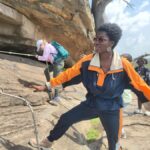
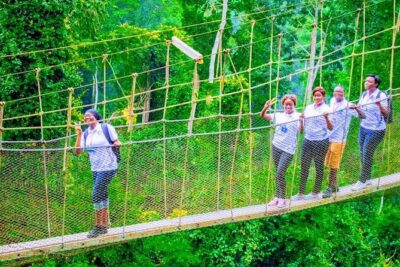
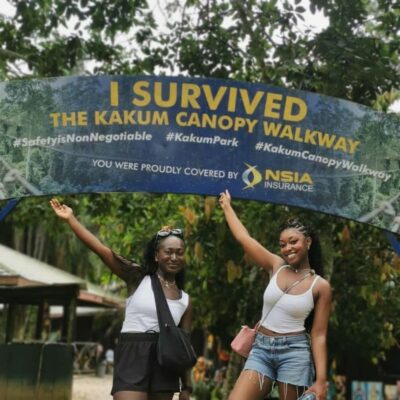
Day 2 brings Kakum National Park, and the star is the Kakum Canopy Walk. This is a real hike through rainforest scenery, but the headline is the wooden suspension bridges. They rise about a hundred feet overhead, giving you that “you are up there for real” feeling.
This stop stands out because it offers a different kind of perspective. Instead of looking at the forest floor, you see how the canopy forms a world of its own. Even if you’re not a nature person, the height and the motion of suspension bridges create a focus you can’t fake. It’s also the sort of walk that makes for great group bonding, because everyone has to slow down and watch their footing.
Consideration: suspension bridges can feel intimidating if you dislike heights. The route is designed for visitors, but the experience is still physically exposed compared with forest paths. If you fall into that category, you might appreciate going with a group and taking it one plank at a time.
Also, plan for the weather to change. Coastal regions can bring quick shifts in humidity and rain. Wear shoes that grip and won’t get ruined instantly if you happen to get sprayed.
Assin Manso Slave River Park: remembrance with a specific place in the story

Then the tour shifts into something much more solemn: Assin Manso Ancestral Slave River Park. This is described as the final link in the slavery route from northern Ghana, and it’s tied to one of the largest slave markets used by merchants supplying forts and castles along the coast.
This stop hits differently because it’s not just about ships and distant places. It’s about a local geography that people were forced through. The site is now considered sacred remembrance, and it includes both a cemetery and the Slave River itself.
Two details make the story feel concrete. First, former slaves re-interred here in 1998 include Samuel Carson from the USA and Crystal from Jamaica. Second, the river where the process happened is called ‘NNONKO NSUO’, meaning Slave River. The descriptions also note that people were washed and sorted before being sold to merchants, and that the river was part of that forced routine.
How to make this visit meaningful without turning it into a sad slog: walk slowly, listen carefully, and give yourself permission to feel uncomfortable. This isn’t entertainment. It’s a place where the past is being kept visible on purpose.
Practical tip: if you feel that you need to take a breath, do it. Step back, look at the river, and then continue when you’re ready. That little pause is part of respect.
Cape Coast Castle: the museum and dungeons you do not forget
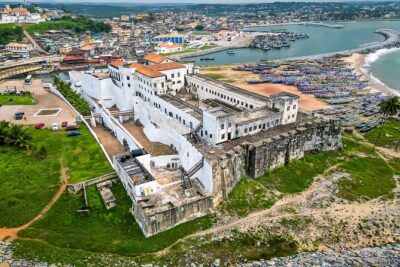
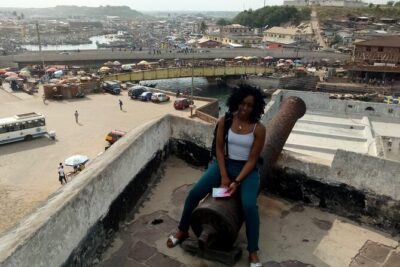
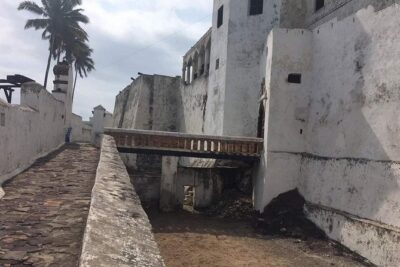
On Day 3, you reach Cape Coast Castle, and it’s the core of the coastal history portion. This castle served as one of the slave castles built along the Ghanaian coast. It also functioned as an administration center for British rule in West Africa.
What you’ll see here is structured around that dual purpose. The stop includes the museum and the dungeons where enslaved people were kept while awaiting shipping to the New World. Even without getting lost in dates, the layout helps you grasp a grim progression: confinement to processing to transport.
I like that the time here is set at about 45 minutes, because you can get the message without feeling like you’re stuck in one endless room. Still, don’t treat it like a quick photo stop. The dungeons in particular can be emotionally intense. If you’re traveling with family or friends, check in with each other and keep conversations respectful during the most difficult parts.
If you want your visit to land, go in with one mindset: you’re learning how systems work, not just collecting “facts.” The people endured something, and the building helps you understand how control was physically enforced.
Other trips down to Cape Coast, side by side
Elmina: Portugal to the Dutch to Britain, all on the same coast

After Cape Coast, you head to Elmina, described as the first European trading post built on the Gulf of Guinea. The timeline here is very specific: it’s said to have been founded by Portugal in 1482, taken over by the Dutch in the 17th century, and by Britain in the late 19th century.
That layered control matters because it shows how trade networks and colonial power shifted over time. Elmina Castle and other forts along the Gold Coast protected ports tied to European-African trade, and later those same fortified sites became centers of the trans-Atlantic slave trade.
The UNESCO angle is another good reason to include Elmina. The information notes that Elmina Castle, along with 17 other fortified trading posts in Ghana, is on the UNESCO World Heritage List under Forts and Castles. Even if you don’t care much about UNESCO labels, it helps explain why these places get protected and why they’re treated as more than old buildings.
What to expect: Elmina’s stop time is about 45 minutes and it’s listed as free admission. That’s a nice bonus near the end of a full tour, especially if you’re budgeting carefully.
Price and value: what $490 per person really buys you

Let’s talk money. The price is $490 per person for roughly 3 days, with pickup offered and group discounts mentioned. At this price point, the question isn’t just whether you got tickets, it’s whether you got your time protected.
Here’s what you’re effectively paying for:
- Transportation and scheduling across multiple major sites, instead of you stitching together buses and day-to-day plans
- Guided interpretation at places where you’ll otherwise miss the meaning fast, especially at remembrance sites and castles
- Admissions included for most stops (Asomdwe Park, Independence Square, Centre for National Culture, Kakum National Park, Assin Manso Slave River Park, and Cape Coast Castle are listed with admission tickets included; Elmina is listed as free)
Is it expensive? For some budgets, yes. But the sites are not the type you casually “DIY” in a single day, and the tour’s pacing suggests it aims to reduce stress. You’re also not dealing with the hassle of coordinating entry times and knowing what to prioritize.
A helpful signal: the overall rating is 4.7 based on 3 reviews, and the feedback highlights customization and solid support from the people running the show.
Guides, customization, and that feeling of safety on the ground

One of the biggest strengths shows up in the reviews through names and behavior. Mohammed is mentioned as customizing itineraries, even accommodating a last-minute addition. Maanan is described as outstanding, with patience and kindness, and the overall service is framed as safe for solo travelers.
Another name you’ll see connected to comfort and confidence is Med and Richard, again in the context of a solo trip where the traveler felt right at home.
You should not underestimate how much that matters in Ghana, especially when your days include emotionally heavy sites. A good guide does more than translate words. They help you stay oriented, adjust the pace when needed, and make sure you’re not simply walking from stop to stop without understanding why.
If you want to get the best value from this kind of tour, do one simple thing before you go: tell your guide what you care about most. If it’s history, say so. If it’s nature, say so. If you want more time in remembrance spaces to absorb, request that too.
Who this tour fits best, and who should consider a different plan
This Accra + Cape Coast format works well if you want two distinct experiences on one trip: city context in Accra, then coastal history and nature in the Cape Coast area. It also suits people who prefer a guided plan with set stops and enough structure to keep things moving.
You should especially consider this if you:
- want pickup and a clear schedule instead of figuring everything out
- like a balance of monuments, museums, nature walking, and historic sites
- prefer a private group setup, so the pace feels tailored
It might be less ideal if you:
- hate early starts, since it begins at 6:00 am
- need lots of downtime each day, because the stops are clustered across consecutive days
- prefer only light, upbeat sightseeing, because Assin Manso and Cape Coast Castle are serious memorial and punishment-site contexts
Should you book Here is Ghana Tours for Accra and Cape Coast?
My take: if your goal is to understand Ghana through both place and story, this is a strong choice. The price makes sense because it bundles transport, guidance, and most admissions into a smooth package, and the itinerary includes stops that you can’t easily substitute with a quick pass.
Book this tour if you want:
- a guided route that connects Accra’s independence story to the coast’s forced history
- Kakum’s canopy walk as a high-impact nature break
- a team that can handle personalization, not just a rigid checklist
Don’t book it if you only want casual sightseeing and you’re not ready for the emotional weight at Assin Manso and Cape Coast Castle. There’s no trick to soften those stops, and the tour’s power comes from facing the material directly.
If you do book, one last piece of practical advice: bring quiet respect into the remembrance and dungeon parts, and give yourself room afterward to breathe. Then the full 3 days will feel like a complete arc, not just a sequence of places.
FAQ
How much does the 3 Days Accra City Tour & Cape Coast Tour cost?
It costs $490.00 per person.
How long is the tour?
The tour duration is approximately 3 days.
What time does the tour start?
The start time is 6:00 am.
Is pickup offered, and do we return to the meeting point?
Pickup is offered, and the activity ends back at the meeting point.
Is this tour private or shared?
It is private. Only your group will participate.
What are the main stops on the tour?
In Accra, the stops include Asomdwe Park, Independence Square, and the Centre for National Culture. On the Cape Coast side, the stops include Kakum National Park, Assin Manso Ancestral Slave River Park, Cape Coast Castle, and Elmina.
Are entrance fees included?
Admission tickets are listed as included for most stops. Elmina is listed as free.
What is the cancellation policy?
Free cancellation is available.
Can I cancel for a full refund?
Yes. You can cancel up to 24 hours in advance of the experience for a full refund. If you cancel less than 24 hours before, the amount you paid will not be refunded.
Longer Routes Through Ghana
- 10 Days Trip to Cape Coast and Elmina Castles from Accra
★ 5.0 · 31 reviews - 10 Days Ghana Cultural and Heritage Trip
★ 5.0 · 31 reviews - Explore Ghana Multi Day Tour
★ 5.0 · 29 reviews - Ghana City 2-day Tour
★ 5.0 · 21 reviews - 2-Day Private Tour to the Mount Afadjato and Wli Waterfalls
★ 5.0 · 17 reviews
More Trips Down to Cape Coast
- The Cape Coast Day Tour
★ 5.0 · 525 reviews - The Cape Coast Tour
★ 5.0 · 177 reviews - From Accra: Cape Coast, Elmina Castle & Kakum Park Day Tour
★ 4.6 · 144 reviews - Accra To Cape Coast And Elmina Day Tour
★ 5.0 · 75 reviews - Cape Coast ,Elmina Castle and Kakum Full-Day Tour
★ 5.0 · 62 reviews
Seeing Accra Another Way
- Experience the Beauty, History and the Culture Of Accra in a Day
★ 5.0 · 323 reviews - Accra Detailed City Tour
★ 4.5 · 118 reviews - Accra Guided City Tour Experience
★ 4.7 · 88 reviews - Accra Guided City Tour Experience
★ 5.0 · 76 reviews - Know Ghana in 4 hrs – Accra City Tour
★ 4.5 · 47 reviews
Latest Accra reviews added here

Cape Coast Castle Tours, compared.
 ★ 5.0The Cape Coast Day TourFrom $155525 reviews
 ★ 5.0The Cape Coast TourFrom $170177 reviews
 ★ 4.6From Accra: Cape Coast, Elmina Castle & Kakum Park Day TourFrom $110144 reviews
 ★ 5.0Accra To Cape Coast And Elmina Day TourFrom $16575 reviews
 ★ 5.0Cape Coast ,Elmina Castle and Kakum Full-Day TourFrom $15562 reviews
 ★ 5.010 Days Trip to Cape Coast and Elmina Castles from AccraFrom $4,69531 reviews
 ★ 5.0Cape Coast and Elmina Castles TourFrom $15731 reviews
 ★ 5.0The Homecoming Experience To Cape-coast And Elmina.From $18028 reviews
Browse the lists this tour appears in