
REVIEW · ACCRA SIGHTSEEING TOURS
Experience Accra
Accra can feel like two cities in one day. This private highlights tour lines up major stops like Kwame Nkrumah Memorial Park and the National Museum of Ghana, then adds real local time at Makola Market so you get the street-level vibe, not just photos.
I also like that the guide connects what you’re seeing to Ghana’s larger story, including the hard chapters of the Transatlantic Slave Trade. One possible drawback: you’re on a moving schedule, so if you want long beach lounging or lots of slow wandering, you may feel a bit rushed.
If you’re the type who likes a plan but still wants to ask questions, this works well. You’ll be driven around in an air-conditioned vehicle, and the stops are timed so you can take pictures, go inside where you want, and then move on without hunting for directions. The private format also means your pace can be adjusted.
In This Review
- Key things to notice before you go
- How this Accra highlights route actually works
- Pickup, tickets, and timing you can plan around
- Stop 1: Kwame Nkrumah Memorial Park and Museum
- Stop 2: Makola Market, bargaining help, and local energy
- Stop 3: James Town Lighthouse, quick photos and optional walking
- Stop 4: W.E.B. Du Bois Center and the late-life Ghana story
- Stop 5: Centre for National Culture for crafts and art choices
- Stop 6: National Museum of Ghana for context after the streets
- Lunch on your terms, plus a beach break if your guide adds it
- The Transatlantic Slave Trade story, and why it belongs on this route
- Price and value: what $123.08 buys you
- Who this Accra highlights tour fits best
- Should you book this Accra day tour?
- FAQ
- What places does this Accra tour visit?
- How long is the tour?
- Is pickup available?
- Are entrance fees included?
- Is lunch included?
- Is this tour private?
- What happens if the weather is bad or I need to cancel?
Key things to notice before you go
- Private guide, your pace: You’re not squeezed into a big group script.
- Makola Market support: Help with bargaining and learning what you’re looking at.
- Admissions are included at each listed ticketed stop.
- A mix of sites and context: Museums and memorials plus everyday Accra.
- Optional walking time near James Town Lighthouse if you’re up for it.
- History that gets explained in plain terms, including the Transatlantic Slave Trade.
Other ways to see Accra, from half-day loops to full-day drives
- Experience the Beauty, History and the Culture Of Accra in a Day★ 5.0 · 323 reviews
- Accra Detailed City Tour★ 4.5 · 118 reviews
- Accra Guided City Tour Experience★ 4.7 · 88 reviews
- Accra Guided City Tour Experience★ 5.0 · 76 reviews
How this Accra highlights route actually works
This tour is designed as a “best of Accra, with context” day. You’ll start with a major memorial and museum stop, then swing through a central market area, and finish with culture and museum time. It’s a logical order, because you’ll learn themes first, then see where those themes show up in the city.
Your day runs about 1 to 6 hours, depending on how much time you spend at each stop and how quickly you move between them. The route includes ticketed entries for the stops listed, and you get bottled water plus air-conditioned transport. That matters in Accra, where you feel the heat if you’re out too long without breaks.
You can also plan for a photo-friendly day. At places like James Town Lighthouse, you’re set up for a quick picture stop, and if you want, you can add a short walk through the town. This is helpful if you’re traveling with people who can do “quick looks” but not always “slow exploring.”
Pickup, tickets, and timing you can plan around
Pickup is offered, and the tour ends back at your meeting point. That reduces friction, especially if you’re new to the city and you’d rather spend time seeing things than figuring out how to return.
You’ll receive confirmation at booking, and the experience uses a mobile ticket. For me, that combo is practical: you don’t have to keep track of paper, and you can show up with less stress.
One more note that affects your timing: the tour requires good weather. If conditions are poor and the day is canceled, you’ll be offered another date or a full refund. If you’re on a tight schedule, I’d book with at least one backup day in your itinerary.
Stop 1: Kwame Nkrumah Memorial Park and Museum
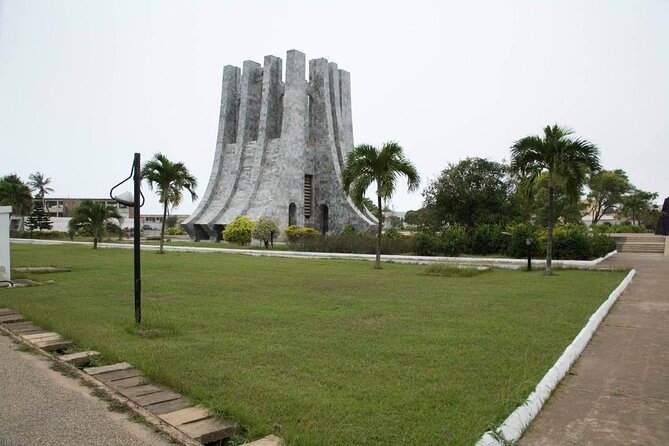
This is where the tour anchors you. At Kwame Nkrumah Memorial Park, you’ll visit the museum area connected to Ghana’s first president, Kwame Nkrumah, including the fact that he was buried there with his wife. That kind of detail gives the place more weight than a generic “look at a statue” stop.
You’ll have about an hour here, which is enough time to take in the museum displays and still breathe. The park setting also gives you a break from street heat, and you can regroup before the market portion.
What I like about starting here is that it sets the frame for everything else. Later stops deal with identity, culture, and the legacy of historical events. When you start with a memorial that ties leadership to place, the rest of the day feels more connected.
Stop 2: Makola Market, bargaining help, and local energy
Next up is Makola Market, and this is the stop that often turns a tour from “sights” into a real experience. Your guide meets you where you want to begin, and you spend around 40 minutes at the market. The guide stays with you the whole time, which is a big deal when you want to browse but still feel comfortable.
The practical value here is bargaining support. If you’re not used to negotiating in markets, this is where having a private guide can save you from awkward back-and-forth. Your guide can also help you figure out what’s worth looking at, what’s overpriced, and what’s just normal price chatter.
You also get the full sensory effect of a market without having to “survive it” alone. That’s the key. You can feel the energy, ask questions, and still step back when you’ve had enough.
Possible consideration: markets can be crowded and active. If your group is sensitive to noise or tight spaces, you’ll want to communicate that to your guide early so they can help you move at a comfortable pace.
Stop 3: James Town Lighthouse, quick photos and optional walking
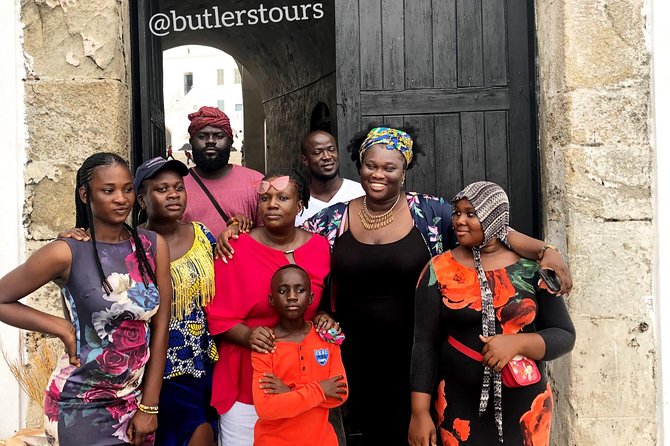
At James Town Lighthouse, the plan is refreshingly simple. You’ll make a stop for pictures, and if you want, you can add a walk through the town. The lighthouse stop is about 30 minutes, so it works well as a breather between longer museum-style visits.
I like this stop because it reminds you that Accra is also a coastal city with a maritime past. Even if you only do the photo moment, it’s a visual pause that changes the pace of the day.
If you do choose the walk, wear shoes you’re comfortable with on uneven ground and keep your attention on where you’re stepping. This is one of those places where you can get great street photos, but you also want to stay aware.
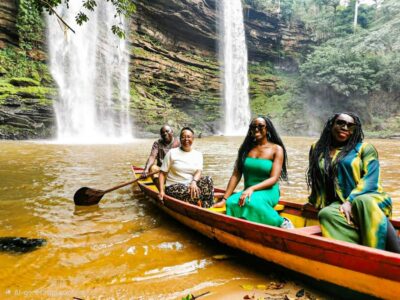
Stop 4: W.E.B. Du Bois Center and the late-life Ghana story
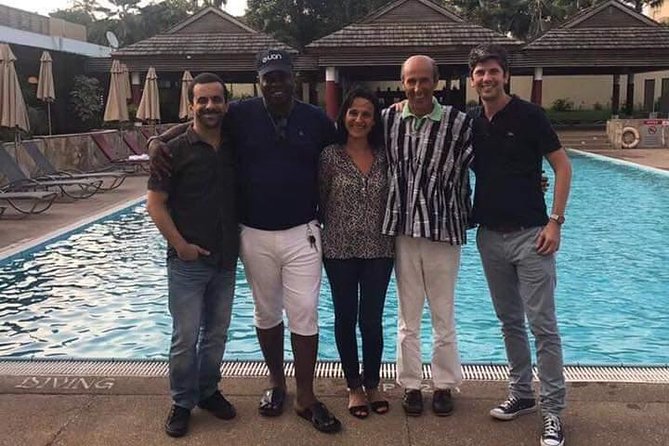
Then the tour shifts to a more reflective, personal history. You’ll visit the W.E.B. Du Bois Center, including time to see aspects of his work and learn about his later years spent in Ghana. It’s about an hour, which gives you enough time to read, look, and connect the biography dots.
This stop tends to hit differently because Du Bois is such a recognizable figure. What makes it valuable is the Ghana angle, not just the name. You leave with a clearer sense that historical figures didn’t just pass through, they built relationships and connections here.
If you’re the kind of traveler who likes meaning behind places, this is a high-impact stop. It also sets you up well for the next ones, which focus more directly on culture and national identity.
Stop 5: Centre for National Culture for crafts and art choices
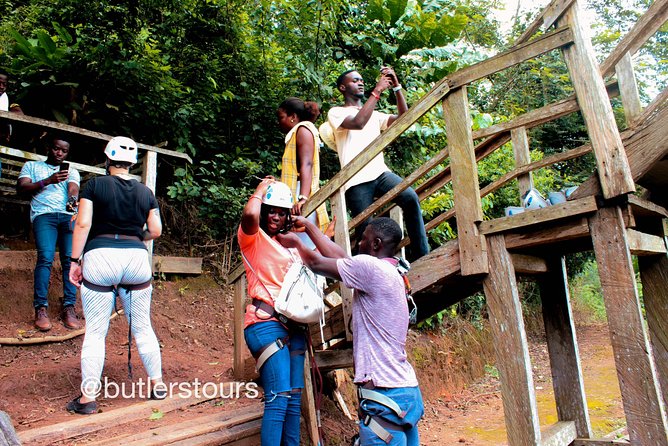
At the Centre for National Culture in Accra, you’re looking at the creative side. The visit is about an hour and gives you a chance to see and buy African goods and artifacts. Your guide can help you make sense of what you’re seeing and decide what you actually want to take home.
I think this is a smart inclusion because it turns shopping from a random hunt into something you can do with context. Instead of buying just because it looks pretty, you can ask what materials are used, what the object represents, and what you’re paying for.
Possible drawback: if you’re not interested in shopping at all, you might feel time is spent where you’d rather be sightseeing. The good news is you’re not forced to buy anything. The center still works as a cultural stop for people who want to look and ask questions, then move on.
Stop 6: National Museum of Ghana for context after the streets
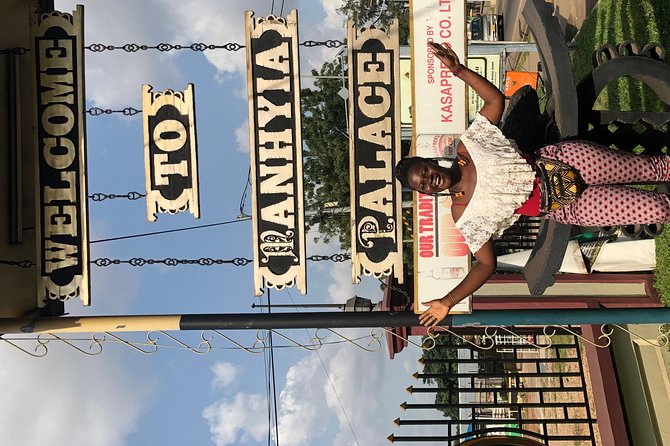
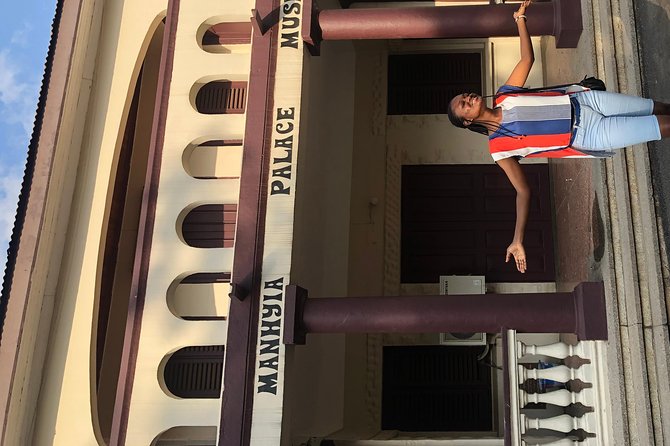
Finishing at the National Museum of Ghana helps the day click into place. You’ll have about an hour to see other parts of Ghana and learn more about culture in a bigger, organized way. It’s a helpful endpoint after you’ve already visited memorials and spent time in a market.
What I like about ending with a museum is that it’s where you can synthesize. Markets show you day-to-day life and trade. Memorials show you identity and leadership. Museums help you connect details across themes, so you don’t leave with separate photo folders that don’t talk to each other.
This is also a good stop for groups with mixed interests. If someone isn’t into crafts, they’ll still find something to appreciate here. If someone is into culture, the museum gives structure to what you saw earlier.
Lunch on your terms, plus a beach break if your guide adds it
Lunch is not included, but you do have freedom to choose. The tour description suggests a traditional Ghanaian lunch on the beach as an option at your own expense. This is one of those “spend your money well” moments, because choosing a beach-side meal can turn a standard stop into a relaxed pause.
One guide, Awuracy, gets praised for folding history and culture into the day, including showing people how locals relax and enjoy themselves near Labadi Beach. That kind of stop is a strong reminder that Accra is more than monuments and museums. It’s also everyday life, casual time, and ocean air.
If you plan this day around lunch, I’d treat it as flexible. If you find a place that looks clean, busy in a good way, and you can see what you’re ordering, go for it. But don’t skip water, and don’t wait until you’re too hungry to think clearly.
The Transatlantic Slave Trade story, and why it belongs on this route
This tour doesn’t treat history as a lecture you only half remember. Your guide provides information about the dark years of the Transatlantic Slave Trade while you visit the major sites and cultural spaces. That matters, because Ghana’s story is tied to global events that still shape how people interpret place today.
What makes this valuable is how it shows up in the order of the day. You start at a national memorial, then move through culture and community spaces, and finally end with museums that help you anchor what you learned. You’re not just hearing facts, you’re seeing environments where those meanings live.
A possible consideration is emotional intensity. If your group is sensitive, tell your guide how you want the information paced. In a private tour, you can ask for slower explanations, more breaks, or more focus on the present-day cultural side.
Price and value: what $123.08 buys you
At $123.08 per person, this tour is priced like a private, guided day with meaningful entries. The value angle is straightforward: you get an air-conditioned vehicle, bottled water, private transportation, a private guide, and admission tickets for the stops listed.
If you were doing this on your own, the admissions plus a driver plus guided interpretation could easily add up. Even if you personally love wandering without help, having someone who can guide the market time and connect history to what you’re seeing can save time and reduce guesswork.
Also, the price makes sense if you’re traveling with a small group or partner who wants flexibility. Private format is where this day really shines. The guide can adjust pace, answer questions, and spend a little more time where your group is curious.
Who this Accra highlights tour fits best
This tour suits you if you want structure without feeling like a factory tour. You get major sites like Kwame Nkrumah Memorial Park, W.E.B. Du Bois Center, and the National Museum of Ghana, plus local life at Makola Market.
It’s also a great fit if you like history, but you prefer it explained as you go. The guide role matters because it helps you connect names, places, and themes instead of just collecting landmarks.
I especially think it works well for first-timers to Accra. You get orientation fast, and the itinerary keeps you from missing big-picture stops that most visitors want.
Should you book this Accra day tour?
Yes, if you want a well-paced overview that mixes memorials, culture, and market time with a guide who can explain what you’re seeing in context. Book it if you’re traveling with someone who likes museums and also someone who needs a taste of everyday Accra.
I would consider a different option if your top goal is long, flexible beach time or if you only want one or two locations. This is built as a “highlights” route, so you’ll be moving through several stops in one day.
If you book, do one smart thing: tell your guide what you care about most. Ask for time at Makola Market if shopping interests you, or ask for more focus on museum themes if you prefer context. With a private guide, you can shape the day to match your style.
FAQ
What places does this Accra tour visit?
It includes stops at Kwame Nkrumah Memorial Park, Makola Market, James Town Lighthouse, W.E.B. DuBois Center, the Centre for National Culture in Accra, and the National Museum of Ghana.
How long is the tour?
The duration is listed as 1 to 6 hours, depending on how your time is spent at each stop and how the day flows.
Is pickup available?
Yes, pickup is offered, and the tour ends back at the meeting point.
Are entrance fees included?
Yes. Admission tickets are included for the stops listed in the itinerary.
Is lunch included?
Lunch is not included.
Is this tour private?
Yes. It is a private tour/activity, and only your group participates.
What happens if the weather is bad or I need to cancel?
The experience requires good weather. If it is canceled due to poor weather, you will be offered a different date or a full refund. Cancellation is free up to 24 hours in advance for a full refund.
More Ghana Tours Out of the Review Pile
- The Cape Coast Day Tour
★ 5.0 · 525 reviews - Experience the Beauty, History and the Culture Of Accra in a Day
★ 5.0 · 323 reviews - The Cape Coast Tour
★ 5.0 · 177 reviews - From Accra: Cape Coast, Elmina Castle & Kakum Park Day Tour
★ 4.6 · 144 reviews - Accra Detailed City Tour
★ 4.5 · 118 reviews
Seeing Accra Another Way
- Experience the Beauty, History and the Culture Of Accra in a Day
★ 5.0 · 323 reviews - Accra Detailed City Tour
★ 4.5 · 118 reviews - Accra Guided City Tour Experience
★ 4.7 · 88 reviews - Accra Guided City Tour Experience
★ 5.0 · 76 reviews - Know Ghana in 4 hrs – Accra City Tour
★ 4.5 · 47 reviews
Latest Accra reviews added here



Accra Sightseeing Tours, compared.
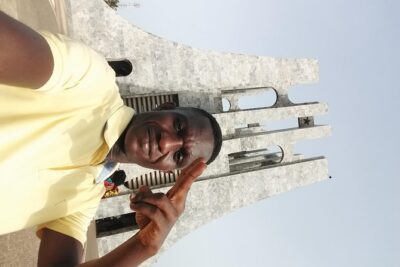 ★ 5.0Experience the Beauty, History and the Culture Of Accra in a DayFrom $80323 reviews
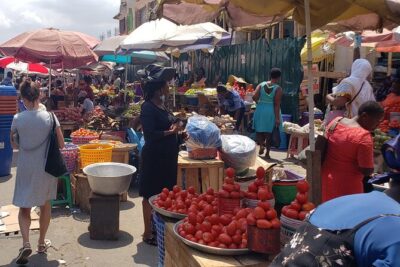 ★ 4.5Accra Detailed City TourFrom $80118 reviews
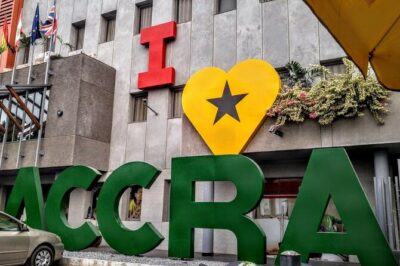 ★ 4.7Accra Guided City Tour ExperienceFrom $4588 reviews
★ 5.0Accra Guided City Tour ExperienceFrom $7076 reviews
★ 4.7Accra Guided City Tour ExperienceFrom $4588 reviews
★ 5.0Accra Guided City Tour ExperienceFrom $7076 reviews
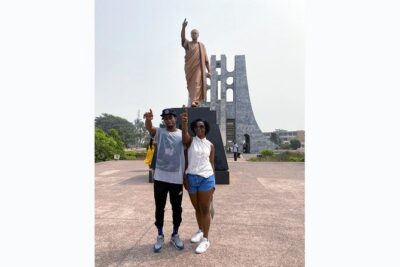 ★ 4.5Know Ghana in 4 hrs – Accra City TourFrom $10047 reviews
 ★ 4.5Guided City Tour with LunchFrom $10640 reviews
 ★ 4.5Escape Accra City to Aburi Gardens and Tetteh Quarshie Cocoa FarmsFrom $17032 reviews
 ★ 4.7ACCRA GUIDED CITY TOUR, GHANAFrom $13029 reviews
Browse the lists this tour appears in