
REVIEW · ACCRA SIGHTSEEING TOURS
Accra City Tour Experience
Accra hits different when you learn the story behind each stop. This private Accra city tour mixes Ghana’s big names, its art scene, and everyday market life, with admission fees included and a private guide for a more personal pace. One consideration: the day runs about 5 to 8 hours, so you will want to plan your energy and departure time accordingly.
I like how the route goes beyond a photo run. You start at Aburi Botanical Gardens to connect plants with medicinal uses, then move into city landmarks like Makola Market, Independence Square, and major cultural stops. If you want context for what you are seeing, this format does that.
The price is $72 per person, which is not cheap if you are only chasing a few quick sights. But when you factor in pickup, an air-conditioned vehicle, a professional guide, bottled water, and admissions included at each stop, it starts to look more sensible. Just be ready to handle lunch on your own since it is not listed under included items.
In This Review
- Key highlights worth planning around
- A private Accra route that links everyday life to national identity
- Aburi Botanical Gardens: plants with medicinal meaning
- Makola Market (1924): where trade, shopping, and social life intersect
- Kwame Nkrumah Memorial Park: a focused look at Ghana’s first president
- Centre for National Culture, Accra: art you can meet and buy
- Independence Square: March 6, 1957, plus photo time and horse rides
- National Museum of Ghana: opened for independence, built for context
- W.E.B. Du Bois Memorial Centre: Pan-African culture through library and graveyard
- Price and logistics: why $72 can be a smart buy
- How to time your day and shop smarter in Accra
- Should you book the Accra City Tour?
- FAQ
- What is the duration of the Accra City Tour?
- What time does the tour start?
- Does the tour include pickup and drop-off?
- What is included in the price?
- Is lunch included?
- Which stops are part of the tour?
- Is this a private tour?
- What is the cancellation policy?
Key highlights worth planning around
- Aburi Botanical Gardens with medicinal-plant context sets the tone before you hit the city’s main landmarks.
- Makola Market, built in 1924, is a real trade hub, not a staged tourist market.
- Kwame Nkrumah Memorial Park gives you a focused look at Ghana’s first president.
- Centre for National Culture is where local art becomes souvenirs you can take home.
- Independence Square photos plus horse rides add a little fun to the historic setting.
- W.E.B. Du Bois Memorial Centre connects Accra to Pan-African culture through library and graveyard visits.
Other ways to see Accra, from half-day loops to full-day drives
- Experience the Beauty, History and the Culture Of Accra in a Day★ 5.0 · 323 reviews
- Accra Detailed City Tour★ 4.5 · 118 reviews
- Accra Guided City Tour Experience★ 4.7 · 88 reviews
- Accra Guided City Tour Experience★ 5.0 · 76 reviews
A private Accra route that links everyday life to national identity
This is a private tour, meaning it is just your group with a guide and vehicle. That matters in Accra because you are not stuck waiting for a large group to figure out what they want to do next. You can ask questions, pause for photos, and move at a pace that fits your comfort.
You also get free pickup and drop-off within Accra City, plus an air-conditioned vehicle. In a day that can stretch to 8 hours, that comfort is more than a luxury. It helps you stay focused on what you came for: Ghana’s history, culture, and nature, in that order.
The tour starts at 9:30 am. Starting in the morning gives you better light for outdoor stops like Independence Square and helps you avoid the most tiring mid-day stretches. It also pairs well with the botanical gardens start, which is more enjoyable when it is not too hot.
If you are wondering about who might guide you, the name Foster shows up in feedback tied to prompt pickup and a well-structured day. That aligns with what you want from a city tour guide: clarity, timing, and answers that connect the dots instead of listing facts.
Aburi Botanical Gardens: plants with medicinal meaning
The morning begins at Aburi Botanical Gardens. The key theme here is how plants relate to medicinal purposes. Instead of treating the gardens as just pretty scenery, your guide frames what you see as part of Ghana’s knowledge of nature and health.
Why this stop is smart: it gives you a baseline understanding of how people think about local resources. After that, the city stops feel less random. You are not just collecting landmarks. You are building a story.
Practical tip: wear shoes you can walk in comfortably, since gardens usually mean uneven ground and some time on foot. Also bring sun protection. The tour includes bottled water, but you still want to protect yourself from strong daylight during the day.
One possible drawback to keep in mind: the botanical garden stop can add a bit of walking and time before you reach the main city sites. If you are short on stamina, tell your guide early. A good guide can help you pace without skipping the meaning of the visit.
Makola Market (1924): where trade, shopping, and social life intersect
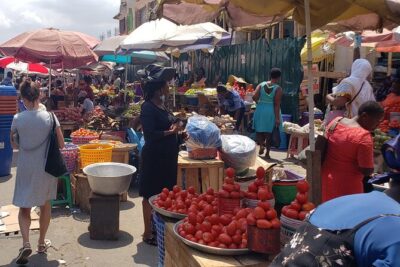
Makola Market is the pulse of urban Ghanaian life. It was constructed in Accra in 1924 and is described as the main wholesale and retail marketplace in the city. That is important. This is not a themed market built for visitors. It is a working marketplace that locals depend on.
You get a 45-minute window and an admission ticket is included. That time is long enough for window-shopping, browsing stalls, and picking up small souvenirs if you want them. It is also short enough that you do not feel trapped if the market gets busy.
What I like about this stop: it gives you a taste of day-to-day culture. You can see how people buy, sell, and negotiate without turning it into an awkward performance. When you keep your questions simple, guides can explain what different stalls sell and what is useful for visitors.
Shop smart if you plan to buy:
- Set a rough souvenir budget before you enter.
- Plan for cash and small denominations, since markets often run on quick transactions.
- Buy items you can actually use later, like textiles or small locally made crafts.
A consideration: markets can be loud and full of movement. If you are easily overwhelmed, use the “look first, ask second” strategy. Your guide can point you toward the right areas and help you avoid getting lost.
Kwame Nkrumah Memorial Park: a focused look at Ghana’s first president
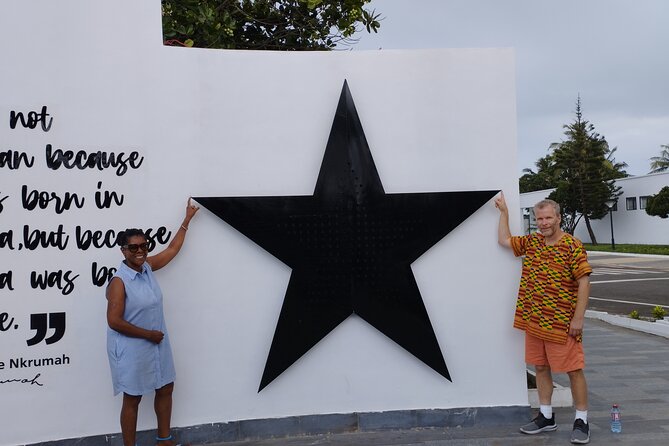
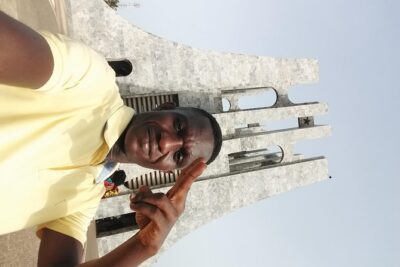
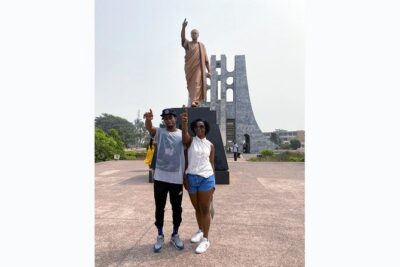
Next is Kwame Nkrumah Memorial Park, also known as the Kwame Nkrumah Mausoleum. This is the final resting place of Ghana’s first president, Osagyefo Dr. Kwame Nkrumah. Your time here is about 45 minutes, and admission is included.
This stop works because it is specific. You are not getting general political background. You are seeing a dedicated space tied to Nkrumah’s role and legacy, and your guide connects that legacy to Ghana’s independence story.
What to expect:
- A calm, reflective change from the energy of Makola Market.
- Time to learn and to take photos in a setting that signals national importance.
Why it fits well in this tour: it sits between market life and the cultural and museum stops that come next. It helps you understand that Ghana’s present day culture is connected to historical decisions and leadership.
Centre for National Culture, Accra: art you can meet and buy
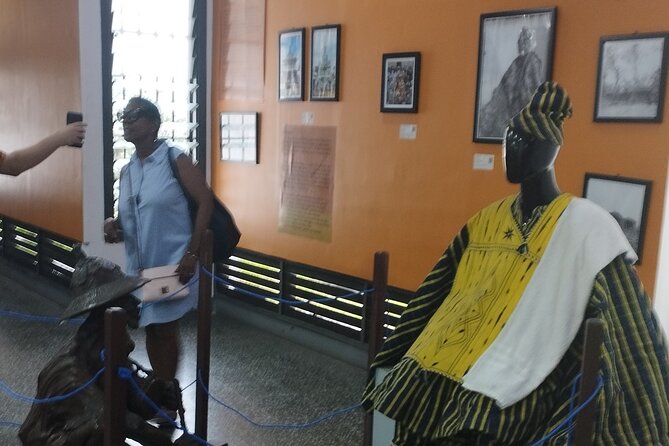
The Centre for National Culture is where the tour shifts into art. You get around 45 minutes, with an admission ticket included. This is a stop built for seeing local artworks made by Ghanaian artists, plus having the chance to purchase souvenirs directly from that creative environment.
I like this kind of cultural stop because it is not just about looking. You can ask questions, see the work up close, and buy if something truly speaks to you. If you collect textiles, paintings, or fabric-based pieces, this is the place to look.
A practical note: keep an eye on your luggage space. This is where art can turn into bigger purchases quickly. If you are unsure what you want, browse first. Let your guide explain what materials are typical or what themes are common, then decide.
One drawback to consider: art centers can be busy, and the experience depends a lot on your personal taste. If you are not an art shopper, you will still learn from the displays, but you might enjoy the cultural context more than the purchasing side.
City runs in other Ghanaian towns
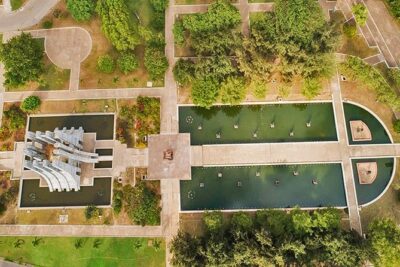
Independence Square: March 6, 1957, plus photo time and horse rides
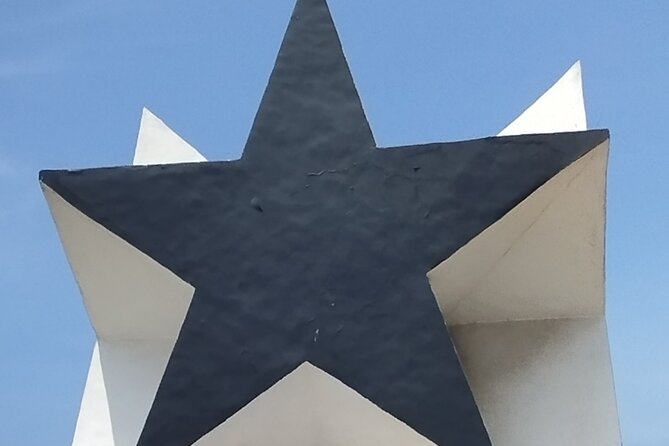
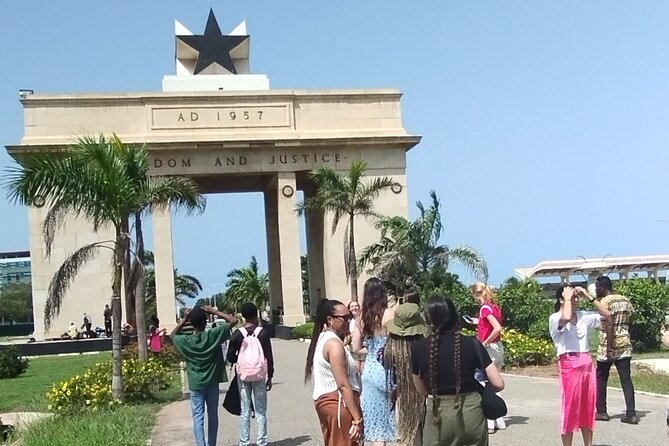
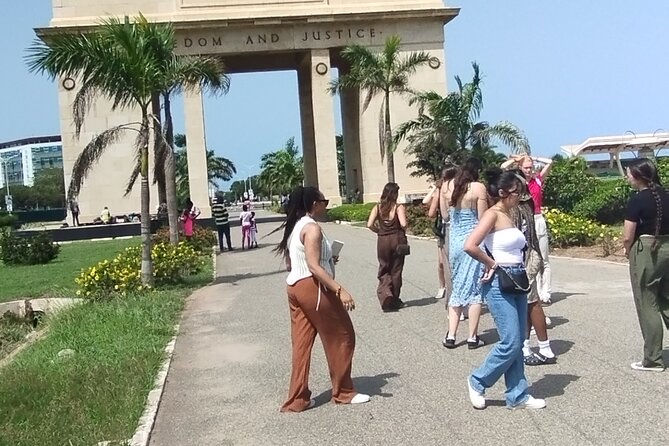
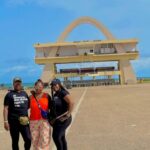
Independence Square is one of Accra’s must-do stops if you want Ghana’s modern story in a single place. Here, Ghana declared independence on 6 March 1957. You typically get 45 minutes, with admission included.
This stop is built for two things: history and fun. You can take pictures, and the tour info also mentions the chance to ride horses and enjoy the setting.
What makes it worth your time: it anchors the tour’s political history in a physical location. After learning about key figures like Kwame Nkrumah, you land in the broader national milestone that shaped Ghana’s identity.
Practical tip for photos: choose an angle that shows the square and your surroundings, not just a close-up. The space itself helps tell the story. If you plan to do horse rides, listen carefully to your guide on how it works and wear comfortable clothing for getting on and off.
One consideration: if you are sensitive to crowds, this is a good stop to manage with your guide’s timing. Morning tends to be smoother, and a quick plan helps.
National Museum of Ghana: opened for independence, built for context
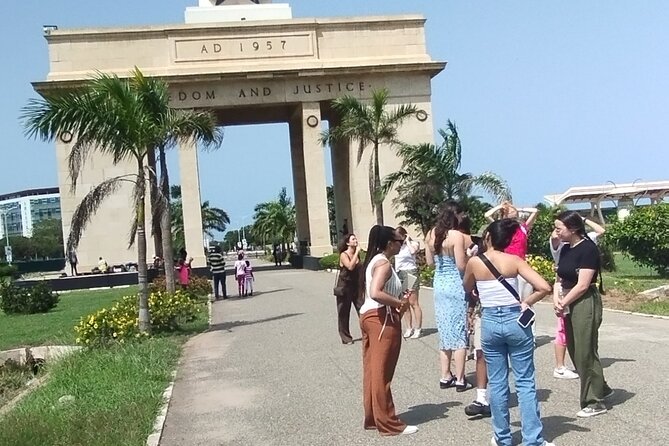
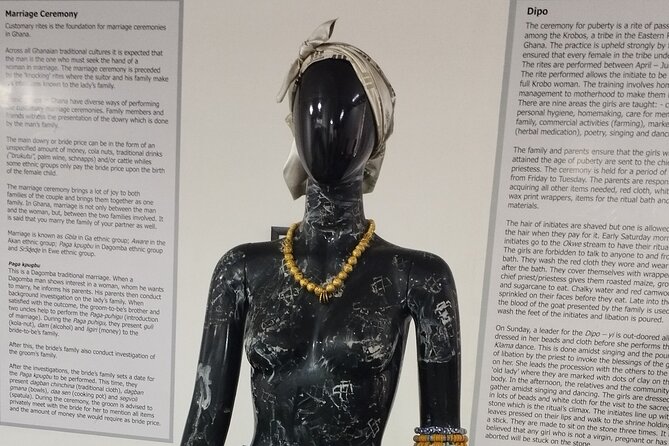
The National Museum of Ghana is the largest and oldest of the six museums administered by the Ghana Museums and Monuments Board. You get about 1 hour here, and admission is included.
The museum building was opened on 5 March 1957 as part of Ghana’s independence celebrations. That connection matters. You are not just touring a building with exhibits. You are inside a site that reflects how Ghana presented itself at the moment of independence.
What you will likely see includes paintings and lots of other art forms: sculptures, fabric art, and older materials used in earlier times. The tour gives you a broad sweep, which is helpful if you do not want to feel like you need to study for days.
How to get more from your hour:
- Ask your guide what themes are most important for first-time visitors.
- Spend extra time on one or two areas that match your interests, like textiles or sculpture.
- Keep track of what feels most relevant to the stops you already saw that day.
A consideration: an hour is enough for a first look, not enough for deep study. If you love museums and want more detail, you might come back later on your own. For this tour, the goal is orientation and context.
W.E.B. Du Bois Memorial Centre: Pan-African culture through library and graveyard
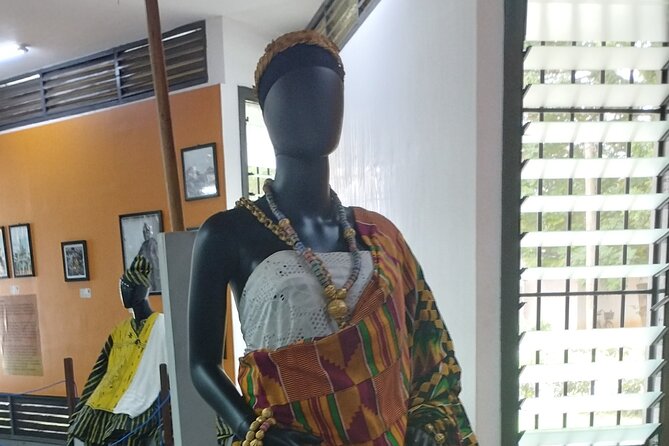
The final major cultural stop is the W.E.B. Du Bois Memorial Centre for Panafrican Culture – Ghana. You spend around 45 minutes and admissions are included.
This center focuses on Du Bois’s history as a Pan-Africanist and his contributions to Pan-Africanism. Your visit includes time at his library and also mentions a stop at his graveyard.
Why I think this stop is a strong match for the rest of the day: it broadens Ghana’s story outward. You start with Ghanaian plants and local knowledge. Then you move through national independence and Ghanaian art. Finally, you connect those themes to a global Pan-African movement.
What to do here: keep your questions simple and focused. Ask what Du Bois’s ideas meant in this setting, and ask your guide how the center tells the story.
One possible drawback: if you are tired by late morning or early afternoon, the center can feel more reflective and slower than market and square stops. That is not a bad thing. It just means you should keep your pace steady and your expectations realistic.
Price and logistics: why $72 can be a smart buy
Let’s talk value, not just cost. At $72 per person, this tour is priced in a way that makes sense when you look at what you are actually paying for.
Included items that matter for real-life costs:
- Air-conditioned vehicle for getting around Accra
- Free pickup and drop-off within Accra City
- Bottled water
- Professional tour guide
- All fees and taxes
- Admissions included at each listed stop
The big thing: transportation plus guide time plus admission costs add up fast. If you tried to recreate this day on your own, you would likely spend similar money once you combine rides, entry fees, and a guide who can explain what you are seeing.
One mismatch to flag: the tour features mention lunch, but the included list says lunch is not included. In practice, I would plan as if lunch is on you. Build in time to buy something nearby, or bring a simple snack you can eat during breaks if your day runs tight.
Also consider the total length, 5 to 8 hours. You are paying for a full-day flow, not a quick half-day hit. If you only have a few hours in Accra, look for a shorter tour. But if you want structure and context, this fits.
Booking wise, it is commonly reserved about 12 days in advance on average. If your dates are fixed, book ahead so you get the start time you want and avoid last-minute changes.
How to time your day and shop smarter in Accra
This tour gives you a steady schedule with planned stops, but your experience still depends on how you show up.
Since pickup starts from within Accra City and the start time is 9:30 am, set your morning up for calm. Don’t plan a stressful breakfast commute. You want to arrive ready to walk, take photos, and browse.
Bring a simple plan for spending time in markets and art centers:
- Bring a light day bag for small purchases.
- Keep some cash for local shopping, even if you think you will pay with cards.
- If you want souvenirs from Makola Market or art from the Centre for National Culture, decide what size items you can actually carry home.
Wear breathable clothes and comfortable shoes. The tour includes bottled water, but you should still pace yourself in warmer weather.
And use your guide. Ask what is normal to bargain on, if bargaining is common for the specific items you like. The goal is not to argue. The goal is to feel confident buying something without guesswork.
Should you book the Accra City Tour?
I would book this tour if you want a structured first trip to Accra with clear stops tied to Ghana’s identity. It is especially worth it if you care about more than landmarks. The combination of Aburi Botanical Gardens, Makola Market, Kwame Nkrumah Memorial Park, Independence Square, the National Museum, and the W.E.B. Du Bois Memorial Centre gives you both national history and cultural context.
You might skip it if:
- You only want one or two sights and prefer to roam without a schedule.
- You dislike markets or shopping and would rather spend your day on fewer stops.
- You are hoping lunch is included, since lunch is listed as not included.
Overall, for first-timers, this feels like a smart value because the day is planned, admissions are covered, and your guide does the connecting work for you. If you like tours that give you context you can actually use while you travel, this one deserves a spot on your Accra plan.
FAQ
What is the duration of the Accra City Tour?
The tour runs about 5 to 8 hours.
What time does the tour start?
The start time is 9:30 am.
Does the tour include pickup and drop-off?
Yes. There is free pickup and drop-off within Accra City.
What is included in the price?
Included items are an air-conditioned vehicle, all fees and taxes, car rental fees and fuel cost, free pickup and drop-off within Accra City, bottled water, and a professional tour guide. Admissions at the stops are also included.
Is lunch included?
Lunch is not listed under the included items.
Which stops are part of the tour?
The tour includes Makola Market, Kwame Nkrumah Memorial Park, Centre for National Culture, Independence Square, National Museum of Ghana, and W.E.B. Du Bois Memorial Centre for Panafrican Culture – Ghana. It also mentions starting at Aburi Botanical Gardens.
Is this a private tour?
Yes. It is a private tour/activity, and only your group participates.
What is the cancellation policy?
Free cancellation is available. You can cancel up to 24 hours in advance for a full refund. If you cancel less than 24 hours before the start time, the amount paid is not refunded.
A Wider Spread of Ghana Tours
- The Cape Coast Day Tour
★ 5.0 · 525 reviews - The Cape Coast Tour
★ 5.0 · 177 reviews - From Accra: Cape Coast, Elmina Castle & Kakum Park Day Tour
★ 4.6 · 144 reviews - Accra Detailed City Tour
★ 4.5 · 118 reviews - Accra Guided City Tour Experience
★ 4.7 · 88 reviews
More Ghana Tours Out of the Review Pile
- The Cape Coast Day Tour
★ 5.0 · 525 reviews - Experience the Beauty, History and the Culture Of Accra in a Day
★ 5.0 · 323 reviews - The Cape Coast Tour
★ 5.0 · 177 reviews - From Accra: Cape Coast, Elmina Castle & Kakum Park Day Tour
★ 4.6 · 144 reviews - Accra Detailed City Tour
★ 4.5 · 118 reviews
Seeing Accra Another Way
- Experience the Beauty, History and the Culture Of Accra in a Day
★ 5.0 · 323 reviews - Accra Detailed City Tour
★ 4.5 · 118 reviews - Accra Guided City Tour Experience
★ 4.7 · 88 reviews - Accra Guided City Tour Experience
★ 5.0 · 76 reviews - Know Ghana in 4 hrs – Accra City Tour
★ 4.5 · 47 reviews
Latest Accra reviews added here



Accra Sightseeing Tours, compared.
 ★ 5.0Experience the Beauty, History and the Culture Of Accra in a DayFrom $80323 reviews
 ★ 4.5Accra Detailed City TourFrom $80118 reviews
 ★ 4.7Accra Guided City Tour ExperienceFrom $4588 reviews
★ 5.0Accra Guided City Tour ExperienceFrom $7076 reviews
★ 4.7Accra Guided City Tour ExperienceFrom $4588 reviews
★ 5.0Accra Guided City Tour ExperienceFrom $7076 reviews
 ★ 4.5Know Ghana in 4 hrs – Accra City TourFrom $10047 reviews
 ★ 4.5Guided City Tour with LunchFrom $10640 reviews
 ★ 4.5Escape Accra City to Aburi Gardens and Tetteh Quarshie Cocoa FarmsFrom $17032 reviews
 ★ 4.7ACCRA GUIDED CITY TOUR, GHANAFrom $13029 reviews
Browse the lists this tour appears in