
REVIEW · ACCRA SIGHTSEEING TOURS
Accra city tour
Accra history hits different in the morning. This is a compact way to connect Ghana’s big story to everyday city life, and I especially like the admission tickets included at every main stop and the way your guide, often noted as Cardi, makes the details click. One thing to consider: it starts early and runs only if good weather cooperates.
You’ll cover four anchors of Accra, from Kwame Nkrumah Memorial Park to W.E.B. DuBois Center, with James Town and Independence Square in between. It’s priced like a real city tour, but with the comfort of pickup offered and a small group, capped at 2 travelers, so it does not feel like cattle herding.
Plan for a half-day that can stretch. The tour runs 3 to 8 hours depending on timing and how your day moves, and an early 6:30 am start means you should bring water and be ready for the pace.
In This Review
- Key highlights you should care about
- Where the day starts: a 6:30 am plan that beats traffic
- Kwame Nkrumah Memorial Park: Ghana’s independence story in a walkable stop
- James Town Lighthouse: oldest Accra with a heavy historical shadow
- Independence Square and the Black Star Gate: symbols you can actually stand beside
- W.E.B. DuBois Center: pan-Africanism you can walk through
- Price and time: is $95 worth it for this route?
- How to get the best from every stop (without overplanning)
- Who this tour fits best
- Should you book the Accra city tour with Zhain tours?
- FAQ
- How long is the Accra city tour?
- What time does the tour start?
- Is pickup offered?
- Are admission tickets included?
- How many people are on the tour?
- What locations will the tour visit?
- What if the weather is poor?
Key highlights you should care about
- Admissions are included at all four main stops, so you are not doing ticket math all morning.
- Small group size (max 2) makes it easier to ask questions and move at a human pace.
- James Town Lighthouse links to the slave trade era, giving the neighborhood history more weight.
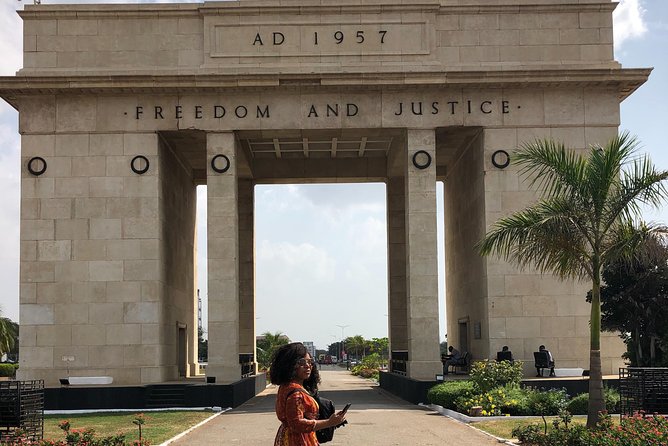
- Independence Square + Black Star Gate puts Ghana’s independence symbolism right in your line of sight.
- W.E.B. DuBois Center includes the personal side of pan-Africanism, including a library and his tomb.
Other ways to see Accra, from half-day loops to full-day drives
- Experience the Beauty, History and the Culture Of Accra in a Day★ 5.0 · 323 reviews
- Accra Detailed City Tour★ 4.5 · 118 reviews
- Accra Guided City Tour Experience★ 4.7 · 88 reviews
- Accra Guided City Tour Experience★ 5.0 · 76 reviews
Where the day starts: a 6:30 am plan that beats traffic
This tour is scheduled to start at 6:30 am. That early timing matters more than you might think, especially in a city where the day gets hotter and busier. You will likely feel more comfortable at the first stops, and you get better light and fewer crowds at key landmarks.
You also get a straightforward route: four major sites, each with a set time on site. That helps if you do not want to guess your way through Accra. Instead of bouncing around and paying for extra rides, you ride with a plan and local context.
Pickup is offered, which is a big deal in Accra. It means you avoid the morning scramble of getting to the meeting area, and you are more likely to start fresh instead of already tired. You’ll also receive a mobile ticket, which usually makes entry smoother when you are juggling a phone, sunscreen, and whatever else you brought.
One practical note: the tour requires good weather. If Accra decides to do its rainy trick, you may be offered another date or a full refund. So, if you are locking in a tight itinerary, keep some flexibility.
Kwame Nkrumah Memorial Park: Ghana’s independence story in a walkable stop
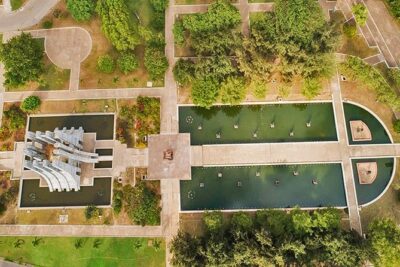
The day begins at Kwame Nkrumah Memorial Park. This is the place you go when you want more than slogans. You are there to see and learn about Dr. Kwame Nkrumah through the things connected to his life, since the park houses his belongings and helps tell his life history.
What I like about starting here is that it sets the frame for everything else on the route. Independence Square later gives you the official monuments and the big public stage. James Town adds the older layer of colonial and trade history. DuBois gives you the global civil rights connection. Nkrumah Park acts like the spine of the whole day.
You’ll spend about 1 hour here, and admission tickets are included. That time is enough to get grounded without turning the morning into a museum marathon. If you are the kind of visitor who likes context first and photos second, this is a good flow. If you are more of a photo-and-go person, you still get the story because the park is built around meaning, not just sights.
Potential drawback: if you are very short on time in Accra or you hate early mornings, the start may feel like a push. But as a history opener, it is a smart trade.
James Town Lighthouse: oldest Accra with a heavy historical shadow
Next up is James Town Lighthouse, in an area also called British Accra. This is one of the oldest parts of Accra, and the lighthouse itself matters because it was used by the British during the slave trade era.
That history can be uncomfortable, but it is also important. I like that this stop does not skip the hard parts. You get a physical landmark, plus a local explanation that helps you understand why the light house stands where it does and what it represented in a dark period.
You’ll spend about 45 minutes here, and admission tickets are included. That is a good amount of time for a lighthouse stop because you usually want a little space to take in the surroundings, then absorb the story, without rushing. If you enjoy walking and looking closely, you’ll get more out of the visit. If you prefer minimal walking, the time window still works.
One thing to plan: bring patience for the street-level reality. Even on a guided tour, neighborhoods have their own rhythm. It is part of the point. This is not a staged set. You are seeing Accra as people actually live it.
Independence Square and the Black Star Gate: symbols you can actually stand beside
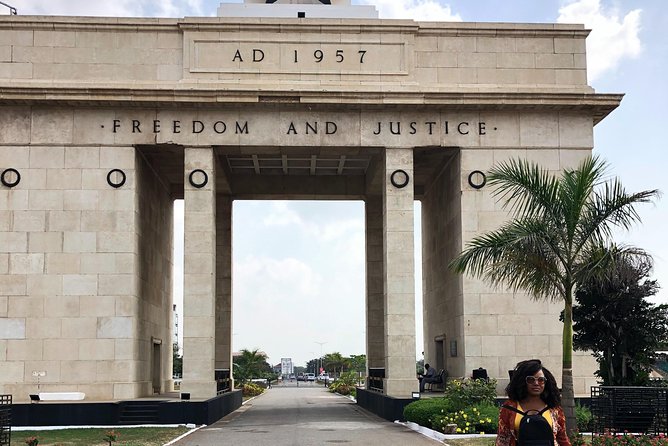
Independence Square is one of the largest squares in the world, and it is designed for serious public moments, including state events, military parades, and commercial events. That mix tells you a lot about how modern public space works in Ghana, how it can swing between ceremony and daily life.
The square was commissioned to honor the visit of Queen Elizabeth II, and the roundabout in front features the Black Star Gate, also called the Black Star Monument. It was designed in 1961, which places it right in the early independence era.
I like this stop because it turns history into geometry. You can stand in the space and feel the scale. It is one thing to read about independence symbolism. It is another thing to walk around a roundabout where the design dates you learned from books suddenly become a real object in front of you.
You’ll spend about 45 minutes here, and admission tickets are included. If you are into photography, give yourself a moment to frame the monument and the square from different angles before you move on. If you are more story-first, focus on the meaning of why these places were built and who they were meant to impress.
Possible drawback: squares can feel open and exposed, especially in the morning heat. Wear breathable clothing and consider a cap. Also, if you are sensitive to loud public spaces, you might find the square less peaceful than the memorial parks.
W.E.B. DuBois Center: pan-Africanism you can walk through
The last major stop is the W.E.B. DuBois Center. This center is named for William Burghardt DuBois, an African American civil rights activist who later became a Ghana citizen in 1960. He is often known as the father of pan-Africanism, and the center is closely tied to his life in Ghana.
Here is what makes this stop feel different from a typical landmark visit: you are not only seeing a statue or a view. The center covers his personal side. It includes his personal library, his belongings, a seminar room, a gallery, and his tomb. That means the story is not just political ideas. It is also the person, in the materials he left behind.
You’ll have about 35 minutes at the center, with admission tickets included. That time is enough to get a coherent sense of who DuBois was and why his Ghana connection matters. If you like learning through objects, you may want a little slower pace inside the gallery and library areas to actually take in details like names, dates, and what is displayed.
If your guide is Cardi, you may find the explanation makes the ideas easier to connect across the day, since you’ve already seen Nkrumah’s independence legacy and then you’re moving into DuBois’s pan-African framework. The tour’s structure helps you connect the dots instead of treating each stop as a separate postcard.
Practical consideration: tombs and memorial spaces often ask for a respectful tone. Keep your phone use in check and stay aware of the setting.
City runs in other Ghanaian towns
Price and time: is $95 worth it for this route?
At $95.00 per person, this is not the cheapest thing you can book in Accra. But value is about what you get packed into that price, and this tour includes admission tickets for every main stop.
You also get:
- Pickup offered
- A mobile ticket
- A route with four major sites, each with dedicated time
- A small group size, max 2 travelers
- A full narrative of Ghana’s history and lifestyle, not just a drive-by
When I judge value, I focus on friction. Tickets, finding entrances, and figuring out where to stand and what to look for can burn time fast, especially when you are new to a city. Here, admission is included and timing is laid out, so you spend your morning learning and looking, not negotiating logistics.
The other part of value is guide time. The tour is designed to give you first-hand insight and a local feel. Customer feedback also highlights good customer service and safety measures, and it repeatedly mentions Cardi as accommodating and informative.
About duration: it says 3 to 8 hours. That range is wide, and it is worth reading as a warning and a benefit. Warning, because you might not have a tight afternoon reservation. Benefit, because if the morning goes smoothly, you could still feel like you are not rushed. Bring a little buffer if you are trying to fit another activity later.
How to get the best from every stop (without overplanning)
This is the kind of tour where preparation makes the day easier, not harder. Since the itinerary is history-heavy, you can use your morning energy well if you show up ready.
Here’s what you should do before you go:
- Bring water. You’re starting at 6:30 am, but you will still feel the heat depending on the season.
- Wear comfortable shoes. You will be walking through memorial and public areas.
- Pack sun protection. Think cap or hat, and sunscreen.
- Keep your phone charged. A mobile ticket is useful, but photos drain batteries.
On the guide side, the best move is simple: ask one question at each stop. You do not need a quiz show. Just ask how a stop connects to Ghana’s independence story or to DuBois’s pan-African ideas. When your guide explains the why behind the landmarks, the day clicks into place.
Also, consider how you pace your day. If you like to linger for photos, you may end up closer to the longer end of the duration. If you are more focused on learning, you may finish nearer the shorter end. Either way, the structure keeps you moving.
Finally, if you are visiting during major Ghana events like the Year of Return, this tour can be especially helpful because it adds historical context to what you are seeing around you. You will understand the why behind the celebrations.
Who this tour fits best
This tour is a strong match if you:
- Want a guided introduction to Ghana’s history in a short window
- Prefer admission-included stops so you can focus on learning
- Like a small group setting, max 2 travelers
- Enjoy connecting monuments to real people and movements
It is also a good pick for couples who want to do something meaningful without committing to a multi-day trip. The route is compact enough to feel efficient, but the content gives you depth. If you are the type who likes your city walking to have purpose, this tour feels like the kind of plan that gets you oriented fast.
If you hate early mornings or you need a late start, you might find the 6:30 am time difficult. Also, because the tour depends on good weather, you should avoid scheduling it as your only morning option on a strict timeline.
Should you book the Accra city tour with Zhain tours?
I’d book this tour if you want a smart, story-led introduction to Accra that does not leave you guessing. For the price, the biggest wins are the admission tickets included at every core stop, the small group size, and the clear emphasis on history plus real city context. It is also reassuring that safety and customer service are highlighted, and guide Cardi comes up as a key reason the experience feels well managed.
I would hesitate if you cannot do early mornings, if you are extremely sensitive to open public spaces like Independence Square, or if you have no flexibility at all because the tour depends on weather.
If you want an efficient way to see Nkrumah, James Town, independence symbolism, and DuBois in one connected day, this is a solid value.
FAQ
How long is the Accra city tour?
The duration is listed as 3 to 8 hours (approx.), depending on the flow of the day.
What time does the tour start?
The start time is 6:30 am.
Is pickup offered?
Yes, pickup is offered.
Are admission tickets included?
Yes, admission tickets are included for each of the four stops.
How many people are on the tour?
This tour has a maximum of 2 travelers.
What locations will the tour visit?
The tour includes Kwame Nkrumah Memorial Park, James Town Lighthouse, Independence Square, and the W.E.B. DuBois Center.
What if the weather is poor?
The experience requires good weather. If it is canceled due to poor weather, you will be offered a different date or a full refund.
A Wider Spread of Ghana Tours
- The Cape Coast Day Tour
★ 5.0 · 525 reviews - The Cape Coast Tour
★ 5.0 · 177 reviews - From Accra: Cape Coast, Elmina Castle & Kakum Park Day Tour
★ 4.6 · 144 reviews - Accra Detailed City Tour
★ 4.5 · 118 reviews - Accra Guided City Tour Experience
★ 4.7 · 88 reviews
More Ghana Tours Out of the Review Pile
- The Cape Coast Day Tour
★ 5.0 · 525 reviews - Experience the Beauty, History and the Culture Of Accra in a Day
★ 5.0 · 323 reviews - The Cape Coast Tour
★ 5.0 · 177 reviews - From Accra: Cape Coast, Elmina Castle & Kakum Park Day Tour
★ 4.6 · 144 reviews - Accra Detailed City Tour
★ 4.5 · 118 reviews
Seeing Accra Another Way
- Experience the Beauty, History and the Culture Of Accra in a Day
★ 5.0 · 323 reviews - Accra Detailed City Tour
★ 4.5 · 118 reviews - Accra Guided City Tour Experience
★ 4.7 · 88 reviews - Accra Guided City Tour Experience
★ 5.0 · 76 reviews - Know Ghana in 4 hrs – Accra City Tour
★ 4.5 · 47 reviews
Latest Accra reviews added here






Accra Sightseeing Tours, compared.
 ★ 5.0Experience the Beauty, History and the Culture Of Accra in a DayFrom $80323 reviews
 ★ 4.5Accra Detailed City TourFrom $80118 reviews
 ★ 4.7Accra Guided City Tour ExperienceFrom $4588 reviews
★ 5.0Accra Guided City Tour ExperienceFrom $7076 reviews
★ 4.7Accra Guided City Tour ExperienceFrom $4588 reviews
★ 5.0Accra Guided City Tour ExperienceFrom $7076 reviews
 ★ 4.5Know Ghana in 4 hrs – Accra City TourFrom $10047 reviews
 ★ 4.5Guided City Tour with LunchFrom $10640 reviews
 ★ 4.5Escape Accra City to Aburi Gardens and Tetteh Quarshie Cocoa FarmsFrom $17032 reviews
 ★ 4.7ACCRA GUIDED CITY TOUR, GHANAFrom $13029 reviews
Browse the lists this tour appears in