REVIEW · GHANA
A Taste of West Africa – Ghana Togo & Benin
Eight days, three countries, one tight story. What makes A Taste of West Africa special is the mix of big, memorable sites with lived-in culture, all paced by a private guide. I love the way culture and ceremonies fit alongside the well-known monuments, and I really like that many entrance tickets are handled for you. One possible drawback, some stops are short, so you should be ready for quick transitions and a day-to-day pace.
I also like that the route includes both nature and history, not just a long list of buildings. Expect rain forest walking and boat rides as real break points from the city driving, even if the overall schedule is busy.
In This Review
- Key highlights that matter on the ground
- Getting oriented in Accra, then stepping into old Ghana
- Kakum National Park canopy walk, then Cape Coast Castle’s heavy questions
- Elmina Castle and Fort St Jago, the coast tells a continuous story
- Accra markets, fantasy coffins, and Black Star Square
- Grand Marché, the voodoo market, and Lac Togo by boat
- Porto-Novo’s Great Mosque, Afro-Brazilian links, and King Toffa’s palace
- Lake Nokoue, Ganvie on the water, and the Temple of Pythons
- Osu Oxford Street, a simple shopping close before departure
- What you should expect from the day-to-day pace
- Price, value, and what inclusion really means here
- Who should book A Taste of West Africa, and who might not love it
- Should you book this West Africa tour?
- FAQ
- What is the start time and where does the tour begin?
- Is this tour private or group-only?
- What does the tour include in terms of food and lodging?
- Are admission tickets included for all stops?
- What is the dress code?
- What kind of physical fitness level is needed?
- Is free cancellation available?
Key highlights that matter on the ground
- Private guide across Ghana, Togo, and Benin, with a group limited to your party
- Kakum canopy walkway in a protected rain forest, including a longer, high walkway option
- Fortress and castle stops tied to the slave trade, including Cape Coast and Elmina
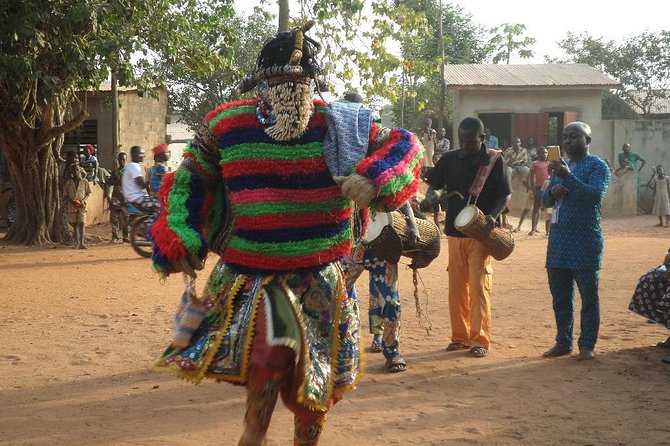
- Voodoo-focused cultural time, including the voodoo market and ritual traditions like Gelede and Zangbeto
- Lake boat rides to Togoville and Ganvie, plus a sacred forest stop for the Temple of Pythons
- Customer service that feels responsive, with guides named Mimi and Patrick showing up in people’s stories
Still deciding? Here are other Accra tours we have written up.
- The Cape Coast Day Tour★ 5.0 · 525 reviews
- Experience the Beauty, History and the Culture Of Accra in a Day★ 5.0 · 323 reviews
- The Cape Coast Tour★ 5.0 · 177 reviews
- From Accra: Cape Coast, Elmina Castle & Kakum Park Day Tour★ 4.6 · 144 reviews
Getting oriented in Accra, then stepping into old Ghana
Your first day starts with a hotel transfer, and if your arrival timing is friendly, you can add a walking look at James Town and old Accra. That early neighborhood time is more useful than it sounds. You get bearings fast, and you also get a sense for how the city moves before you hit inland driving.
You’ll start with smart-casual clothing, and it helps to dress for heat and walking. This trip does assume some movement every day, including time in markets and museums, plus later forest walks and lake travel.
If you’re coming in as a first-timer, this Accra start works because it sets context before the heavier history days. It also gives you something light and human to anchor the trip.
Kakum National Park canopy walk, then Cape Coast Castle’s heavy questions
Day two is built around contrast. You begin at Kakum National Park, one of the most famous rain-forest experiences in Ghana, with an included admission ticket. You have a choice: a 1-hour forest-trail walk or the longer experience on the canopy walkway, described as the longest and highest in West Africa.
This is the part I’d call a physical reset, as long as you take it at your own pace. The canopy walk is exciting, but it’s also a real reminder that West Africa is not just history stops. The forest trails, even when they’re only about an hour, give you a chance to breathe differently.
Then you shift to Cape Coast Castle (also called Cabo Corso). The castle was built by the Swedes in 1653, seized by the Danes, and later conquered by the British. That quick timeline matters, because it shows how control over this coast kept changing while the impact on people kept compounding.
You’ll have about an hour for the castle visit. In a schedule like this, short time is normal. My advice is to slow down inside and pick a few areas to focus on rather than trying to see everything. Even in an hour, you can get the shape of what happened and why this place is so central to the story of the Atlantic slave trade.
Elmina Castle and Fort St Jago, the coast tells a continuous story
Day three keeps you on the coast and builds on what you started understanding at Cape Coast. You visit Elmina Castle, described as well preserved, with an included admission ticket. You’re given about an hour here as well, which is enough time to understand the core function of the site and the history of slavery tied to the coast.
From there, you move to Fort St Jago, part of an Elmina city tour. It’s also about an hour. This stop connects the colonial past with present-day life in the Fanti area, which gives you a chance to shift from the museum-like setting to what life looks like beyond the walls.
A practical note: these are emotionally heavy stops. If you know you get overwhelmed in museums, tell your guide early. A good private guide can help you pace the moments that feel too intense and point you toward what to focus on first.
Accra markets, fantasy coffins, and Black Star Square
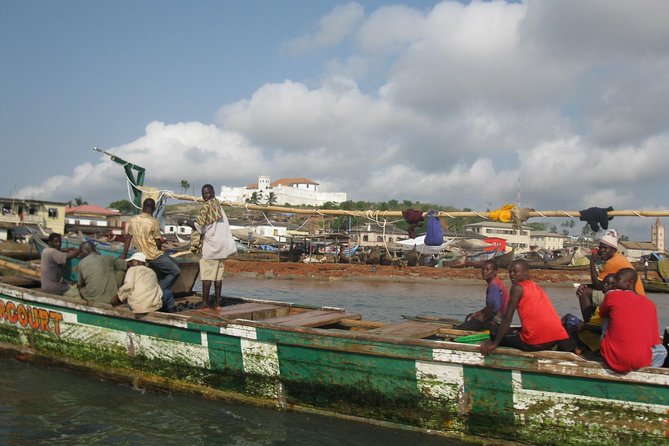
Day four is where Accra feels more like a living city. You start at Nungua Local Market, including time to visit the fantasy coffin makers. These are coffins made to reflect a person’s affiliation, and the trade is fascinating because it links art and identity with a craft that has real cultural meaning.
Then you head to the Artists Alliance Gallery, with painting and sculpture by both established and up-and-coming Ghanaian artists. This is a good place to look for contemporary voices after earlier historical sites. You don’t just get the past; you also get current creativity.
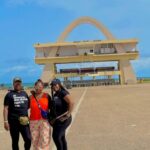
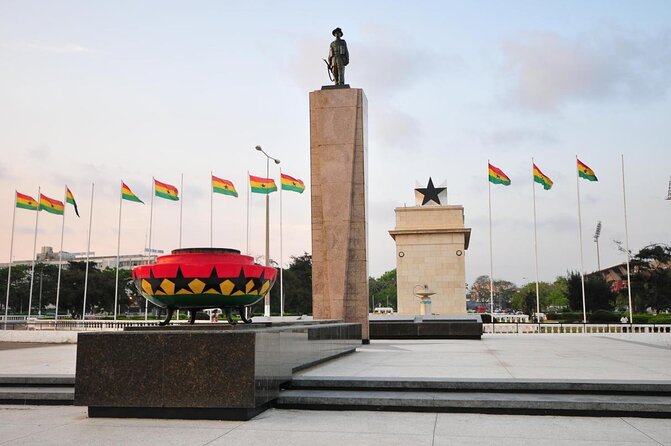
Next stop is Independence Square, also called Black Star Square, tied to Ghana declaring independence in 1957. It’s a short stop, about 30 minutes, but it’s one of those places where you can stand, look, and understand why national symbolism is powerful.
You finish with a stroll through the Center for National Culture, Ghana’s largest craft market. This one is listed as free admission for the hour portion. I like this stop because it gives you a practical “shop smarter” option. You’re not stuck with random souvenir stalls. You can browse for traditional clothes and arts and crafts while you have downtime within the day.
Grand Marché, the voodoo market, and Lac Togo by boat

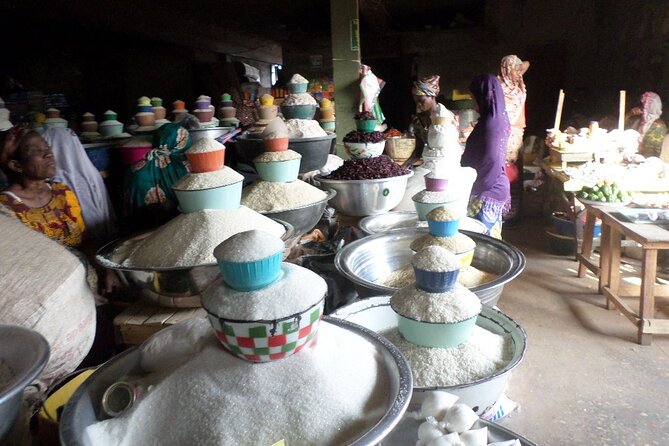
Day five opens with the Grand Marché, a large open-air market described as the realm of the famous Nana Benz. The big value here is seeing how trade works when it’s social and constant, not staged for tourists.
Then you visit Akodessewa Fetish Market, the main voodoo market, where you can see magic remedies and local voodoo charms used by sorcerers. The time here is about 30 minutes, and the admission ticket is listed as not included. So you’ll want to budget a bit for that specific stop, and it’s worth handling with respect.
The overall tone of this day is important. The itinerary is not treating voodoo culture like a side show. It’s presented as a real belief system tied to history and community practice. Still, it’s also a topic some visitors find sensitive. If you’re not comfortable with fetish-market style displays, you can ask your private guide for guidance on what’s most informative without forcing you into the most intense scenes.
After that, you move to Lac Togo and take a boat ride to Togoville. Here you visit shrines, an ancient German Cathedral, and a traditional museum tied to the King of Togoville. You get about two hours, and the admission ticket is included. Boat travel helps you reset, and Togoville gives you a sense of how lakeside communities live with their environment and their history.


Porto-Novo’s Great Mosque, Afro-Brazilian links, and King Toffa’s palace
Day six centers on Porto-Novo. You start at the Great Mosque of Porto-Novo, where the itinerary notes many Afro-Brazilians settled after returning to Africa after emancipation in Brazil.
This stop is more than religious architecture. You also visit the vibrant market and the ethnographic museum, plus additional key sites: the Grand Mosque, formerly a church designed in Brazilian style (the text mentions Da Silva Museum), and the 300 year-old Palace of King Toffa.
You get about two hours total, with admission tickets included. That time allocation suggests you’re not meant to rush. You can look at how cultural influence shows up in places people built, and how the Afro-Brazilian presence shaped Porto-Novo’s identity.
A practical mindset for this day: think of Porto-Novo as a place where names, religions, and architecture overlap. The tour’s mix of market, museum, mosque, and palace helps you see the layers without needing deep background before you arrive.
Lake Nokoue, Ganvie on the water, and the Temple of Pythons
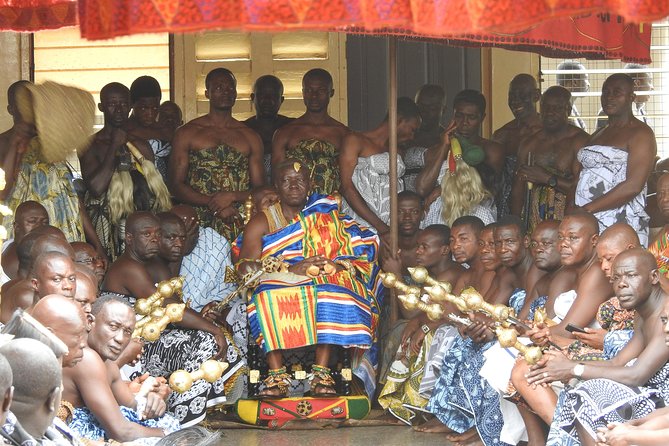
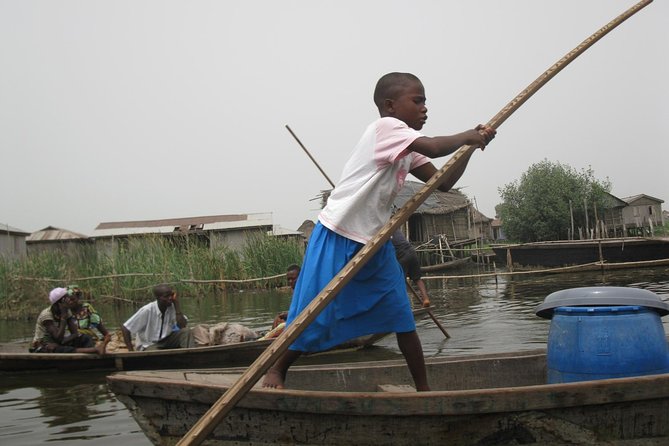
Day seven is one of the most visually memorable. You go to Lac Nokoue and take a boat ride on the Nakoué river. Ganvie, often described as the Venice of the continent, is a 500-year-old village on water. The itinerary also gives a specific historical reason people ended up here, mentioning refuge from attacks and a deep belief that forbade certain fighting on water.
You get about two hours here, with admission included. Boat time can feel like a slow part of the day, but on this route it helps you make sense of why lakeside living developed the way it did. It also breaks up the earlier castle and market focus.
Then you head to Temple des Pythons, visiting the Sacred Forest and Temple of Pythons, home to sacred snakes. That’s about one hour, with admission included. This is one of those stops where you should listen closely to your guide about what’s permitted and what isn’t, because sacred spaces have rules even when you’re just observing.
To finish the day, you visit Ouidah Museum of History, located at a Portuguese fort that now houses the museum. The focus is on the slave trade and cultural links between Benin and Brazil and the Caribbean. The stop is shorter, about 30 minutes.
Because the museum is brief here, I’d treat it like a compass rather than a full coursework. Use it to understand the big connections, then let the rest of your trip imagery do the work.
Osu Oxford Street, a simple shopping close before departure
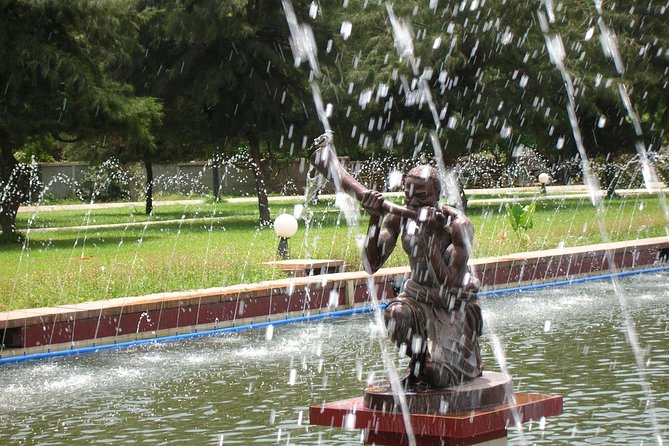
Your final day gives you breathing room with a free day shopping stop at Osu Oxford Street. It’s about two hours, with admission tickets listed as included for that time block.
This kind of ending is practical. It helps you use what you’ve learned about markets and crafts to make smarter purchases rather than grabbing last-minute souvenirs out of stress. Also, Osu is a familiar way to end a multi-country trip. It feels like a relief valve after earlier days of deep context and serious sites.
What you should expect from the day-to-day pace
This is a full 8-day run. Many stops are 30 minutes to about an hour, which means the schedule stays active. That doesn’t make it bad, but it does change how you should travel.
Here’s the mindset that works best:
- Arrive ready to walk and stand, especially for market time and the canopy experience
- Assume you’ll spend part of each day moving between sites
- Let your private guide steer you toward what to focus on first inside each place
The tour lists a moderate physical fitness level and notes that there’s smart-casual dress. That pairing fits the itinerary: you’re not doing extreme hikes every day, but you are doing enough walking that comfortable shoes matter.
Also, this is described as a private tour, only your group participates. In plain terms, it’s easier to ask for a short break, to change the pacing inside a museum, or to adjust how long you want at a marketplace. Names of guides like Patrick come up in people’s stories, and that kind of guide experience tends to show up when there’s a lot to see.
Price, value, and what inclusion really means here
At about $2,861.54 per person for an 8-day trip, this is not a budget outing. So the real question is value, not just cost.
What helps the value side:
- Accommodation and some meals are included, so you’re not paying for everything separately
- Many of the major entrance tickets are included, including Kakum canopy walkway, Cape Coast Castle, Elmina Castle, Fort St Jago, and several Porto-Novo and Benin key stops like the mosque area and Temple des Pythons
- You get a private guide, which reduces the hassle of coordinating multiple countries on your own
What to watch on the value side:
- Some stops have limited time, so you do need to be comfortable with a busy plan
- Not every site has included admission. Akodessewa Fetish Market is explicitly listed as not included, and you should plan for any extra entry costs that are named as excluded
For many people, the “private guide plus included entrances” combo is what makes a multi-country route feel worth it. If you’re the type who likes to travel with confidence and fewer logistics headaches, this structure tends to pay off.
Who should book A Taste of West Africa, and who might not love it
This tour is a strong fit if you want a guided West Africa experience that covers major Ghana, Togo, and Benin highlights in a single trip. You’ll enjoy it most if you like mixing practical sights with cultural context, and if you’re curious about belief systems and rituals alongside castles, markets, and modern art.
It’s also a good pick if you’re visiting Africa for the first time. Having a private setup, responsive support, and a guide who helps you stay on track can make the difference between a stressful trip and a smooth one.
You might want to look elsewhere if you prefer slow travel with long, unstructured downtime, because several key stops are time-boxed. You might also think twice if you know you struggle with topics linked to slavery and colonial history, since the route includes multiple sites focused on that subject.
Should you book this West Africa tour?
Yes, if you want a private, high-coverage Ghana, Togo, and Benin itinerary that combines nature, markets, art, and culturally specific rituals, all while handling many admission tickets for you. The strongest selling point is how the trip moves from famous sites into everyday culture, with enough cultural programming to feel like you learned something real, not just took photos.
I’d say book it when you can handle a busy schedule and you’re comfortable with short visits inside big sites. If you want a slower, more flexible rhythm, or if you want every museum and market to be half-day deep, then this might feel rushed.
If you do book, go in with the right expectations: wear good shoes, carry water, and treat each short stop as a focused chapter.
FAQ
What is the start time and where does the tour begin?
It starts at 8:00 am, and the meeting point is in Accra, Accra, Greater Accra.
Is this tour private or group-only?
This is a private tour. Only your group will participate.
What does the tour include in terms of food and lodging?
Accommodation and some meals are included.
Are admission tickets included for all stops?
Many major admissions are included (for example Kakum National Park and several castle and museum visits), but not all stops do. The Akodessewa Fetish Market admission ticket is listed as not included.
What is the dress code?
The dress code is smart casual.
What kind of physical fitness level is needed?
The tour says you should have a moderate physical fitness level.
Is free cancellation available?
Yes. You can cancel up to 24 hours in advance of the experience for a full refund.
More Ghana Tours Out of the Review Pile
- The Cape Coast Day Tour
★ 5.0 · 525 reviews - Experience the Beauty, History and the Culture Of Accra in a Day
★ 5.0 · 323 reviews - The Cape Coast Tour
★ 5.0 · 177 reviews - From Accra: Cape Coast, Elmina Castle & Kakum Park Day Tour
★ 4.6 · 144 reviews - Accra Detailed City Tour
★ 4.5 · 118 reviews